September was the first month for which a cross-state comparison of sports betting revenue was truly viable. Now that the Nevada numbers are finally out for September, we have data from a full month of wagering in five different states: Delaware, Mississippi, Nevada, New Jersey, and West Virginia. I thought it might be fun to dive deeper into these numbers to see what they might tell us about the culture of legalized sports betting in America.
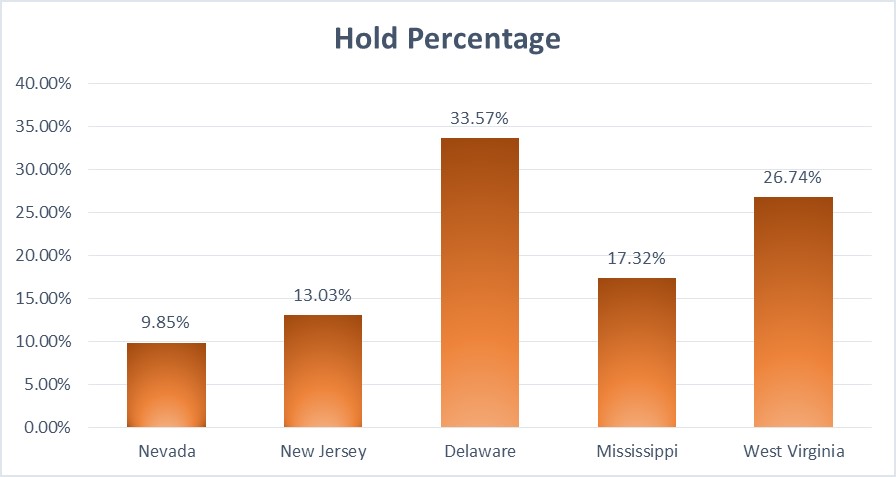
First, the grand total. Americans wagered $817,787,683.55 on sports in regulated states in September 2018. They lost $95,565,895.87 in doing so. That’s an 11.69% hold percentage for the house. A double-digit hold across the entire country is eye-popping; however, the devil is in the details. This number is derived by wagers accepted minus wagers paid. As a result, futures wagers in the new markets that aren’t yet paying out previously made futures wins creates an inflated hold. Still, it’s an impressive number.
Slice Up the Pie

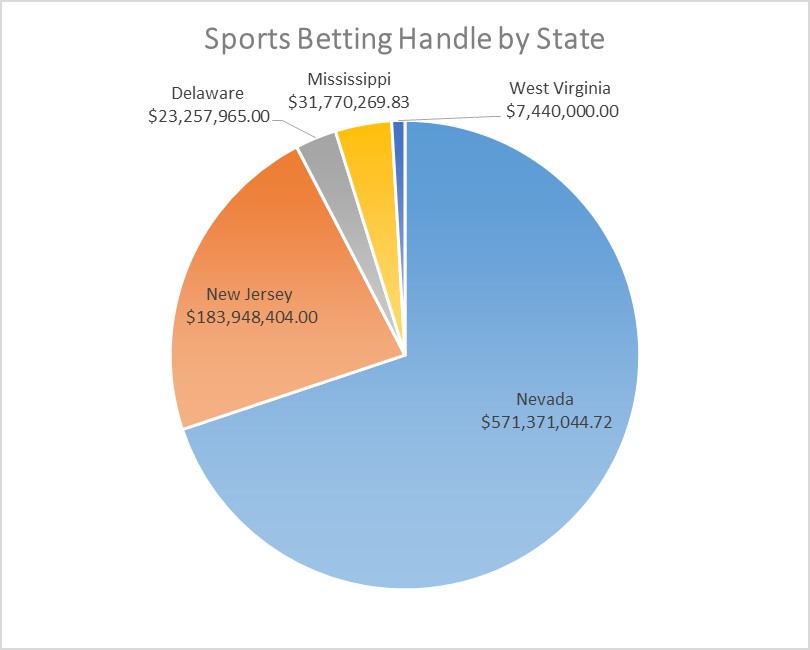
We all know Nevada is still the dominant player and in September that dominance was evident. Nevada’s handle of $571 million was more than double all the other markets combined. Likewise, Nevada’s revenue generation was nearly 60% of the entire market. Both handle and revenue were the highest ever for a single month in Nevada. The takeaway here is that sports wagering legalization has not cannibalized Nevada. This shouldn’t come as a surprise. When casino proliferation bloomed across the country in the early 2000s, Nevada gaming experienced a period of unprecedented growth.
A Comparison of States
Given the diverse populations of these legalized states – New Jersey’s population is more than the other four states combined – we should look at how sports betting revenue breaks down per person. Nevada will be an outlier since much of the betting in Nevada is done by out of state tourists. However, there are some surprises:
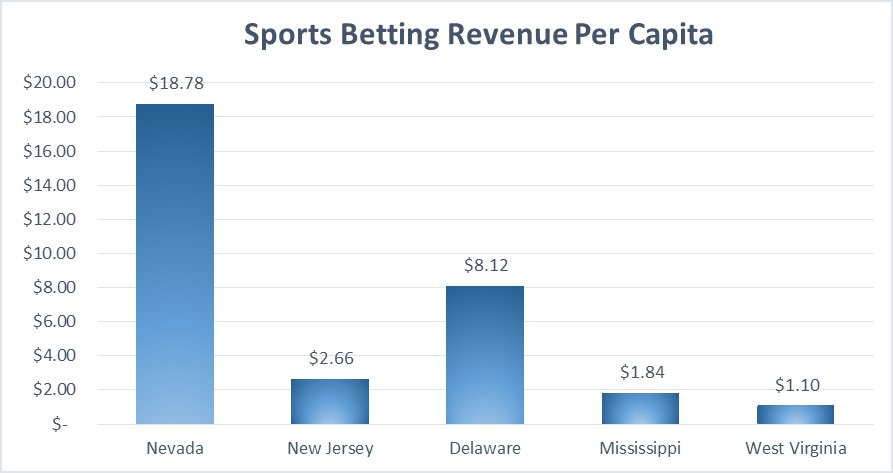
Look at tiny Delaware producing the second-highest revenue per capita. The reason for this is largely due to the sports betting culture in Delaware. Since 2009, Delaware has had legal betting on the NFL in the form of parlay cards. These cards are available not only at the state’s three casinos, but also at 100+ retailers around the state. Single-game wagering in Delaware is available only at the casinos. Retailers can only offer the parlay-card option. Betting at retail shops represented nearly 28% of the total handle in the state. Many bettors in Delaware like the “bet a little, win a lot” allure of the parlay cards. It’s the preferred wager in The First State.
Unfortunately for parlay-card bettors, September was a rough month. The hold percentage for Delaware retailers was a whopping 65.39%! Parlay cards are generally a bad bet anywhere, though. For instance, the hold percentage for the cards in Nevada was 60.67%.
By The Book

For reviewing the revenue per sports book, I chose to separate the revenue generated solely at Delaware casinos versus the revenue derived from the retailers selling parlay cards. Nevada has 190 functioning sports books (including mobile-app wagering). New Jersey is the only other state currently offering mobile wagering; it’s factored into the 15 listed sports books for the state. Mississippi had 21 sports books operating in September; West Virginia only two.
It’s important to note in this chart that these are all gross revenue figures from which taxes are derived. The actual profitability of a sports book comes after operating costs, salaries, and other factors. A sports book in Pennsylvania generating less than $1 million in revenue each month would have to keep expenses relatively low after the 36% tax rate and depreciation of the $10 million license fee is factored in.
When Will the US Market Top $1 Billion?
Earlier I stated that the total amount wagered across all five of these states was an incredible $817.8 million in September. That leads to the inevitable question, when will the US market top $1 billion in sports wagering in a single month? As we close out October, are we closing out a billion-dollar month? Historically, the Nevada market grows slightly from September to October. If we project a similar growth pattern for the other states, October probably won’t be the billion-dollar baby. My estimate is $850 to $870 million. Pennsylvania arriving to the party will likely be what it takes to push through the billion barrier. It’s also likely that we’ll be talking about the $2-billion barrier this time next year as more states move toward regulation.


 Never miss another post
Keep in mind that the Delaware numbers will also be skewed by its proximity to Philadelphia and its suburbs. I live in the NJ suburbs and Delaware is closer to me than anywhere I can bet in New Jersey. I would expect that number to change dramatically once betting arrives at Harrah’s in Chester.
You’ll see Nevada’s piece of the pie shrink as time goes on. Not everyone back east is even aware that you can now bet in Delaware, NJ, etc. Plus, the convenience factor will weigh heavily over time–I expect the east coast sports books to greatly cannibalize Nevada’s Super Bowl handle.
Good point, Mike. Delaware gets a lot of out-of-state traffic to their sports books. Something tells me those first books in PA would be wise to promote their parlay cards. Maybe even sweeten the typically atrocious odds.
When parlays were the only bets to be made, the lines on football Sundays at the lottery locations right on the border were crazy. Maybe they still are, I don’t even try.