

 After 13 years chairing the Nevada Gaming Commission, it’s quitting time for Pete Bernhard, who’s leaving 10 months before his term expires.
Wasting no time, Gov. Brian Sandoval named Dr. Tony Alamo Jr. to fill Bernhard’s chair and Pat Mulroy to serve out the 10-month vacancy created by Bernhard’s departure. That should be interesting. As tsarina of the Southern Nevada Water Authority for 11 years, Mulroy made many enemies with her take-no-prisoners style.
Ironically, it was Bernhard who replaced Sandoval when the latter stepped down from the NGC and ran for Nevada attorney general. One can’t blame Bernhard for leaving. He’s still making the same 55 grand that was his salary back then. He attributed his early departure to a desire to have a successor who has sufficient time to coordinate with the Nevada Gaming Control Board in advance of the next Legislature.
As Howard Stutz notes, Bernhard oversaw a great deal of history, chairing the NGC through two recessions, and a series of ever-bigger takeovers and LBOs. But the departing chairman thinks Alamo is the man of the moment, telling the Las Vegas Review-Journal, “he’s younger, he understands social media, and he was ready and willing to serve.”
* The prospects of casino gambling in Japan wax and wane with each  passing day. Forbes‘ Muhammad Cohen opines that parliamentary debate is “another small step in a long kabuki performance whose ending hasn’t been written.” He points to the slower-than-expected progress of the enabling legislation (Spectrum Asia CEO Paul Bromberg: “We’re not talking about a bill to legalize casinos but a bill to study legalizing casinos”). And if that initial bill makes it to the upper house, it will go into a committee chaired by a casino opponent.
Bromberg doesn’t think there will serious legislative action until 2015 … too late for megaresorts to open in time for the 2020 Olympics. “Unlike Macao,” he adds, “Japan is a very large and diversified economy. Lots of people think, ‘We don’t need casinos.’” They also wonder why they need American companies to get a piece of the action when they have the competency themselves. Cohen glumly concludes that legalization will be “a long-running show.”
* Amaya Gaming Group‘s planned purchase of PokerStars is already paying dividends. New Jersey officials are sitting down with the company 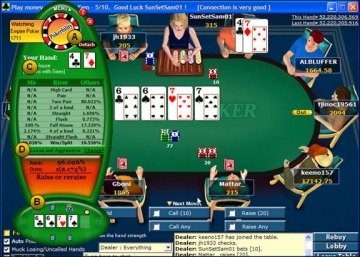 to discuss lifting PokerStars’ two-year suspension. Division of Gaming Enforcement Director David Rebuck characterized himself as “encouraged” by Amaya’s actions, which would include the ouster of fugitive bad actor Isai Scheinberg. “I think in the long run it will be a good story for New Jersey. I’m optimistic that they know what the rules are, and I fully expect them to be very aggressive because they want to be here,” said Rebuck.
There’s one school of belief which holds that Internet-gaming action has been week because the dominant brands — PokerStars and Full Tilt Poker — have been barred from the U.S. market, leaving the action mostly to a group of startups. (Amaya provides the platform for one, Caesars Interactive.)
Among the believers is Fitch Ratings, which wrote, “The return of the exiled poker giant would inhibit the online poker ambitions of big U.S.- based operators such as Caesars Entertainment, Boyd Gaming and Station Casinos.” Another would be Caesars Interactive partner 888 Holdings, which is lending its support to giving PokerStars clemency. “They are a formidable competitor,” said 888 CEO Brian Mattingley. “But they would make all of us work much harder and it would expand the market. I would much rather have a small slice of a large pie, than a big piece of a small pie.”
