

Vital Vegas, whose predictive skills are superior to ours, recently came out with a blockbuster, forecasting that Las Vegas Sands or MGM Resorts International or Wynn Resorts (or maybe some combination of the above) might be headed into  bankruptcy. “Tectonic changes in China” were tagged as the inciting incident (Sheldon Adelson recently lost $3 billion of his net worth in 30 minutes, when the markets had a coronary over China’s restructuring of UnionPay usage in Macao). In addition to heavy Macanese exposure, $39 billion in long-term debt was cited. Much of that is carried by Caesars Entertainment but MGM is highly levered, and both it and Sands are talking about spending $10 billion in Japan alone — all highly theoretical at this point.
(In other prognostications, Vital Vegas wrote that “skill-based games will prove to be a flop and eSports will be seen as the false hope it is.” That’s big talk but Scott Roeben made some brazen predictions for 2016 and did they ever come true.)
On the other side of the ledger, Macao recently posted an 8% gain for December, probably 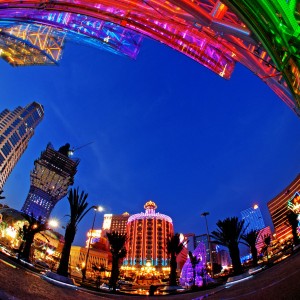 driven by mass-market play, which has gone from one-third of the market to fully half, which means higher profit margins for the casinos. (No junketeers to pay, heh, heh.) But let’s not pop the champagne cork just yet. The Wall Street Journal reports that credit is becoming harder to get on the mainland and housing prices are still on the rise. Stock analysts don’t share Vital Vegas‘ gloom, predicting a 12% return on investment in 2017 — a good ROI in any market, especially one as competitive as Macao.
* Going from a highly valued market to one that is frequently disrespected, Atlantic City was worth $3.7 billion in 2015. It’s on a similar track for 2016: $2.8 billion through three quarters. Those who stress the need for diversification will be happy to see that one third of that figure was derived from non-gambling revenues. The latter have exploded from $252 million in 2012 to $998 in 2016. Said developer Wasseem Boraie, “I think any mayor in the state would raise their hand right now if you said, ‘Hey, who wants $2.5 billion going through their town?’” (Boraie has $81 million invested in a new Atlantic City apartment complex.) The Boardwalk needs more such optimists.
* Detroit gaming regulators got a rap on the knuckles from the state’s Auditor General for approving 213 gaming employees. The problem was that the hires in question “were not licensed in accordance with industry rules,” the sticking point being that they held supervisory positions within the gambling operation as table game supervisors, table game assistant supervisors, table game team leaders or poker room supervisors.” They will need to be reclassified as “level one” employees which, among other things, means providing a statement of financial worth.
The MGCB protested the findings of the Auditor General, who also felt that the extant regulations — dating back to 1999 — did not adequately reflect subsequent technological advances. The Control Board was also found to be not meeting its quota of quarterly inspections. As for the 213 employees who slipped through cracks in the system, the MGCB argued that it had discretionary powers to let anyone who wasn’t supervising an entire department pass muster. We’ll see if that contention holds water.

The number one question in Las Vegas for 2017 is will Resorts World finally start construction? Awhile ago I read that the reason for the delay is because of Resorts World “complex design.” Its possible that the complex design is a redesign of Resorts World and then the total cost would be around $2 billion dollars. Anyways we will know sometime this year if anything happens at all with Resorts World.