

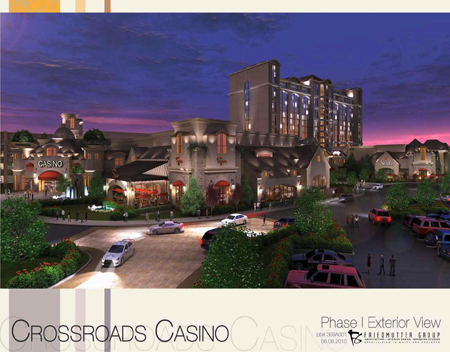
 “[W]ell-connected developer” — but so not well financed — David Nunes (below) just got his casino-application fee across the transom, meaning that there are 11 contestants vying for two casino licenses and a slot parlor in Massachusetts. A
  couple of casino aspirants who couldn’t get their act together in time are pleading for extensions That number could rise still further once the Massachusetts Gaming Commission has decided it’s waited long enough for the Mashpee Wampanoags to prove that they are eligible under the Carcieri v. Salazar ruling, which foreshortens the number of federally recognized tribes that are qualified to offer gambling. If the Interior Department, soon to be minus one Ken Salazar, rules adversely, it’s a free-for-all in southeastern Mass. If the State of Massachusetts opens the region to private-sector casino developers and the Mashpee Wamps then achieve recognition, Gov. Deval Patrick finds himself with four casinos on his hands, not the three upon which he insisted.
Nunes, whose above-pictured Milford project has looked like smoke and mirrors so far (and is fugly beyond description) is at best a distant third-place contender for the Boston-area license. Steve Wynn has to be regarded as the prohibitive frontrunner because … well, because he’s Steve Wynn, bitches! Caesars Entertainment and Suffolk Downs‘ second-place standing is shaky as long as 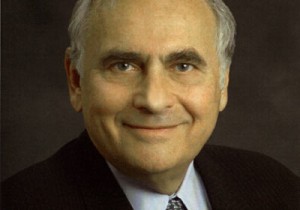 Neil Bluhm (right) is circling Beantown. He could go for the slot-parlor license (and its painfully high tax rate) but that’s pretty down-market for him. Two racinos are presently dueling for the slot-parlor gig and Cordish Gaming affiliate Power Plant Entertainment is also lurking about. Since Cordish just delivered the Slot Parlor To Rule Them All in Maryland, I expect some knockout-punch offer to Massachusetts will soon be forthcoming. Of course, that leaves four heavyweights duking it out for western Massachusetts … of which more shortly. However, one has to say to Patrick and his gaming czar, Stephen Crosby, “Job well done.” They’re drawn an excellent pool of applicants — much superior to what several other new jurisdictions have been able to lure. Then again, by capping the resort tax rate at 25% (unlike the greedheads down in Maryland, for instance), Massachusetts lawmakers set out some mighty tempting bait.
Barring regulatory disapproval either from the New Jersey Casino Control Commission or the Department 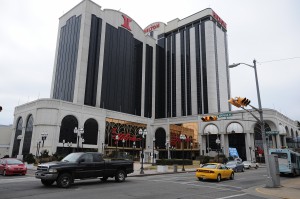 of Justice, it looks like Colony Capital‘s flagship casino property, the Atlantic Club, will soon have new ownership. That means that, unless or until Sam Nazarian actually builds his mooted SLS Las Vegas, Colony is out of the U.S. gaming industry. Hallelujah! CEO Tom Barrack is the worst, most catastrophic gaming investor in industry history and the doorknob cannot hit his butt one moment to soon. Overseas buyers Full Tilt Poker and Rational Group promise to subsidize the much-diminished casino, which continues to lose millions (on pace for an $18 million shortfall this year), even after a successful repositioning of the place as a grind joint. Rational Group’s Eric Hollreiser “declined to disclose terms of the deal, including the purchase price,” which almost certainly means Colony took a bath on the deal … as usual. Keep in mind that Rational subsidiary PokerStars ran afoul of the DoJ during Pokergeddon and had to pony up an eye-popping $547 million to placate Uncle Sam. So once the Division of Gaming Enforcement starts going through Rational and Full Tilt’s rap sheets, this whole deal could go sideways. But it’s the most interesting ownership bid in Atlantic City in quite a long time.

I was in the Golden Nugget/Bally’s Grand/The Grand/The Hilton/ACH/The Atlantic Club (did I miss any?) just two weeks ago. I just took a walk through the place and I must say, I still feel very comfortable there. It is a shame that Colony has been such a lousy steward of a very pleasant hotel. Does Colony own a piece of SLS? I am a bit confused on that one. Also, to some degree, I agree with you on Barrack. But worse than Bill Yung? Colony at least has one victory under its belt (Harveys sale to Harrahs) to say the least.