

It’s time to pay the piper for Boyd Gaming‘s $1.5 billion takeover of Peninsula Gaming and Boyd employees are the first ones feeling the pinch. Three vice presidents — including 13-year Boyd veteran Dan Stark — and roughly 250 employees got the chop. This sort of thing is never pleasant, especially for the people getting the axe, but at least Boyd  distributed the pain from top to bottom. Apparent strength in one of Boyd’s biggest territories, Louisiana, was revealed to be flatness when December’s numbers were adjusted to reflect the new business generated by Pinnacle Entertainment‘s L’Auberge Baton Rouge (laying a -28% wallop on Penn National Gaming‘s Hollywood Baton Rouge in the process). All of Boyd’s Pelican State properties save Sam’s Town in Shreveport (-6%) had a revenue-positive month. However, the winter months have been unkind to the mid-American casino states in which Boyd is heavily invested and near-term improvement is unlikely. Lightening of the payroll was to be expected, especially once corporate economies of scale began being applied to the Peninsula acquisitions.
Having some free time (and extra money) on his hands now that he’s left scandal-dogged Peninsula, ex-CEO Brent Stevens just plunked $35 million into 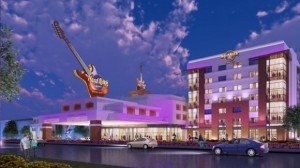 proposed Hard Rock Hotel & Casino Sioux City. This relieves Warner Gaming of the 14% interest rate it was previously facing on the project. Two rival applicants, however, took umbrage. The Iowa Racing & Gaming Commission made the valid point that there is ample precedent for such after-the-fact refinancing. To which Ho-Chunk Inc. CEO Lance Morgan made the equally valid rejoinder that Warner’s deal drastically changes the ownership. For his 35 million clams and an 8% interest rate, Stevens is able to convert his seed money into half-ownership of the $118.5 million project. Sweet! I’ll bet Ho-Chunk and Penn National are wondering where they can get $60 million worth of casino at a 42% discount.
Ohio’s baneful effect on Detroit casinos appears to have been grossly overestimated. For the year, Motown gambling palaces are down only a half-percent. True, Ohio still has a passel of racinos coming but, with numbers like these, Michigan casino moguls can afford to be sanguine. True, the Buckeye State’s gambling rollout blunted a spring rally in Detroit gaming revenues, but the impact has been far less than feared. MGM Grand Detroit still finished 1% up from 2011, Greektown Casino was flat and MotorCity Casino fell nearly 3%. Those are some pretty good mousetraps up in Motown and Hollywood Casino Toledo doesn’t look like a patch on any of them.
 For a really smart guy, restaurant magnate and Golden Nugget owner Tilman Fertitta did something fairly dumb — or naive. It’s not a government secret that key holders of Atlantic City gaming licenses can’t gamble at each others’ properties. (The prospect of gambling debts being erased in return for trade secrets would be among the activities the law seeks to prevent.) Somehow, none of his flunkies passed this pesky little detail along to Tilman, who laid down some action at Revel and Borgata. Hell, Revel’s in no position to refuse anybody’s action. Bottom line: Feritta’s going to be $15,000 out of pocket … an expensive lesson in the regulatory niceties of New Jersey gambling.
