

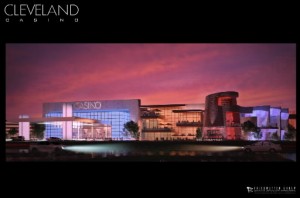
 So, as Ohio marks the first full year of casino play, is the glass half-full or half-empty. Currently, much is being made of Horseshoe Cleveland having brought in less than half of greatly over-ambitious expectations (and 12% less than what Moody’s Investor Service anticipated). And that isn’t even the fault of Rock Gaming Caesars but of Penn National Gaming, which put some bullshit numbers out there to appease the electorate, then had to walk them back. If Year One wasn’t what is was supposed to be, remember that the paint’s barely dry on Horseshoe Cincinnati, and that both Hollywood Toledo and Hollywood Columbus have been open less than a full year, too. True, Hollywood Columbus has — no excuses — been an out-and-out disappointment, but it looks like Penn is finally figuring out how to get reasonable dollar amounts from it.
In Cleveland, fears of higher crime and less street-level business near Horseshoe have proven untrue. Between higher foot traffic in the area and the prospect of Dan Gilbert making a major real estate play in the area around and including the Higbee Building, the Gilbert-Gary Loveman project has the makings of a civic savior. The operative question is how long it will take Gilbert to get Phase II underway, considering that he’s already committed to casinos in Baltimore and Detroit, and is flirting with Toronto. As one Cleveland columnist put it, Gilbert built the casino he promised the city … in Cincinnati. (The two Horseshoes share a copycat design. Thrift, Horatio!)
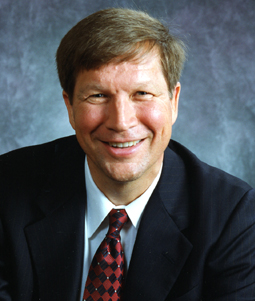 We’ve known for months that Year One would produce disappointment because of the Penn National Effect: The reckless election-year exaggeration of the tax revenues gambling would yield. Blame also Gov. John Kasich (R), who held the implementation of the electorate’s will hostage while he extorted still more money from the industry, and sliced the pie thinner by adding racinos. But don’t blame the casinos — they’re just getting out of the starting blocks.
Shocking! City councilmen in Springfield, Massachusetts, decided not to query MGM Resorts International too closely about how much the company would spend on a downtown casino. ($850 million sez MGM, $800 million according to Mayor Domenic J. Sarno, no specific amount according to the host-community agreement … tiny little oversight, that last bit.) They voted unanimously to put MGM’s project before their constituents. They also revealed what tipped their hand — and the very reluctant one of Mayor Sarno — in MGM’s direction:
Springfield Casino Overview Recommendation Final
Winning criteria included an “immersive” site downtown, “Reuse of historic structures and integration into city fabric … Strong outward focus.” Penn National couldn’t match MGM on those points. Assuming that voters don’t throw the council’s decision back in its face (in which case we re-start the merry-go-round with Penn National), MGM will go before the Massachusetts Gaming Commission for very deliberate consideration that could stretch into next spring. Rest assured that Jim Murren isn’t waiting by the phone.
In a characteristically free-associative speech, across the state in Everett, the one and only Steve Wynn said the 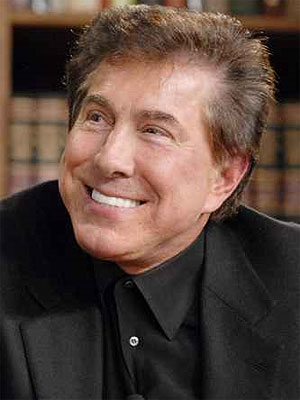 sort of things only Steve Wynn does, even confessing that he can’t tell one slot machine from another. (A slight exaggeration, I suspect.) What other casino executive would dare to wax rhapsodic to the effect that, “for the last 800 million years, since multicellular life appeared on this planet, the story of life on this planet is basically the function of three primordial forces: the energy of the sun coming through our atmosphere, water, and plants that make oxygen“? Anyone familiar with Wynn’s Las Vegas properties can vouch for their emotive effect, their atriums, skylights, their memorable use of color and texture. It’s a message that seems to resonating in Everett — helped by a more inspiring design that the log-cabin lodge he offered Foxborough, where a snooty, Wynn-style customer base gave him the boot.
When Wynn pitches Everett voters on the importance “fanciful and unusual food, beverage, entertainment, convention, and hospitality places,” his essential message isn’t that much different from that of Gary Loveman, who called for greater emphasis on amenities last week in Biloxi. The difference lies in Loveman’s lugubrious manner and equally characteristic (and pessimistic) formulation of a similar theme as a do-or-die ultimatum. There are several reasons why the problem in Biloxi was as much with the messenger as the missive (Loveman is a poor ambassador for the importance of upkeep) and we’ll see them showcased as Wynn Resorts and Caesars Entertainment (and financially strapped Foxwoods Resort Casino) grapple for the Boston market. In terms of liquidity, type of facility being proposed and recent track record, the logical choice — all sentiment aside — is Wynn. But several local electorates have to weigh in on the matter before battle is well and truly joined.

Hi Fred,
I’m leaving this comment because I can’t find any contact info on the site. Anyway, your external links all start with http// – they are missing the colon (supposed to be http://) and thus all of your external links are broken.
” the logical choice — all sentiment aside — is Wynn”
Hands Down!
All broken links should now be fixed. My apologies for the inconvenience.