

Update/Correction: I’m reliably informed that dog racing (see below) is illegal in Massachusetts and will remain so, praise be. Also, Neil Bluhm is now wooing Millbury for a slot-parlor site. Except for Raynham Park, all slot-parlor applicants are under the gun. If they don’t negotiate ‘host community’ agreements by early August, they’ll miss the Oct. 4 cutoff date for submitting voter-approved agreements. Confusing much?
Somebody thought better of literally floating a trial balloon to demonstrate the height of Mohegan Sun‘s projected hotel tower in Palmer. The Mohegans balked at the $20,000 cost of clearing a path through the woods  and then cutting down trees to create a launch pad. I’m not making any of this up, by the way. As the Springfield Republican reports, Linda Leduc, Palmer’s town planner, thought that ‘conducting such a test without a site plan indicating building location, landscaping, lighting and other details “is very misleading.“‘ I mean, could anybody back in Vegas have imagined the incredible hulk that is Fontainebleau if its builders had simply hung a weather balloon at a height approximating the top of the building?
Would-be slot-parlor owners and their potential host cities have been showing a distinct lack of urgency about cutting deals, even though their proposals are going to be the first ones before the Massachusetts Gaming Commission. If the race goes to the swift, then Raynham Park in Taunton has a few furlongs on the competition. Taunton’s referendum will be held in a little over a month — and the track is 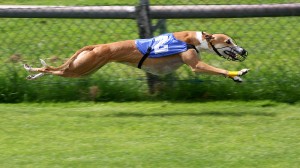 partnering with Greenwood Racing, owner of Parx Casino, whose record speaks for itself. Rival Plainville Racecourse can’t hope to get before the voters until early September. (Hard Rock International‘s West Springfield vote might get pushed into October, to avoid getting trampled by the Eastern States Exhibition.) In Raynham Park’s favor is a promise to rebuild the facility using unionized workers. However, if Raynham is tapped for the slot parlor, it also means the return of dog racing, a “sport” that S&G opposes, so we view these events with very mixed feelings.
Two other wannabe operators remain in holding patterns. Cordish Cos. is orbiting Leominster and hoping the third time’s the charm, having been rebuffed by two other towns. Neil Bluhm doesn’t have anywhere to land, either, meaning that dark-horse contender Plainridge could outrace some of the casino industry’s thoroughbreds. Regulators might like the Cordish proposal best, partly in view of the company’s strong cash flow and largely for geographical diversity … if Cordish can sell Leominster on what Salisbury and Boxborough ixnayed.
On a comical note, opponents of the proposed MGM Resorts International casino in Springfield have been rebuffed by the MGC. Not having gotten their anti-casino act together, they wanted more time before the July 16 referendum to make their case to voters. The ‘host community’ agreement’s particulars are practically old news at this point and MGM’s project isn’t exactly a sudden revelation, either. Casino opponent Dr. Mark Mullan plaintively wrote state officials that, due to spending disparities between MGM and its adversaries are such that the MGC needed to “level the playing field.” I’m sorry, Doc, but un-level playing fields are a constant of the democratic political process.
“How can they say ‘the voters have had their say’ when the voters aren’t allowed to hear opposing viewpoints? It taints the entire process,” Mullan adds. I sympathize … but how many delays are needed to ‘un-taint’ the process? Who decides when the opposing views have been sufficiently heard? As a great man once said, democracy is the worst political process — except for all of the alternatives.
(For the record, S&G urges a “yes” vote in all Massachusetts casino referendums, leaving it for the state to sort the wheat from the chaff.)
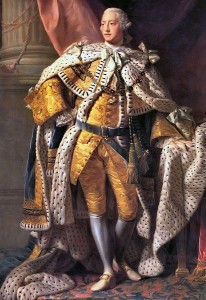 Even if one assumes that Compact #2 between Bay State Gov. Deval Patrick (D) and the Mashpee Wampanoags for a Milford casino meets with the approval of the Interior Department, there’s a new bubble in this soap opera. A tranche of documents newly submitted to the Interior Dept. presents a new obstacle to the tribe’s hopes. Activist Michelle Littlefield and friends have combed through 66 years worth of documentation and found no evidence of federal recognition of the Mashpee Wamps prior to 1936. If that is indeed the case, it would quash the tribe’s hopes of getting around the Carcieri v. Salazar ruling. In essence, Carcieri holds that if your tribe wasn’t federally recognized by 1934, then — for casino purposes — it essentially doesn’t exist. The Mashpee band, in turn, points to a treaty with King George III. Considering that what became the United States fought an eight-year war to be rid of House of Hannover, the irony is pretty thick. This may be the first time that the Treaty of Paris has been referenced in a casino negotiation. And if the treaty doesn’t do the trick, tribal counsel Arlinda Locklear maintains that there are other loopholes through which the Wampanoags may be able to extrapolate eligibility. It looks like a triple-bank shot from here, but that’s why people like Ms. Locklear get paid the big bucks.
Elsewhere in Indian Country … the Chickasaw Nation of Oklahoma having thought better of extending its reach into Louisiana and Mississippi by buying two “extremely outdated … 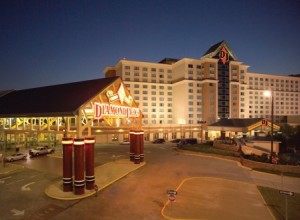 woeful” and very bankrupt DiamondJacks riverboats, senior creditors decided it was better to own them instead of selling them. The Shreveport– and Vicksburg-berthed vessels will be captained by the same casino-management company that runs Bally’s Tunica and Resorts Casino Tunica, both of which were salvaged from the ruins of Colony Capital‘s fallen gaming empire. The two DiamondJacks boats were jettisoned by Isle of Capri Casinos when that company was in freefall back in ’06. The next owner, Legends Gaming, itself capsized only two years later. Having fallen so far, the two casinos will really be bucking the odds to get back into a competitive position.
Americans might find it odd that Sheldon Adelson‘s $22 billion (complete with private airport) EuroVegas could be undone by Spain‘s smoking ban. But it could. Perhaps Iberian politicians should reserve their  umbrage for Adelson’s insistence on limited criminal immunity and that the government securitize some of the gargantuan debt he will accrue — pretty rich demands of a very impoverished country. (Why would one insist upon being exempt from bans upon “gambling by minors and gambling addicts, and money laundering” unless one were contemplating violating those very laws, I ask you?) “The bulk of Aldelson’s [sic] job-creation proposal would be in the construction and tourism sector,” reported the Christian Science Monitor, “mostly as low-income jobs – precisely the kind of economic model that …” sent Las Vegas into ruin in 2008, and is blamed for ongoing unemployment and other maladies in Spain.

“Having fallen so far, the two casinos will really be bucking the odds to get back into a competitive position.” They were low budget dumps a long, long time ago.