

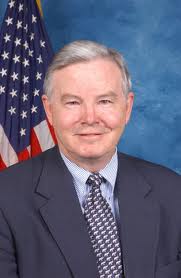
 It was a somewhat mixed victory for the casino industry. Rep. Joe Barton (R-TX, left) revived a 2012 initiative, in the form of his Internet Poker Freedom Act, legislation that he’s been promising for a couple of election cycles now. However, contrary to the hopes of Gary Loveman and like-minded members of Big Gaming, Barton doesn’t seek to legalize Internet at the federal level, although there would be a federal set of regulations which individual states could opt into or out. His bill, much narrower in scope than rival legislation by Rep. Peter King (R- N.Y.), would free up individual states to legalize Internet poker without fear of federal interference. Ergo, it’s still a state-by-state issue. However, that very narrowness ought to give King’s bill a better chance at passage. The American Gaming Association kicked off its post-Fahrenkopf era by saying it was “pleased” by the news, but remained exquisitely noncommittal — poker-faced, you might say.
Everybody wins. A federal appellate court in the District of Columbia has tossed out an inane IRS policy whereby overseas players were taxed on every bet they make in U.S. casinos (yes, even when they lose). The court deemed the taxmen’s justifications a “non-sequitur.” The news should be welcome to everyone except the tax collector.
Gambling for charity? Although the idea didn’t work for the failed Foxwoods Resorts Casino project in Philadelphia, that’s not stopping Penn National Gaming from proposing that two-thirds of its would-be Philly casino be placed in non-profit ownership. A corresponding portion of EBITDA (not profit) would go right into the coffers of the City of Philadelphia’s pension fund and school district. According to company spokeswoman Karen Bailey, “Penn Hollywood’s proposal sets itself apart from the rest of the applicants, and this is something we want the general public to know. No other applicant is providing two-thirds of its cash flow from their proposed casinos to city schools and pension funds, and no other applicant can even match that.”
With so much EBITDA being offloaded into civic coffers (to say nothing of Pennsylvania‘s stiff tax rates), it’s a good thing Penn is keeping its planned investment to $480 million. It’s going to have recoup its investment on suddenly attenuated cash flow. Then again, on Penn’s budget, it will be easier to break than will the highly budgeted Wynn Resorts and Isle of Capri Casinos proposals.
Penn got good news from the Nevada Gaming Control Board, which approved its split into a REIT and a casino-management company. Since 90%  of the former’s taxable income has to go straight to shareholders, the onus to make capital improvements at Penn’s casino will fall upon the management entity. The REIT hangs onto fast-fading Penn properties in Perryville and Baton Rouge and leases everything else to the management company.
Displaying a shaky grasp of history, Commission Chairman A.G. Burnett “said Penn’s REIT was the first for the gaming industry and it might be a concept for other casino companies to explore.” Uh, no it wasn’t A.G.: Barry Sternlicht did the same thing with the ITT Sheraton casino properties 15 years ago. Several other companies toyed with the notion — including Station Casinos — but “REITmania,” as I dubbed it at the time, was a short-lived phenomenon.
Casino Life magazine takes a look at MGM Resorts International‘s latest experiment with ‘new urbanism.’ Don’t ask me why that picture of MGM’s Springfield project is the lead image is in the story. I just write the stories, folks, and I hope you enjoy this one.

“said Penn’s REIT was the first for the gaming industry and it might be a concept for other casino companies to explore” Before I even saw your response, I was thinking Sheraton/Sternlicht as well.