

Instead of being left to rot, Hard Rock Hotel & Casino Sioux City will be permitted to resume construction, with a view toward a late-summer opening. That good news was handed down from the Polk County District Court bench. If Penn National Gaming‘s Argosy 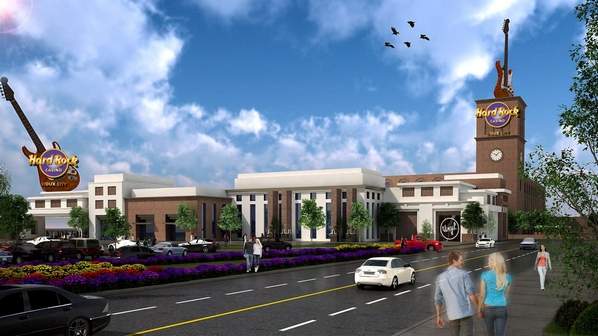 Sioux City had its way, the HRH Sioux City would be in limbo until a lawsuit had been thoroughly adjudicated. Deeming HRH an “indispensable party,” the presiding judge opined that “The effect on SCE’s gaming license from a temporary stay is significant, if not drastic. It would very likely lose its financing. It would lose millions of dollars already spent. The project would likely come to a halt.” It would also default on a Credit Suisse loan, contended HRH prexy Bill Warner, while Penn argued that Warner knew the risks when construction began. Besides, its argument ran, an up-and-running Hard Rock casino would have a prejudicial effect on the outcome of Penn’s litigation with the Iowa Racing & Gaming Commission. Judge Eliza Ovrom ruled that Penn “not likely to succeed on the merits,” given the IRGC’s wide discretionary powers. The IRGC’s is, however, using a procedure known as “operation of law” to keep Argosy Sioux City open and its workforce employed until the case is resolved.
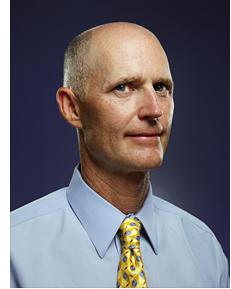 Is Florida‘s governor, Rick Scott (R) negotiating a new compact with the Seminole Tribe? A billion dollars in Seminole revenue sharing runs out in 2015. Ergo, great stock is being placed in a hyper-vague statement issued by Scott’s office. “Governor Scott is focused on renewing the state’s compact with the Seminoles to get the best deal for Floridians … the governor’s immediate focus is the future of the Seminole compact.” That could mean Scott is engaged in intense negotiations or that he’s merely thinking positive thoughts. (“Gary Bitner, the tribe’s spokesman, said he is unaware of any negotiations.”) However, it firmly places him on the sidelines of legislative jousting over whether to expand private-sector gambling in Florida. Said state Sen. Bill Galvano, “we have to give deference to the governor, and that could create a time issue for us going forward on other aspects of gaming.”
House Speaker Will Weatherford (R) has made any casino expansion “contingent” upon amending the constitution to make further such expansions subject to statewide vote. Between that and the delicate nature of Scott’s negotiations, would-be casino developers may be checkmated for the remainder of this legislative session. Scott is resistant to state Sen. Garrett Richter‘s push for an independent gambling-regulation body, removing a power that currently resides with the governor’s office.
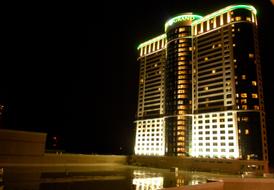 Cannibalism as a form of survival is central to both Foxwoods Resorts Casino and Mohegan Sun‘s respective pushes into Massachusetts. Bay State residents spent $554 million at the two tribal casinos in 2012 and if the Connecticut casinos have to be sacrificed to recover that revenue closer to the source, so be it. The motherships are hurting, Foxwoods having lost 34% of its peak revenue since 2005 and Mohegan Sun suffering a similar fate (down 31%) since 2007. “I wouldn’t say we have to be in Massachusetts. We want to be in Massachusetts,” said Foxwood CEO Scott “Woody” Butera a bit disingenuously.
The tribal pair is already besieged from east (Twin Rivers Casino) and west (Resorts World New York), prompting Moody’s Investor Service analyst Keith Foley to observe, “Having something compete with yourself is sometimes better than competing with others.”
Debt-laden though it is, Caesars Interactive, is busy agglomerating social-gaming applications. The latest, Pacific Interactive, could be worth as much as $30 million to Caesars. It’s the latest in a string of mid-priced and astute purchases the company has made in the social-gambling sphere. $148 million in recent acquisitions translated into $290 million in revenue last year.

That’s the first time I have ever seen Caesars and astute in the same sentence.