

 Las Vegas‘ premier casino companies have been showing their wares at the J.P. Morgan Gaming, Lodging, Restaurant & Leisure Management Access Forum. Among the pilgrims was Wynn Resorts CFO Matt Maddox, who reported that Wynncore is increasing revenue per available room in the 8%-9% range and has an optimal amount of conventioneers (20%) in its current guest mix. Wynn believes it can extract $800 million to $1 billion (Really?) a year from the Boston market, and thinks ROI will be strong despite the 25% tax rate. It also hopes to steer its lucrative international players — two thirds of the customer base — to Boston.
In Macao, Wynn will be reinvesting in Wynncore Macau, even as Wynn Palace moves forward, so that the two properties can be competitive with each other. The company sees no problems getting the construction labor it needs. It’s bullish on Japan, predicting casino legalization in May or June.
Representatives of Las Vegas Sands said their company would have “an absolute seat at the table,” should casinos be approved in the Land of the Rising Sun. They also predicted this would have a domino effect, opening South Korea to casino expansion. Sands Cotai Central, in Macao, isn’t expected to outperform Venetian Macao, due to the latter’s table play and shopping mall. Sands is in no hurry to sell the latter. It’s standing pat in Las Vegas (i.e., no completion of the St(ump) Regis tower-ette, focusing on pushing ADRs up as it “expects the market to get healthier.”
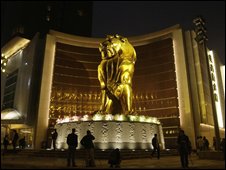 MGM Resorts International was in a sunny mood about the Las Vegas Strip, forecasting a more than 10% increase in revenue per available room, driven by its value properties, not (as in the recent past) its luxury ones. In Macao, the company is content with a 9%-11% market share, pending completion of its high-end Cotai Strip casino, which will be half again as large as MGM Grand Paradise. As for Japan, MGM counseled patience, noting that it would take until at least mid-2015 for regulations to be promulgated. The company thinks it’s as competitive as anyone but expects to have to take on a local partner.
Characterizing locals play as “healthy [and] stable,” Boyd Gaming said it expected a modest growth in cash flow, achieved by eking out savings in marketing expenses, coupled with a slight increase in play. (Does this sound like whistling past the graveyard to you?) Boyd is also looking for help from the extension of its B Connected program to its Peninsula Gaming properties. It furthermore expects B Connected to increase visitation from its Louisiana customers to IP Biloxi and vice versa. Little cannibalization, beyond the early stages, of Delta Downs‘ business is anticipated when Golden Nugget Lake Charles opens.
Interestingly, CEO Keith Smith and CFO Josh Hirsberg opined that 85% of their online players in New Jersey haven’t visited Borgata in two years. They also said that Boyd is holding off more-aggressive marketing of its site until all the bugs get worked out (aka, “working through technology issues”). In tacit response to Elliott Associates‘ move on Boyd this week, Smith and Hirsberg “noted that they remain open to doing transactions that increase shareholder value, which could involve either asset dispositions or acquisitions.” (Emphasis added.) If Elliott is trying to lure Boyd into a REIT structure, management shows no signs of taking the bait.
