

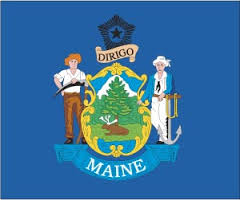
 Six gambling-expansion bills were mowed down in Maine‘s state Senate last night. Three of the quashed proposals would have provided some form of Native American gambling. (A fourth would have allowed racinos to go from 3,000 slots to 4,500.) Pleasant Point Passamaquoddy Tribe Chief R. Clayton Cleaves lashed out at the state for having a lottery but barring tribes from so much as wagering on beano. “This is not about fairness. It’s about race, color and creed. … We’re just trying to get jobs on our reservations, just like everyone else in this state.”
Casino opponents, however, were motivated in part by Maine’s lack of a cohesive structure for gambling expansion. The latter has been achieved willy-nilly, via a series of referendums. “Before we move forward we should do so cautiously and judiciously. We want to establish the proper policy,” said state Sen. Andre Cushing (R), although some gaming supporters were having none of it. “They’ve had more than enough time to come up with a strategy or policy to address that,” rejoined Indian Point Passamaquoddy Tribe Chief Joseph Socobasin. His sympathizers in the senate lamented that the tribes had to go through the Lege in order to achieve this sort of economic development. Even Gov. Paul LePage‘s support for the Passamaquoddy (and favorable votes in the House) weren’t enough to turn the tide.
Despite the excitement of Western operators cracking the South Korea casino market, it may not be a land of plenty. Currently a $1.3 billion/year market, it’s no Macao, even though stronger product would probably change that number dramatically. One of the basic problems — a challenge not even faced in Singapore — is that South Korean citizens can’t set foot in any but one of the country’s casinos. And that’s unlikely to change when Caesars Entertainment and Lippo Ltd. open their Korean casino in 2018. Since it will have to make its nut off of tourists, Caesars better have a big Chinese-player database ready and waiting.
* In New York State, the Seneca Tribe is angling for a fourth casino, somewhere in the Rochester area. But the town board of Henrietta was having none of it last night.
* Soon-to-be Harrah’s Gulf Coast (currently Grand Casino Biloxi) appears to be onto something with chef Kelly English‘s planned Magnolia House restaurant. If you love seafood, the menu is mouth-watering and the design concept seems fairly innovative.
* FinCEN compliance is a costly business. Just making a mistake on the paperwork can set you back $1,500, says Dr. David G. Schwartz. Per capita, not many people make $10,000-plus casino transactions, I’ll warrant. But the costs of noncompliance are so high it must be a serious thorn in the industry’s side.
