

Iowa casino regulators took a strong stand in favor of the status quo, after playing it so cool they had expansion advocates fooled. Following the guidance of their own studies, they shot down the Cedar Crossing Casino project, citing its adverse economic impact on other  casinos in the area. Dissenting commissioner Dolores Mertz called for a “market-driven” casino industry in the Hawkeye State: “As a farmer, if I really believe that in agriculture, I’d be really remiss not to do that in gaming.” If they’re going to go to Nevada-style survival-of-the-fittest mode, they’ll need to go to a new process and set of criteria for approving casinos. As it is, the Iowa Racing & Gaming Commission is charged with preserving the financial health of the industry and Cedar Crossing didn’t pass that test.
“Beyond dismayed.” That’s how Penn National Gaming expressed its reaction to the denial of its Argosy Sioux City supplication. Penn was appealing the loss of its license (due to the loss of its nonprofit partner) and requested a one-year extension. It’s also tried — and failed — to halt construction of a Hard Rock-branded casino in downtown Sioux City. Penn may yet take the IRGC to court but, as of now, has until July 1 to surrender the keys to Argosy.
Caesars Entertainment continues to sell assets. The latest is an Atlantic City golf course with an historic cachet.
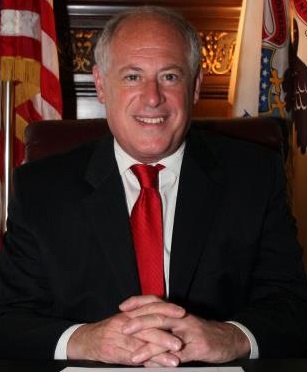 Illinois may not be able to defer the issue of casino expansion much longer. Gov. Pat Quinn (D, left) is keeping his powder dry but a temporary tax increase is slated to sunset in January, giving legislators motivation to approve more slot machines — and soon. Pensions, education, infrastructure are three hungry mouths that have to be fed. But one hangup is a provision to give the state ownership of a Chicago casino, something that’s against existing Illinois law.
“Caleb Melamed, an attorney for the Illinois Gaming Board … also questioned the size of the Chicago casino, saying the proposed 10,000 gambling positions would make it the largest casino in the world. Supporters contended there was enough demand to support a gambling operation of that size in Chicago.” When you put it that way, state Rep. Robert Rita‘s proposal for a smaller Chicago casino and four outlying ones seems downright sensible. (Perhaps this was Rita’s intent all along.) Wannabe racinos say it’s 900-1,200 slots apiece for them — and no exclusion of any track — or they won’t play ball.
Interestingly, the Chicago Crime Commission weighed in against state ownership and in favor of a private-sector solution to a Chicago casino. Sites under consideration are Macy’s, the James R. Thompson Building and the Congress Plaza Hotel. Mayor Rahm Emanuel, however, has taken a vow of silence on the issue until issues with the city’s pension fund are resolved.
Lawmakers, given the choice between budget cuts which hurt their constituents and casino expansion (which hurts other casinos), may find this whole thing a no-brainer. The Illinois Casino Gaming Association is protesting but it’s having a hard time making its voice heard.

Interestingly enough, I was looking to book a golf trip at A.C.C. just last week and noticed not link to Caesars what so ever. Now it makes some sense. Too bad, that is a wonderful asset, but I guess non-core when you need to make debt service payments.
Did you see the latest Trump quotes? On the prospect of bidding on the Bills:
The NFL prohibits all personnel — from owners all the way down to the assistant equipment manager — to have any involvement with gambling operations. Trump’s name is on two Atlantic City casinos, the Trump Taj Mahal and the Trump Plaza, but he said he owns only a small stake in those properties anymore.
“It’s a public company, and I could sell instantaneously,” Trump said. “So that wouldn’t be a conflict at all.”
Trump Entertainment is a public company???
If memory serves, Trump Entertainment Resorts’ debt is publicly held (some of it by Carl Icahn) but the company’s stock is not traded. As usual, Trump appears to be blowing hot air.