

That’s the conclusion of a Suffolk University/Boston Herald poll. It shows support for casinos having fallen to 37%, while opposition has risen to 47% of those surveyed. That’s a dramatic reversal from a February poll by the Herald 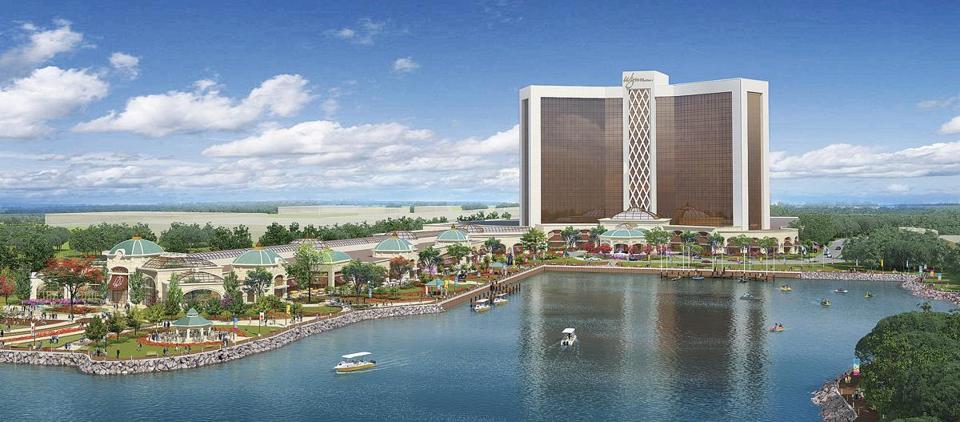 which showed casinos enjoying 51% support against 37% opposition. Asked “whether it makes sense” to open a casino in Everett or Revere, 55% answered “neither.” Polls should not influence the Supreme Judicial Court in its deliberations about whether a repeal question goes upon the November ballot or not. But they should give casino developers a scare. To the extent that casinos have been making the news lately, it has usually been in a negative context. Whether it’s Wynn Resorts or Mohegan Sun or even Penn National Gaming or MGM Resorts International, they need to start campaigning like their lives depended on it.
* For years, casino expansion in New York State has been sold on the basis of what it would do for the Catskills region. However, the enabling  legislation rather carelessly included Orange County, a “choke point” that could interdict gambling revenue otherwise destined for places like Grossinger’s Catskill Resort Hotel, destined for redevelopment by Foxwoods Resort Casino … or is it? Foxwoods is said to be rethinking its plans. Ominously, that means it could be the second defector from the Catskills market, after Len Wolman‘s Trading Cove Associates threw in the towel. Predictably, all the big dogs — Caesars Entertainment, Genting Group, Cordish Gaming, Penn National Gaming and Saratoga Casino & Raceway have piled into Orange County. Can you blame would-be Catskills casino owners for thinking, “Why bother?”
* Detroit is making a high-risk bet that casino wagering will stabilize and remain steady for the next nine years. Since the city’s bankruptcy plan leans heavily on casino taxes, this really is a sizable wager, one that is bringing doom-and-gloom prognostications from detractors. True, casino revenue fell 5% last year and is down 6% so far in 2014. But that’s nothing compared to some of the swoons we’re seeing in Illinois and Indiana. What’s more concerning is that Detroiters who will be seeing smaller, post-bankruptcy paychecks will play less, exacerbating the problem.
 The City of Detroit, which relies upon casino taxes for 17% of general-fund revenues has to watching all of this with apprehension. Says one pundit, “Casino revenue is not a traditional, long-term revenue source.” Adds another, “What if Detroit has another 5 percent decline next year? Then their budget is already way off track.” Adding to this concern is a lack of younger players stepping up to replace those who are — pardon my indelicacy — dying off or drifting away. Greektown (“a casino that’s basically just changing the carpet”) is a worry, down 7%, but MGM Grand Detroit — despite being the city’s flagship property — slipped 6% last year. Trying to peg Detroit’s future fiscal health to trends in casino revenue must be as easy as nailing Jell-O to a wall.
* The horseracing industry must be so proud of California Chrome owner Steve Coburn and his trigger-happy comments.
