

 Casino companies in Massachusetts “could” or “may” team up to fight the repeal effort currently underway. How about “must” or “should”? If ever there were an imperative for joint action, this is it. Perhaps even Wynn Resorts and Mohegan Sun could bury the hatchet. (This presumes that the eternally unpredictable Steve Wynn won’t erupt and storm out of the Bay State altogether.) MGM Springfield President Michael Mathis (above) promises joint action, adding, “there is a real sense that we all need to work together to educate the Commonwealth about all the benefits of the gaming law.”
(Perhaps this explains the American Gaming Association‘s blunderbuss lobbying effort; see “Freeman’s strange plea.”)
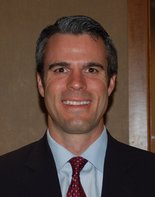 The Boston Globe describes the major players — including Penn National Gaming — as “highly motivated.” “It would not surprise me if $10 million is spent on media ads,” forecasts gaming regulation scholar Paul DeBole. “If
we see money coming in from competing interests from out of state, that certainly is going to change things and may escalate things,” adds Penn spokesman Eric Schippers (right). That would be karmic payback for Penn, which hasn’t hesitated to sandbag business competitors with vicious and misleading ad campaigns in the past. But do Mohegan Sun, Foxwoods Massachusetts, MGM and Wynn deserve to pay for Penn’s sins?
Casino developers hope to cobble together a supporting coalition ranging from Big Labor to the horsey set, from small-business owners to aspiring employees. MGM, which seems to be leading the effort, says a grassroots campaign is the first step, saving the heavy artillery for later (closer to the vote). Knowing that it’s outgunned — probably $5 to $1 — and with thin donor ranks, Repeal the Casino Deal is putting all its chips on grassroots-level lobbying. Says a spokesman, “that will carry much more weight than the messaging the casinos will put on the air waves.” They can always invoke the Almighty, now that the Episcopal Diocese of Western Massachusetts has chipped in three grand, putting its money where its mitre is.
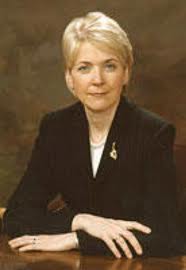 The only sure winner is Secretary of State William F. Galvin, who can confidently predict a high election turnout. It’s hard to tell where gubernatorial aspirant and Attorney General Martha Coakley (D) stands on the issue, as she seems to be evading a confrontation with opponent Don Berwick (D) on the issue. The latter wants to lock horns on July 7 in Boston. Coakley has agreed to the date but not the venue. She wants the debate held in Springfield, where she can be guaranteed a sympathetic audience. She also wants the topic expanded to include Internet gambling.
Among the Massachusetts pols looking toward November with bated breath is Speaker of the House Robert DeLeo. Overconfident lawmakers 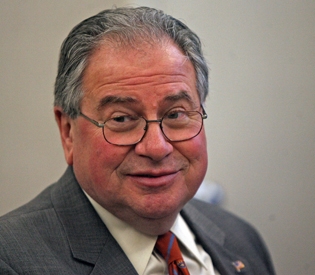 had already booked casino tax revenues into the budget. “We’ve already started to use it and to depend upon it,” admitted DeLeo, who now finds that he took a $54 million gamble. “Obviously should the voters decide otherwise in November, we would have to make some difficult decisions in terms of cuts … That’s one of the issues I thought about when I woke up this morning, actually.” If that’s the case, DeLeo — who isn’t termed out until 2016 — will still be around to feel the electorate’s wrath.
False report? Shares of Bwin.Party Digital Entertainment Plc bounced nicely on news that the company was putting some or all of itself up for sale. Bwin quickly denied the whole thing and blamed the company’s valuation problems on a proxy fight with shareholder Jason Ader. Much as what happened when he tried to undermine International Game Technology CEO Patti Hart, Ader was pacified by putting one of his allies on the board of directors. Bwin says it is looking at other means of increasing shareholder value.
