

Indiana Gov. Mike Pence (R) may be swimming against the tide when he opposes casino reforms that he slimes as gambling expansions. For instance, for safety reasons alone, moving  riverboat casinos ashore is an idea that was overdue 10 years ago, when Hurricane Katrina showed the peril of the water-borne casino. As House Public Policy Committee Chairman Tom Dermody (R) says, “We want to try to do something like we would for any other industry or another other business in our state that was struggling.” Dermody’s committee voted the reform package through, 10-2.
Admittedly, switching to live table games from electronic ones at Hoosier Park and Indiana Grand just might constitute an “expansion.” Rather than be an obstructionist, perhaps Pence ought to horse-trade onshore casinos for continued electronic table games at the racinos. He has a surprising ally in Full House Resorts CEO Dan Lee, who offers the following rationale for the live-dealer provision: “If it wasn’t an expansion of gaming, they wouldn’t be asking for it.” He’s also against onshore casinos mainly because his own company, rebounding from Ohio gambling, can’t afford it. The expansion Dermody would like to see is in the form of hotels and amenities. As he said, “”I don’t think we can ignore opportunity to put some commonsense measures in that help the industry as a whole.” Amen to that.
* Rather than take their troubles lying down, Delaware‘s racinos have launched a PR campaign, heavy on the infographics. Dover Downs is the primary mover behind this push for  tax cuts, as well as credits for capex improvements and for marketing. (Delaware tracks are levied a confiscatory 43.5%.) Gov. Jack Markell (D) has proposed satellite slot parlors, filled by the racinos’ unused slot quota, but that seems to do more for government than the tracks, which will be in competition with themselves.
“They are a huge pillar to our local economy,” Dover City Manager Scott Koenig says of the racinos, but Dover Downs finds itself on the ropes financially. Were it a horse, they’d probably shoot it. Slot revenues have fallen $77 million in the last seven years and the track was on pace to lose over $190,000 last year. The casino’s mortgage has been collateralized against a $42 million loan. Pension plans have been frozen since 2011 and employee co-pays for health benefits are up. More than three-fourths of Dover Downs’ hotel rooms are routinely comped. Since its two fellow tracks, Delaware Park and Harrington Raceway & Casino, don’t have hotels, they’ve no love for giving Dover Downs tax credits for those comps.
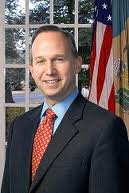 Considering that Gov. Markell raised casino taxes in 2009, the tracks are playing to an unsympathetic audience (barring a dramatic increase in state revenues). Propping up the horsey set with a 10% subsidy doesn’t help, either. The days of a 30% maximum tax rate must seem like a distant memory. Since Delaware is a tax haven for corporations, the tracks find themselves paying more than all corporate income taxes combined. “You’ve got to know how to make it, or not make it, under the rules you’re dealing with,” said a Markell aide, frostily.
“The discussion needs to be, ‘What do we do if one of the casinos closes?’ Because maybe their business plan isn’t where it needs to be with the challenges that are being faced,” said House Majority Leader Valerie Longhurst (D), preparing for the worst. Between financial losses and impending new competition from Pennsylvania, apocalyptic thinking is not inapt.
Laments Dover Downs CEO Denis McGlynn , “The message that [Delaware’s policy] sends to anybody that comes to this state and is successful is that we’re going to tax you into break even and expect you to stay. That’s a backwards way to approach economic development,”
