

Two years ago, Ohio was grappling with what J.P. Morgan analysts called “a sluggish ramp” for its casino industry. He may 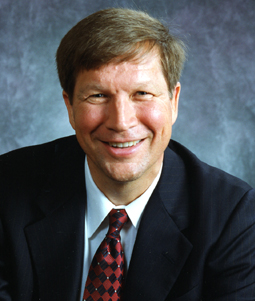 have been against casinos before he was for them but Gov. John Kasich‘s supersized version of predecessor Ted Strickland‘s envisioned industry is finally pulling its weight. According to figures from the American Gaming Association by way of Oxford Economics, casinos and racinos in Ohio are creating 8,000 indirect jobs and 9,525 direct ones, for an economic impact of $3 billion, including $1.5 billion in gambling revenues. Since the AGA study predated the opening of two Penn National Gaming racinos, that impact is now greater still.
The gaming industry was also responsible for $917 million in tax revenue, a point that AGA President Geoff Freeman would like to drive home as he attempts to educate current presidential candidates on the beneficial effects of the casino industry. “Gaming in no longer a niche, novel industry but an economic driver in Ohio that is providing a path to the middle class in Columbus, Cleveland, Cincinnati and beyond,” Freeman wrote. At least he doesn’t have to have a ‘teachable moment’ with Kasich.
* Meanwhile, MGM Resorts International was trying to pry open the Georgia market to gambling. With HOPE Scholarship funds  swamped by demand, there may be receptive ear for state Rep. Ron Stephens‘ proposal to augment the Peachtree State with six casinos. Among those testifying in support was MGM Resorts International CEO Jim Murren, reiterating his case for a billion-dollar Atlanta megaresort, adding that Georgia could learn from other states’ missteps and wasn’t venturing into uncharted waters.
Stephens’ plan would include multi-million-dollar upfront fees but a casino-friendly tax rate of 12% (the next-lowest on the East Coast would be Massachusetts‘ 25%). It’s put a scare into the Georgia Lottery Corp., which is voicing fears of cannibalization, while Gov. 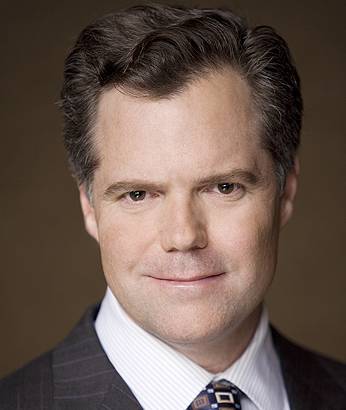 Nathan Deal (R) emphasized social issues. “Money is not everything. Society has to sometimes deal with the consequences of how you generate it,” he said. However, Deal has sent out vague signals that he might not block a constitutional amendment if it makes its way out of the Legislature. So far, Murren is taking the lead for the casino industry but he has an ally in the Georgia Horseracing Coalition, which would like to see a wagering bill make it out of committee this session. (One died last year between a favorable state Senate committee vote and inaction on the Senate floor.)
* Meanwhile back in Las Vegas, MGM has — without any great urgency — been mulling whether or not to succumb to the current epidemic of REITmania sweeping the casino industry. (The latest 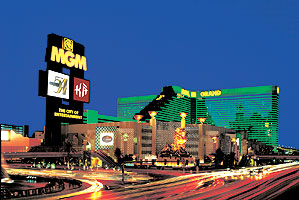 outbreak has been spotted at Isle of Capri Casinos.) The idea got a raspberry from Susquehanna Financial Group analyst Rachael Rothman, who wrote there was “no need to do anything fancy” at MGM, just mind the P&Qs and do some cost-cutting rather than attempt a potentially expensive REIT conversion. Rothman was echoed by Morgan Stanley analyst Thomas Allen, who outlined several intriguing alternate scenarios (including the oft-mooted sale of Crystals). Investors love REITs because they’re designed for instant financial gratification (which would explain why Caesars Entertainment Operating Corp.’s creditors support a REIT spinoff) … but they also raise a lot of questions about the future of companies that go that route.
* Caesars Palace admitted to essentially being a rogue operation in a $1.5 million settlement with the Nevada Gaming Control Board. “Highly deficient internal controls” were just the tip of the iceberg in a 15-count mea culpa by Caesars. The knowledge that Caesars Entertainment CEO Mark Frissora “created a pressurized operating environment” at Hertz Global Holdings during his tenure there does not augur confidence that Caesars will straighten up and fly right.
* One swallow doesn’t make a spring and a strong July was a false portent for Connecticut‘s tribal casinos. Mohegan Sun‘s slot revenues dropped 9% and Foxwoods Resort Casino‘s fell 10%. With Penn National Gaming going great guns up in Massachusetts, it doesn’t look to get any better from here.
* Somebody fax Business Insider a clue. It breathlessly breaks the news that “the high rollers … stick with baccarat.” No sh!t, Sherlock, and just when did this revelation occur? Then again, how much can you trust a reporter who thinks that James Bond‘s preferred games are 21 and poker? At least you’ll find out what “rolling chip volume,” that shibboleth of Macao VIP play is.
* Credit Sheldon Adelson for breaking with industry tradition again. Interim Sands China CEO Rob Goldstein will hand off his portfolio on a permanent basis to Wilfred Wong, late of the National People’s Congress. This shatters the longstanding precedent of reserving the top jobs in Macao for imported 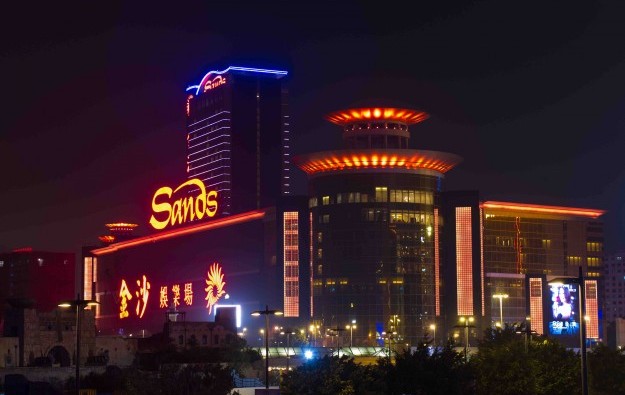 Westerners. While industry analysts don’t appear to think that Sands is in great danger of losing its concession — especially in view of its gargantuan capital investment — neither do they think that this move will hurt its chances for renewal, come 2020.
Thinking outside the box like this is not without risk. Acknowledging the obvious (i.e., Wong’s lack of casino experience), 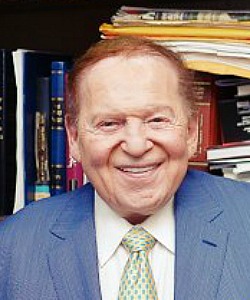 Adelson wrote, “We reached outside the gaming industry to find an executive who is highly educated, distinguished and ethical. Wilfred has a unique combination of private- and public-sector experience we think will be invaluable to the company at this point in our history.” A Harvard man, Wong is currently an exec in the construction industry. Sands’ overseas leadership posts turn over a lot, so it will be interesting to see if Wong brings stability to the ship.
Wong comes aboard at a time when Sands has reduced Macanese staffing 11% by way of attrition. Other operators are described as hamstrung from making job cuts because they need the manpower 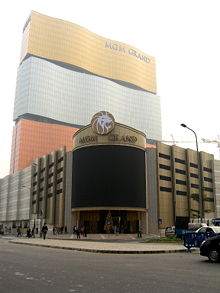 for impending openings on the Cotai Strip. (F0r instance, Galaxy Entertainment hired 5,000 workers for Galaxy Macau Phase Two.) What does that leave to cut? Advertising! Budgets for casino advertising are described as retreating to 2012 levels, indicative of industry pessimism. MGM Grand Paradise (left) was particularly aggressive, slashing promotion 27%. Wynn Macau wasn’t shy, either, cutting 22% of costs, while Sands reduced its outlay 14%. It does, after all, have more casinos it has to market.
* Medicinal marijuana and casino licenses don’t mix, said the Nevada Gaming Commission, bowing to federal law. In a bit of inadvertent comedy, the NGC could barely muster a quorum, three of the five members having to recuse themselves because they also represented members of the medicinal-pot industry. (A ricochet from ex-Gov. Jim Gibbons‘ having packed the NGC with attorneys during his brief tenure.) M Resort CEO Anthony Marnell was among those who argued in vain that gaming licensees, being the most thoroughly investigated people in the state, were the most squeaky-clean to run a medical-marijuana business. Our condolences.
