

Judge David Campbell accepted the Tohono O’odham Nation‘s assertion that it could make as much money from Class II electronic-bingo machines as it could from conventional slots. And that’s bad  news for the tribe. While it can open a Class II facility without the blessing of the state, Campbell ruled that the Arizona casino can’t compel Gaming Director Daniel Bergin to certify it for Class III. This is the first time Campell has ruled against the Tohono O’odham, causing rival Gila River Indian Community President Stephen Roe Lewis to take a victory lap: “For years, the Nation has claimed that their position is invincible in court. The judge’s ruling shows otherwise, handing the Tohono O’odham a clear loss and changing the momentum of this case.”
Even so, the news can’t have been half as bad for the Tohono O’odham as the House of Representatives’ passage of Rep. Trent Franks‘ hypocritically labeled “Keep the Promise” act, which would mothball 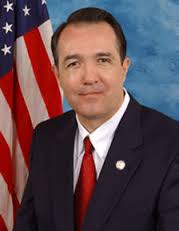 the casino until 2027. (If Native Americans “break” one promise to Uncle Sam, there’s hell to pay from Rep. Franks, left.)
Campbell also dismissed claims against Gov. Doug Ducey and his attorney general for urging Bergin to deny certification to the Tohono O’odham. Bergin is investigating whether the nation committed fraud by promising not to build a casino near Glendale, under a 2002 compact, then doing so. The nation responds that the law on which Bergin’s case rests doesn’t apply to the compact in question.
* In another setback for troubled Chukchansi Gold Resort & Casino, the long-suffering casino sacked 100 workers due to uncertainty over when the place would reopen. The National Indian Gaming Commission wants to see steady, long-term leadership before it issues the go-ahead. Well, that’s not going to happen anytime soon now that three of the four members of the Picayune Rancheria of Chukchansi Indians‘ gaming commission resigned. Commission chairman Norm Derosiers complained that the tribal council will “not respect the independence of its tribal regulatory agency and … knowingly and willingly will not comply with its own tribal gaming ordinance.”
Of the mass layoff, casino COO Christian Goode said, “I frankly don’t have work for people to do.” The NIGC is looking into the matter but, lacking firm governance, the casino’s future looks to be as stormy as its past.
* The calls for austerity from Macao‘s government are causing some blowback on City Hall. A coalition described as being comprised of 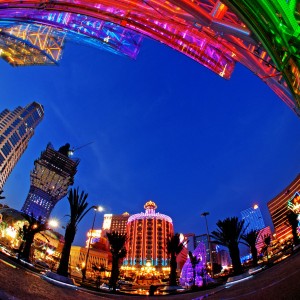 “residents, local activists, academics and legislators” is demanding that the government get its own house in order and stop spending casino-tax money on things like panda exhibits. Or as University of Macau economics professor Jose Duarte put it, “For all the amount of money and reserves accumulated, the financial reserves have not translated into an improvement in everyday life for residents.”
One government minister, at least, has acknowledged that Macao binged on subsidized celebrations of the anniversary of its handover 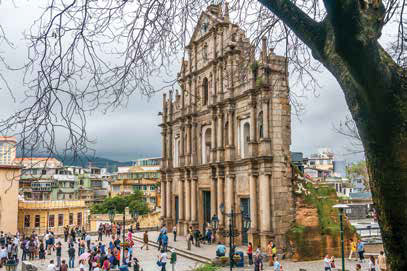 from Portugal. “There have been too many celebrations,” allowed Secretary for Social Affairs & Culture Alexis Tam. Particular criticisms have fallen on the murky disbursements of the Macau Foundations, whose outlays have exceeded those for public housing or for police. Although casino revenue generates 80% of the government’s budget, public works projects like a new ferry terminal (five years past due) and a rail system (completion TBA and 3X over-budget) are not seeing a trickle-down effect.
