

This just in: Nevada has lowered the boom on DFS operators.
The fat’s in the fire for daily fantasy sports — and New Jersey might want to rethink its push for unregulated sports betting in the Garden  State. According to the New York Times and Wall Street Journal, the FBI is probing DraftKings. The Justice Department is said to be “trying to determine whether daily fantasy games are a form of gambling that falls outside the purview of the exemption” in UIGEA for ‘skill-based games.’ Both FanDuel and DraftKings are conducting their own, internal investigations and the latter went into a defensive crouch, stating, “It is entirely predictable that the government would follow up on the misleading reports about our industry.” In other words, when the news is bad, kill the messenger.
DraftKings executive Jon Aguiar seems to have helped draw federal scrutiny when he popped up on an Internet chat board to advise “players how to deposit funds and play in contests in states and countries where the games are prohibited.” The feds may also be looking into the gross disparity between players and winners. According to the NYT, “91 percent of player profits in daily fantasy sports were won by just 1.3 percent of the players.” A mere 11 players accounted for 17% of entry fees.
With New York State Attorney General Eric Schneiderman (below) investigating insider trading at DFS sites, FanDuel tried to get ahead 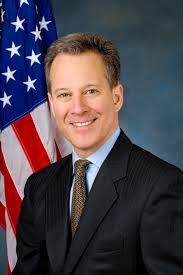 of the rapidly unfolding scandal. It “announced that it was permanently barring its employees from playing daily fantasy games on any site, and was prohibiting employees of other companies from playing on its site.” Nor is the problem confined to states where DFS is legal (45 of the 50). A Louisiana resident, Artem Genchanok, self-reported that he had wagered with both DraftKings and FanDuel despite their illegality in the Pelican State.
With DFS expected to be a $14.4 billion industry by 2020, the sports and media worlds have dollar signs glazing over their eyes. NBC-TV, Comcast, Fox Sports, the Dallas Cowboys and the New England Patriots, to name a few, have been lured into the DFS  web. At the same time, politicians are rapidly coalescing into a faction aimed at slowing the DFS phenomenon. They include Reps. Frank Pallone (D, left) and Hakeem Jeffries (D), and Sens. Frank Menendez (D) and Richard Blumenthal (D). The latter is trying to bring the Federal Trade Commission into the act, writing it that “If employees are using insider information to unfairly advantage themselves over others, this may constitute fraud regardless of any other federal or state gambling statutes.”
In a not-unrelated story, the NYT went in-depth on the complicated skein of DFS, offshore gambling sites and illegal domestic gaming, “an old-fashioned shadow banking system where billions of dollars pass through paper bags, car trunks, casino chips and various money-laundering schemes.” It would be an understatement to say that we’ve got a problem. Or, as the Times said of UIGEA, “the law has been a spectacular failure.” It created: the demimonde in which DFS flourishes, a black market for illegal Internet gambling within the U.S., and ingenious new methods for offshore ‘Net casinos to circumvent ostensibly forbidden transactions.
Luddite legislation, such as Sheldon Adelson‘s Restore America’s Wire Act is likely only to exacerbate the problem by 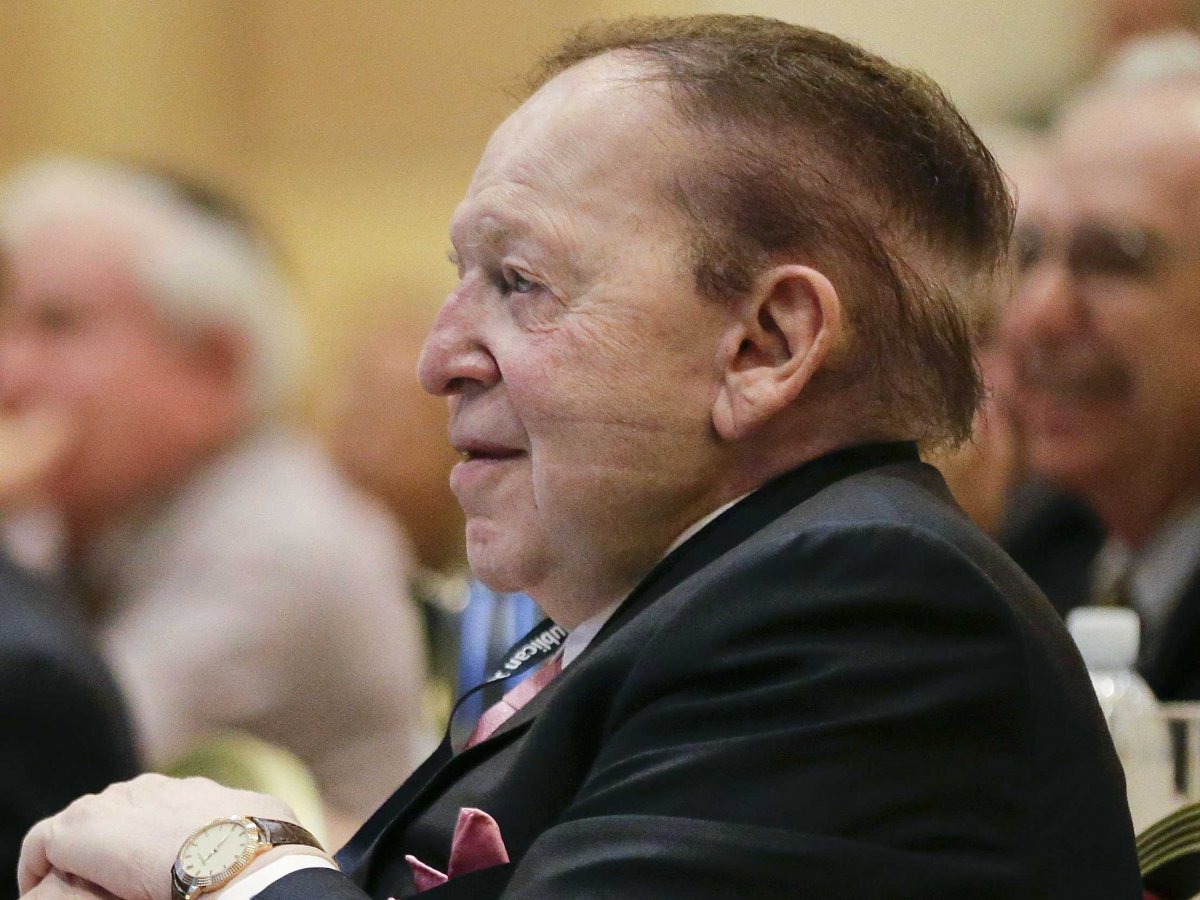 eliminating the legal, regulated market for Internet gambling and driving the action further underground. Not that the illegal component of the industry seems particularly intimidated: one New Jersey company was hosting 100 Web gambling sites virtually right out in the open. Reports the Times, “One Texas-based ring processed $1 billion during a single season of the National Football League before it was shut down.”
And if you can’t find a domestic site to take your action, never fear: Offshore sites are only too happy to advise you how to structure your transactions to get around UIGEA. One Panamanian site takes bets behind the front of a British safety-equipment vendor. Former online-gambling operators and poker pros now fill the ranks of the DFS industry. The latter would be easiest to scotch, at least to a degree, by amending UIGEA to remove the games-of-skill exemption. Nonetheless, the illegal gambling operators’ best friend is Congress and its opposition to legal online wagering. When Internet gambling is outlawed, only outlaws (including the Mafia) have Internet gambling, to coin a phrase. In one piquant instance, a Texas gambling ring racked up so much money that its boss simply bricked $20 million into a wall. (Talk about built-in home equity!)
American Gaming Association President Geoff Freeman seized upon the NYT report to reiterate the message that “illegal  gambling is rampant in America, funds criminal activities, lacks integrity and fails to protect consumers.” Turning to DFS, Freeman wrote, “more legal clarity is necessary. Today, daily fantasy sports operate in a ‘gray area’ of the law according to many regulators. We believe that it needs to be black or white – either daily fantasy sports are legal and our highly-regulated casinos have the opportunity to participate in this marketplace if they so choose, or they are illegal and appropriate enforcement should take place.”
I can’t argue with the man.
