

Florida‘s Seminole Tribe is pursuing a two-track policy in the court of public opinion. On the one hand, it has announced 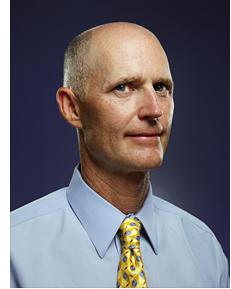 “significant progress” in its talks with lawmakers and Gov. Rick Scott (R, left). On the other hand, it is taking legal measures to keep its table games operational after their Oct. 29 expiration date. The latter argument leans heavily on the Indian Gaming Regulatory Act, pointing out that private-sector casinos in Florida will be allowed to continue operating electronic blackjack at Sunshine State parimutuels, putting the Seminoles at a competitive disadvantage. In an attempt to placate the state, the tribe would continue revenue-sharing payments despite being under no obligation to do so.
The Seminoles issued a statement saying ” the Tribe remains hopeful that a positive outcome will result,” but Gov. Scott didn’t rise to the bait. He may be the least of the tribe’s problems,  considering that the new compact must be shepherded through the conflicting agendas of the Florida Legislature. Lead negotiator Rep. Jose Felix Diaz (R) floated a variety of revenue-sharing and timeline scenarios but said nothing had been agreed to as yet. As summarized by the Tampa Bay Times, said “the matter is complicated because legislators are divided over most of the issues and any final agreement must appease those who want to protect their local parimutuels, tamp down gaming expansion or use the compact to generate more state revenue.” It sounds like “significant progress” still leaves us a long way from the finish line, with that Oct. 29 fail-safe point looming.
* Domenic Sarno must be feeling his oats. The mayor summoned MGM Resorts International CEO Jim Murren to a Thursday to discussion the succession of cutbacks being planned for MGM Springfield. It’s not only a snub to project President Michael Mathis, it tells you how important this project is to MGM that Murren would hop on the company jet to try and smooth things over with Springfield city officials, who have been through a series of unpleasant surprises.
* Pennsylvania lawmakers took a field trip to Harrisburg International Airport to debate the idea of augmenting it and five other airports — Erie, Lehigh Valley, Philadelphia, Pittsburgh and Wilkes-Barre\Scranton — with slot machines. 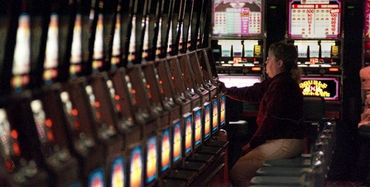 (Airsinos?) Aerodrome officials needn’t fear a massive influx of slot fleas: Only ticketed passengers would have access to the game. A bill before the Lege would earmark 10% of the revenue garnered for airports, dividing the rest between slot operators, the state and municipal service funds. The allotments could be as few as 25 machines for smaller airports to 1,000 for Philadelphia’s.
“Proceeds will certainly allow for an enhanced visitor experience since the proceeds, in most cases, will improve or support airport  operations and the airport infrastructure in some fashion; without increasing the ‘cost per enplaned passenger,'” testified Harrisburg International Airport Executive Director Tim Edwards. However, Philadelphia International Airport, which stands to gain the most, is opposed. Testified CEO Mark Gale, “we believe that the placement of slot machines would significantly detract from the path we are on and negatively impact the positive image of the airport we are working so hard to create and deliver.” Gale’s message could give lawmakers significant pause.
* A wave of renovations and new construction are bringing renewed glitz and glamor to the “Redneck Riviera.”
