

In a step backward for public transparency, the Nevada Gaming Commission has decreed that privately held casinos no longer have to disclose their financial performance. Not only 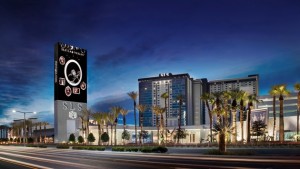 will this spare SLS Las Vegas the embarrassments that are its quarterly reports, it means that you, dear reader, will no longer have a window into the performance of SLS, The Cosmopolitan of Las Vegas or any other casino that is not the property of a publicly held company. The NGC found that it “was an additional burden to both the casinos and state regulators to review these financial earnings.” It wouldn’t be a burden if the Nevada Gaming Control Board were funded to an appropriate level instead of being on an austerity budget and, as for the companies’ auditors, isn’t that what they get paid to do? S&G fails to see the burden. Besides, the financial data will still be shared with the Control Board, which will keep it under wraps.
The NGC rationalized its decision by saying that out-of-state private businesses weren’t subject to disclosure, so it was a double standard to impose that requirement on Nevada ones. The Culinary Union replied that this would “only exacerbate the ‘too-big-to-regulate’ problem in Nevada gaming by concealing more information from the public.” It’s hard to argue with, especially with all the havoc wrought by private equity firms during the casino collapse of 2008.
* Where there’s smoke there isn’t always fire. Such was the case at Paris-Las Vegas, where smoke invaded the spa but no fire could be located. Guests in Caesars Palace were not so lucky yesterday. A fire in the convention center forced guests in 140 rooms of the Palace Tower to be evacuated and three employees were sent to the hospital with smoke inhalation. It’s been a fiery week on the Las Vegas Strip. Last Friday, a fleet of fire trucks was dispatched to Treasure Island, after a grease fire broke out in Senor Frog’s. The rapid-response capabilities of the Strip’s fire crews are definitely getting a workout.
* When is casino advertising too much? When it gets too rich for your budget, that’s when. In the Land Down Under, Sportbet CEO Cormac Barry is calling for regulators to restrain the amount of advertising bookmakers can buy. Last year, $112 million was spent on buys by company’s Sportbet. Barry is trying to present his case as altruism, saying he sought to “strike an appropriate balance between legitimate community concerns … such as whether wagering advertising is appropriate in certain public areas or on sporting team merchandise.”
Barry’s hands are not exactly clean: Sportbet was criticized earlier this year for making book on Triple J’s Hottest 100, a song competition aimed mainly at youngsters. Triple J said, “It is concerning that gambling companies are aiming directly at Triple J listeners. We cater to a young audience, an audience that is at a very vulnerable point of their lives financially.” Sportbet was unrepentant. Triple J fans, meanwhile, were encouraged to donate the money they might otherwise have wagered to the Australian Indigenous Mentoring Experience.
