
Macao gaming operators are off the hot seat as it appears increasingly inevitable that their casino concessions will be renewed rather than re-bid or nationalized. However, that may come at a price — literally. The  casino magnates aren’t completely out of the woods, as a series of public tenders must be held between 2025 and 2027. But near-term, five-year renewals look more and more like a given. Experts on the industry foresee either a one-time fee or a hike in the 39% tax rate as the quid-pro-quo for those five-year renewals. Also, Secretary for Economy & Finance Lionel Leong has called for casino operators to address unspecified “shortcomings.”
Further clouding the picture, concession renewal will fall into the tenure of whoever succeeds Fernando Chui as chief executive (he’s termed out from running again). At least all that speculation about the Macanese government allowing additional concessions appears to be dead and buried.
* Skill-based slots continue to look like the Edsel of the casino industry, or at least are meeting with a firm “meh” from decision makers. States one article, “It has been reported by Gambling Compliance that European casino bosses have come to the conclusion that it’s not economically viable to incorporate skill-based slots into their premises as they don’t provide a sufficient return on investment.” Some European operators advise caution, but others reject the newfangled games outright.
Said one operator, “we should be sticking to our core business. If you put skill-based elements into a bonus that you play next to your neighbour it can become a bit more exciting, but in general it’s like putting table tennis … into a casino.” Simon Thomas, CEO of London‘s Hippodrome Casino is equally emphatic about giving SBS games the boot. “Skill-based slots are doomed to failure because they annoy gamers who don’t see why they should play their favourite game in a slots version and they disappoint gamblers who want to play a straightforward slot game and feel they are at a disadvantage,” he told Casinopedia.
(Not all innovations are being rejected. Casinos Austria is moving ahead with e-sports. While Caesars Entertainment has temporarily pulled back from SBS at its Atlantic City casinos, both Borgata and Foxwoods Resort Casino are persisting with them.)
* Moving into the 21st century, the Indiana state government has repealed the admissions tax on casinos, an anachronism from the eras when riverboats had to cruise. It inflicted some collateral damage: Horseshoe Hammond was deterred from holding meetings because it 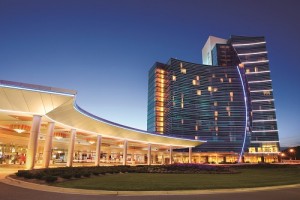 had to pay for attendees as casino customers. Nobody will be happier than Boyd Gaming, whose Blue Chip paid the highest rate in the Hoosier State. As Blue Chip grew, so did the problems created by the admission fee (which the company eats rather than passing on to consumers). Said company spokesman David Strow, “the admissions tax penalized us for the significant investments we’ve made in nongaming amenities, such as hotel rooms and restaurants. We incur a separate admissions tax each time a customer moves between the casino and those amenities.” To add insult to injury, the admission tax had to be counted as revenue and be taxed as such.
There will be some losers in the new arrangement, namely the counties and cities that host casinos. Gary will have to make up $480,000 somehow over the next four years and Blue Chip’s port of call, Michigan City, will be $590,000 out of pocket in that time. It’s not a painless solution but it removes an archaic practice of scaring up revenue.
* Jack Cleveland has a problem which a change of name and 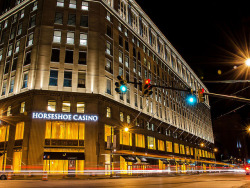 management has failed to cure. When it opened under the Horseshoe banner in June 2012, it grossed $26 million. What followed were three straight years of decline, an uptick in June 2016, followed by another drop-off last month. It now grosses $15 million — a loss of over 25% of its business. Cleveland ought to be Ohio‘s top casino market but instead it’s the black hole of Dan Gilbert‘s gaming aspirations.
