
Can it really be 20 years since casinos were legalized in Detroit? (It’s been 18 years since MGM Grand Detroit opened.) Time flies and so does casino lucre — straight into city coffers. Then-Gov. John Engler 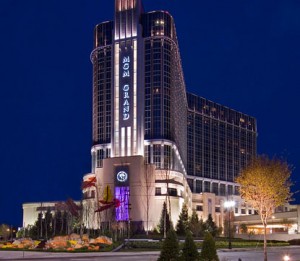 (R) had to dragged kicking and screaming into approving Motown casinos but they’ve been a winning bet, backstopping city revenues during a painful civic bankruptcy. Over the first 20 years of the life of the Michigan Gaming & Revenue Act, $4.5 billion of casino taxes have flowed into state and city bank budgets. The casinos employ roughly 6,800 Detroiters are do business with 1,400-odd firms.
Public education has been a prime beneficiary, to the tune of $1.9 billion. Regulation also appears to be working smoothly, including the state’s self-exclusion policy, which has weeded out 4,000 gamblers. Legalizing casinos in Detroit was a rocky passage and the civic administration had to fight off heavy pressure for cronyism. Two decades later, casinos as civic policy looks pretty good.
* Sands Bethlehem President Mark Juliano has paid the price for letting the cat out of the bag on the abortive MGM Resorts International sale. He abruptly resigned his position, effectively 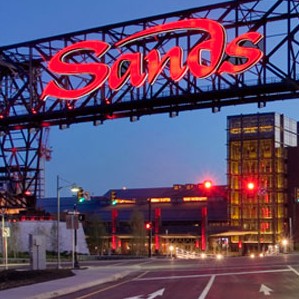 immediately, accompanied by some well wishes from Las Vegas Sands. The latter lost no time in filling Juliano’s chair, promoting Senior Vice President of Finance & Administration Brian Carr to the top spot. The company said there wouldn’t be any slacking off as work will “continue in the efficient and professional manner to which we are all accustomed.”
Bethlehem Mayor Robert Donchez, for one, professed himself stunned by the events. So, too, did South Side Task Force Chairman Robert Hudak, who said, “I thought he was doing a great job,” something the casino’s numbers bear out. “His charge was to grow the business and he did that. I’m just not sure what’s going on over there anymore.”
Juliano left as abruptly as he came, having taken over from Douglas Niethold on the day that CEO Sheldon Adelson aborted sale talks with Tropicana Entertainment. Niethold’s predecessor, Robert DeSalvio, fled Sands for Wynn Resorts, where he’s now empowered with developing Wynn Boston Harbor. One thing about top execs at Sands Bethlehem: They never seem to last long.
* When Attorney General Jeff Sessions toys with reinterpreting the Federal Wire Act, he’s not just messing around with states that have Internet gambling but also those with online lotteries. It’s a constituency that just grew by one as New Hampshire Gov. Chris 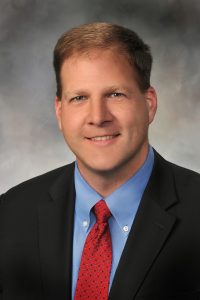 Sununu (R) affixed his signature to a bill legalizing online lottery play in the Granite State. New Hampshire thus joins Illinois, Michigan, Kentucky and Georgia as online-lottery states … and they’re not liable to go quietly. For instance, the Georgia Lottery funds the public education system, so the Peachtree State can be expected to dig in its heels. An online lottery is also lurking amid Pennsylvania‘s gaming expansion package — one that is needed to close a yawning state budget deficit. Internet-based lotteries could also be on the ballots of West Virginia and Massachusetts in 2018. If Sessions tries to stem this tide, he could be on the wrong end of history. Don’t expect Sununu and other state governors to take a restricted Wire Act lying down.
