
American Gaming Association President Geoff Freeman gave Atlantic City the thumbs-up this week, pointing to the reinvention of Trump Taj Mahal as Hard Rock Atlantic City and to the as- yet-undisclosed joint venture between Caesars Entertainment and MGM Resorts International. He even gave Glenn Straub a mulligan, including Revel in his list of good things to come. Stopping on the Boardwalk (not literally) during a speaking tour, Freeman said, “The Atlantic City market is an exciting market right now. There is no doubt the market right-sized itself over the last couple of years. While the closing of the facilities was painful for many, it strengthened the community; it strengthened Atlantic City’s potential for the future.”
Moving to subject of sports betting, Freeman said, “No state is better positioned than New Jersey and no location is better positioned than Atlantic City to quickly capitalize on it. This area has been talking about it for years, so there is going to be no debate if we should have it. The casinos are already scouting out where the sports books will be located … What is exciting is that people are spending money in the city and not taking it out of the city. I think that should give people confidence and a quiet optimism about the future.”
Warning that “the market only has so much capacity,” Freeman cautioned, “it’s important to keep that at a stable level.” Considering 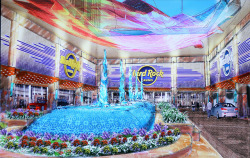 that Atlantic City has already achieved a “stable level,” it’s hard to see how an infusion of new capacity could preserve that equilibrium, although the Hard Rock project does have the potential to grow the market. At any rate, Hard Rock is betting $500 million that it will.
As for potential sports betting, that includes e-sports. While the casino industry tries to figure out how to make money on the games themselves it’s already learned how to glean ancillary revenue from e-sports. After all, the players and their fans need hotel rooms in which to stay and restaurants at which to eat — areas in which the casino industry is almost indecently well-equipped. “We certainly  experienced a spike in our hospitality offerings — the hotel, food and beverage side of things,” said Caesar executive Kevin Ortzman of a March e-sports tourney on the Boardwalk.
“The fast-paced action, vivid graphics and often violent on-screen action is catnip to millennials, the audience casinos are targeting as their core slot players grow old and die,” reports The Morning Call. But getting the e-sports crowd onto the slot floor — that’s a bit of a problem. A less-reported-upon problem is that many of the e-sports crowd are too young to play casino games. For instance, Alec “Shock” Collins is three years away from being able to play a simple hand of blackjack. But with Wall Street pegging the e-sports market as being worth anywhere from $500 million to $700 million, escalating to $1.5 billion in two years, that’s a chunk of change that would have casinos salivating for a slice.
* Although Michigan has gone quiet on the Internet-gambling front that doesn’t mean the issue is dead. While the Lege is in August recess, state Sen. Mike Kovall (R) continues to tinker with enabling  legislation, undeterred by previous attempts in which ‘Net betting just ran out of steam on the floor of the Senate. His bill would restrict Internet-gaming license to brick-and-mortar casinos and would deal the state’s tribal industry in with a large measure autonomy (although it would be held to some of the same constraints as private-sector operators). MGM Grand Detroit, let’s say, would have to observe a year’s moratorium to allow Michigan tribes to amend their gaming compacts to be congruent with the Kovall bill.
Poker Players Alliance Executive Director John Pappas was downbeat, saying, “Michigan is progressing but rather slowly. The bill was updated a few weeks ago, but not all gaming stakeholders are satisfied with the changes. I don’t think we’ll see any more movement until the end of summer or early fall.” Still, any movement is preferable to none.
* Chalk up a “win” for New Mexico Gov. Susanna Martinez (R), who has bent the Pojoaque Pueblo tribe to her will and gotten them to sign a new compact that gives the state an increased share of the tribe’s 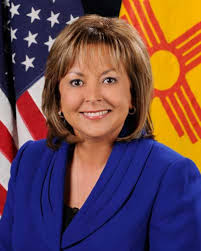 gaming revenue. Several factors put the squeeze on the tribe. It has lost its case before the Tenth Circuit Court of Appeals, which set a September deadline for compliance, so the Pojoaque were running out of time. A promised appeal to the Supreme Court never materialized. The state was putting the squeeze on casino vendors, including Bally Technologies, causing the Pojoaque to pull the plug on its leased slots and some of its card shufflers. A Justice Department official who had allowed the Pojoaque to continue operating its casinos while the case was on appeal was forced out by Attorney General Jeff Sessions. And, finally, the tribe was just plumb running out of money to fight Martinez. Game, set and match.
The Pojoaque Pueblo has the reputation of being rather a rogue outfit. In 1995, it got in trouble for operating a casino without a compact. Now the tribe will have to up its 8% tax levy to 10.5%. Although the Pojoaque would surely disagree, it’s hardly an excessive impost and it’s one to which all of New Mexico’s other casino-operating tribes have assented.
* Small wonder that Seminole Hard Rock Hotel & Casino in Hollywood, Florida, is expanding: It’s outgrossing all eight nearby parimutuels combined. The Hard Rock International casino took in $579 million during FY2016, outdone only by Seminole Hard Rock Tampa‘s $967 million. (To be fair, the latter operates in a less-competitive market.) Even when they don’t use the Hard Rock brand the Seminoles are raking it in: $383 million at Seminole Coconut Creek and $167 million at Seminole Classic Casino. By contrast, Isle Casino & Racino lagged behind at $153 million, the best performance in the private sector. The Seminoles having obviously built a better mousetrap, seeing as the world is beating a path to their door.
