
In today’s dog-bites-man story, a Wall Street analyst has belatedly concluded the obvious: that the casinos on Cotai will sap business from Macao proper. Global Market Advisors analyst Andrew  Klebanow wrote, “What the industry can expect to see is a pattern that was witnessed in Las Vegas, dating back to the opening of the Mirage in 1989 and the succession of casino resorts that opened on the Las Vegas Strip through the 1990s. Downtown Las Vegas devolved into a second tier gaming destination, attracting people with low-priced accommodations, cheap food and better gaming odds. Not only did that not stop the loss of market share to
 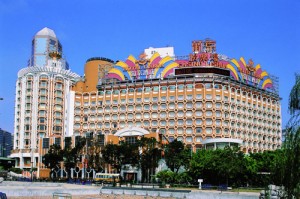 the Strip, it prevented downtown owners from reinvesting in their properties … In short, the Peninsula casinos with one or two notable exceptions, will continue to lose market share to those more alluring properties on Cotai.” Hey, if Macanese casinos start offering better odds for gamblers, is that such a bad thing?
Klebanow also predicted some reshuffling of the Peninsula casinos among existing operators, and possibly a few closures: “They will always enjoy the advantage of having properties that are easy to get in and out of … Some of those properties will be sold to more nimble 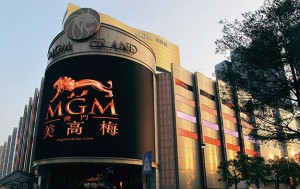 operators or to people and companies that think they can operate those casinos better than their predecessors. What is inevitable though, is the continued growth in market share by the casinos on Cotai.” The company under the most pressure will be Sociedade de Jogos de Macau, which won’t have a Cotai casino until sometime next year. There would also be a lesser amount of strain upon MGM Grand Paradise … or “my casino” as Stanley Ho called it.
Without contradicting the overall thrust of Klebanow’s report, Fitch Ratings‘ Alex Bumazhny had a more positive take. “While we expect 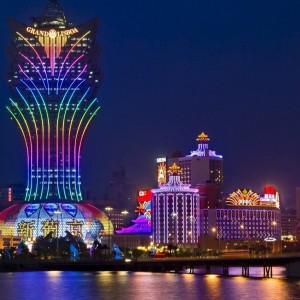 the centre of gravity to shift to Cotai over time, the recent better results of Cotai operators relative to SJM Holdings and MGM China has more to do with Cotai operators adding incremental capacity over the past two years or so, not necessarily just because they are more Cotai oriented. The casinos in the main downtown cluster – including Grand Lisboa, Wynn Macau and MGM Macau – are still doing fine, especially considering the new supply coming online on Cotai.” In other words, panic is very premature.
* Georgia‘s GOP state committee is firmly against casinos but has quietly dropped its aversion to DFS. What this bodes for the upcoming Lege one cannot say, at least not until DFS-related
legislation is introduced. As for state Sen. Brandon Beach‘s casino-enabling bill, it faces uphill sledding, as Republicans  overwhelmingly outnumber Democrats in both chambers. The Beach bill would put one casino in Atlanta (presumably MGM Resorts International‘s $2 billion proposal) and one in either Augusta, Columbus or Savannah, the last of which would presumably make the most sense, both in being the most distant from Atlanta and close to casino-free South Carolina. A cosmopolitan city — albeit one with an appalling homeless problem — Atlanta really has everything but a casino. One would help the state recapture some of the $600 million in casino revenues currently estimated to be fleeing the Peachtree State for North Carolina and Alabama. But don’t expect a breakthrough this year and probably not the next, although the Georgia electorate would look favorably on casinos.
* In Ohio, players who choose Hard Rock Rocksino will be able to fill up at the pump to, as a gas station is the latest amenity at the highly successful racino. It also displays canny diversification of 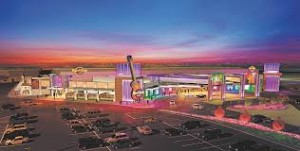 revenue on the part of the Seminole Tribe. By contrast, Jack Casino Cleveland is pushing back with hot air, promising an “electronic gaming concept” this fall. The only thing that’s falling at Jack Cleveland are its revenues, as the Seminoles continue to beat the pants off Dan Gilbert. “The business is healthier than it’s ever been,” claimed Jack Senior Vice President Mark Tricano but the revenues tell a different story.
“Anecdotally, I know people on the West Side who skip downtown and go to the Hard Rock Rocksino, and that’s mainly because of the amenities they have and the kind of experience they provide,” says KeyBanc Capital Markets executive Jay Masurekar. As for Gilbert’s Jack Thistledown racino, where Gilbert stashed the slots under the grandstand, Masurekar sniffs, “The building is not suitable for gaming.”
Now if Hard Rock allows players to cash out loyalty points at the gas  pump it will really have built a better mousetrap. Gilbert, meanwhile, has quietly reneged on the brand-new casino he promised Cleveland. “At this point, further expansion of gaming in Northeast Ohio, I don’t see as a prudent investment,” says Tricano. Translation: We can’t afford it.
* Australia has effectively banned Internet gambling and sports betting. Somewhere, Sheldon Adelson is green with envy.  Stateside, MGM has gotten off the fence regarding ‘Net betting and is launching it in New Jersey. It remains to be seen whether playmgmcasino.com and playmgmpoker.com can claw market share away from the Golden Nugget and back to Borgata.
