
No big surprise, the American Gaming Association has submitted an amicus brief in Christie v. NCAA et. al. The brief makes some normative arguments that are unlikely to sway the Supreme Court,  which will undoubtedly take a narrow view in weighing the constitutionality of the Bradley Act. For instance, “earlier this year, Americans bet an estimated $15 billion on the Super Bowl and NCAA Men’s Basketball Tournament alone, and 97% of those bets were made illegally.” That dog won’t hunt with SCOTUS, nor will citing public opinion polls that favor legalized sports betting. More to the point is the brief’s “PASPA has thus had the perverse effect of pushing an enormous market underground by way of federal decree while stamping out state and local efforts to adapt their own laws pursuant to their own citizens’ wishes.”
“Just as Congress cannot force a State to regulate its own citizens, Congress cannot prohibit a State from deregulating its own cit- izens. It is commandeering either way,” the brief continues, adding that the Bradley Act “violates the core principles of Federalism.” The 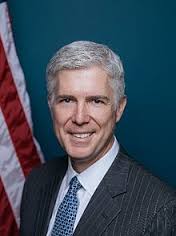 latter sounds like a pitch to Chief Justice Neil Gorsuch, a known adherent to Federalist doctrine. The AGA has clearly done its homework, citing cases dating all the way back to Alexander Hamilton. “There is no freestanding federal definition of illegal gambling,” the brief continues, noting that the “Illegal Gambling Business Act, for example, authorizes federal prosecution of multi-state illegal gambling conspiracies but prohibits only activities that operate in violation of state anti-gambling laws.” Noting that the Bradley Act prohibits states from repealing unpopular laws, the AGA states, “that is like saying shackles are not coercive because they do not require the wearer to move.”
The brief makes some of the expected arguments. To wit, that legalized sports betting makes point shaving and match fixing easier to spot, adding that “law enforcement in countries like China,  Russia, and India cannot rely on ‘crucial’ cooperation.” It goes on to argue that under-the-table sports betting is fueling organized-crime activities such as human trafficking and money laundering. (New Jersey state Sen. Raymond Lesniak gets a shout-out as an expert witness here.) The AGA even reaches back to the Black Sox scandal to point out that it was legal sports books who laid it bare. That’s not an argument that will admit Shoeless Joe Jackson into Cooperstown but it might be enough to get SCOTUS to put the Bradley Act into the shredder, freeing Americans to bet on sports.
* La Bayou is dead, long live the Golden Gate. Owner Derek Stevens has erected a spinoff of the Golden Gate featuring an expansion of the casino floor and a 20-foot elongation of the outdoor bar and a  new entrance. Stevens also purchased an adjoining alley “to develop more approachable and safe experiences for Downtown Las Vegas.” Said Stevens, “Golden Gate is an important landmark in Las Vegas’ narrative and it was our responsibility to revere its past. So many prominent figures have walked down Fremont Street Experience and into Golden Gate throughout the last century, so we intend to respect and relish its history, while introducing amenities suited for today.”
The new casino has a sports a spiraling chandelier “cascading downward in tiers of beveled mirror accents,” while those seeking more contemporary visual stimulation can revel in the 360-degree, 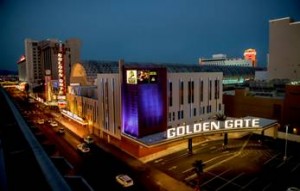 24-foot tower of TV monitors. (Something for everyone?) Gaming — 91 slots — seems almost an afterthought. There’s also a grand, marble rotunda, accentuated with 500-pound, gold velvet drapes. Backstage you’ll find a “massive” beer cooler, an expanded employee dining room and dressing rooms for the Dancing Dealers. Why is it that Las Vegas casinos feel that freaky dealers are needed in order to get me to play 21? At any rate, Downtown should be grateful for Derek Stevens’ commitment. He has delivered where others have faltered.
In other Downtown news, although the Downtown Grand has struggled to draw players, due to its off-Fremont Street location, business has been good enough to warrant another hotel tower, which has been green-lit by the city. There’s so much innovative thinking going on at the Grand that we’re encouraged by such signs of vitality.
* Wind River Casino in Wyoming gets a shout-out in the end credits for the movie Wind River. The casino doesn’t figure in the murder mystery, set on a Native American reservation and shot in Utah. However, it is partly financed by the Tunica-Biloxi Tribe of Louisiana, owners of Paragon Casino Resort, which dates back to 1994. The tribe has invested its money wisely. Writer-director Taylor Sheridan (scribe of Sicario) has fashioned a gripping saga that stands out like a pillar from a particularly flat crop of summer movies and features salient performances from Graham Greene and especially Jeremy Renner, our best exponent of the strong, silent type. If you’ve not seen Wind River I strongly suggest you do so.
