
MGM National Harbor continues to grow the Maryland casino market, while taking down its main competitors. (Would we call this a “category killer”?) In the meantime, the small casinos are doing 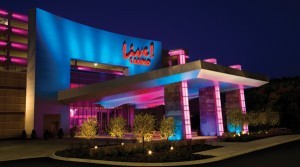 just fine. Last month Penn National Gaming‘s Hollywood Perryville was up 5% ($6 million), while Golden Entertainment‘s Rocky Gap Resort ascended 6% ($5 million) and Ocean Downs racino jumped 12% to $7 million. Things were not so rosy for Maryland Live, which grossed $45 million but fell 20% — worse than Cordish Gaming executives had predicted. (They thought it would be somewhere in the 15% range.) Horseshoe Baltimore did even worse, falling 21% and grossing $22 million.
As for the elephant in the middle of the room, MGM grossed $53 million, good enough to lift Maryland’s casino industry 37%. It’s clear that National Harbor is enlarging the Free State gambling market. It’s equally clear that its big competitors are walloped harder than just about anyone expected. The monthly grosses coincide with the news that MGM is selling National Harbor (as expected) to its REIT, MGM Growth Properties, making Jim Murren his own landlord. MGM Resorts International gets $462.5 million in cash and unloads $425 million in debt. The money that changed hands will go toward paying off construction costs. MGM Resorts will pay an annual $95 million lease on the mega resort — a bargain any way you look at it.
* “In Elgin, we’ve been very fortunate that we have had the riverboat over these last few years. But we’re definitely going to be at a crossroads coming up soon,” Senior Management Analyst Laura 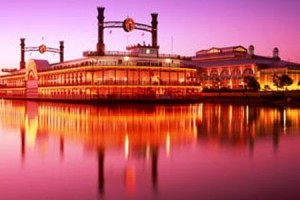 Valdez-Wilson. One fork of that crossroads is slot routes, which are cutting into the casino revenues that cities like Elgin and Aurora enjoy. If there’s a lackluster quality to roads and bridges in casino towns in Illinois, it’s probably due to the declining casino-tax receipts that have accompanied the rise of slot routes. Of course, it’s easy to just blame it on video gaming when casinos have never recovered from the Great Recession or a statewide smoking ban (not to mention that it’s more profitable for operators to redirect patrons to lower-taxed casinos in neighboring states).
In Elgin, the tax falloff has been over $14.5 million since 2006 (that’s the measure of the disparity — the cumulative amount would be much larger). What this means for places like Elgin and Aurora is less dough to blow on replacing city vehicles or dealing with juvenile  drug offenders. The opposite side of the coin-operated slot is that markets like Rockford and non-casino towns are seeing a boost in tax revenue from the 30% levy on slot routes. Fifteen towns surveyed saw an increase in slot handle of $200 million just over one year. Alsip‘s 61 machines generated $223,000 in tax revenue last year. That’s just one of several dramatic gains. They’ve taken the shine off the idea of a casino in Chicago and slowed legislative momentum toward casino expansion. As the state’s gaming commission wrote, “The numbers suggest that adding video gaming to the Chicago area has merely redistributed the revenues to the numerous gaming venues that now exist in that area.” It consoles itself with the thought that it means fewer dollars are going to Indiana.
* Plainridge Park racino is about to get some new competition. The Tiverton Planning Board voted overwhelmingly to approve  construction of a Twin River-branded casino 400 feet south of the Massachusetts border. When completed, the Rhode Island casino will have 32 table games and 1,000 slots. You can get plenty of slot action at Plainridge but players who are jonesing for some table action will no doubt spurn slots-only Plainridge Park and make a beeline for Tiverton. The move of the casino license from Newport to Tiverton was approved three years ago. (Already? Time sure flies.) It’s nice to see it coming to fruition.
* The Oneida Nation has been smarting over private-sector competition near its turf in upstate New York. So it must be somewhat gratifying to be named (again) as the best casino in the Empire State by Casino Player magazine. That was merely the  capstone on a litany of other awards showered on the tribal pleasure palace. The Oneida are pushing back against the competitors with a planned satellite casino in Bridgeport in addition to the already-open Yellow Brick Road Casino in Chittenenago (say that three times fast). The tribe can also take some comfort in the struggles of their new adversaries. Expected to generate $4 million a week, they’ve not come close save for an early spike at Del Lago Resort & Casino and a recent, $3.9 million week at Rivers Casino & Resort. There just wasn’t as much gambling fever in upstate as Gov. Andrew Cuomo (D) thought.
