
Could we see heavy-footed federal intervention in the MGM Resorts International vs. Connecticut tribes slugfest? Bridgeport Mayor Joe Ganim (D) hopes so. A supporter of Donald Trump‘s 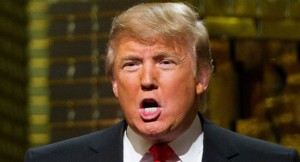 presidential campaign, he’s hoping the White House will stomp into the Nutmeg State fray, interceding on the side of MGM and the City of Bridgeport. Ironically, Trump himself tried to build a casino in Bridgeport in the payback, but lost out to what would become Foxwoods Resort Casino. During that dustup, Trump demonstrated his propensity for ethnic slurs, saying of the Mashantucket Pequots, “They don’t look like Indians to me … I look more like an Indian.” (The Clinton administration disagreed.)
“There’s a very specific reason why Joe hasn’t taken a hard line against Trump like other Democratic chief elected officials have done,” said political blogger Lennie Grimaldi. “One thing Trump does do is he keeps 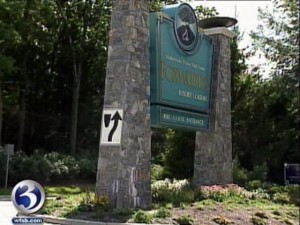 score. He keeps score of what people say about him, good, bad and ugly.” Adds author Jeff Benedict, an authority on the Foxwoods saga, “Look, I think there’s some titillating curb appeal to the idea of Donald Trump getting his revenge to old business opponents like the Mashantuckets” by nuking their satellite casino project. He adds, “Too many people smarter than me have been wrong in trying to predict Donald Trump’s motivations and behaviors.”
That being the case, it’s no question whether Trump’s warm fuzzies for Ganim would outweigh his antipathy to MGM CEO Jim 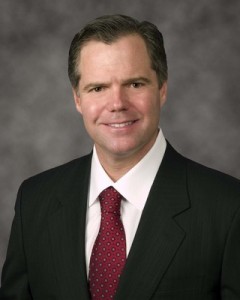 Murren. The latter, a Bridgeport native, prominently endorsed Hillary Clinton in the last election. The White House could direct the Bureau of Indian Affairs to find against the off-reservation casino being developed in East Windsor by Foxwoods and Mohegan Sun. That would be a gross overreach, particularly when one considers the hands-off attitude of the previous administration in the Mashpee Wampanoag‘s ongoing struggle to develop a casino in Massachusetts.
The East Windsor project is, at the moment, poised precariously on the federal fence, awaiting the pinkie-push that could tip it into the “yes” or no” category. Acting Assistant Secretary for Indian Affairs Michael Black wrote, “We find that there is 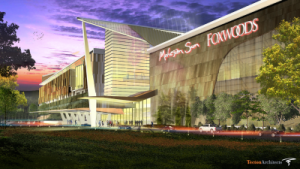 insufficient information upon which to make a decision as to whether a new casino operated by the Mohegan and Mashantucket Pequot Tribes would or would not violate the exclusivity clauses in the Gaming Compact.” That’s slightly ominous and, at minimum, leaves you wondering what additional information Black is waiting upon, Tribal spokesman Andrew Doba dismissed the playing of the Trump card as “complete speculation” but it looks like a real gambit from where we sit.
* Fifty-five percent of Americans now approve of sports betting, a 14% swing (and well outside the margin of error) from 1993, according to a new poll commissioned by the Washington Post and the University of Massachusetts-Lowell. “Literally, we’re at the 1-yard line, and it’s first-and-goal,” says gaming attorney Daniel Wallach — but an adverse ruling by the Supreme Court in Christie v. NCAA could move the gaming industry 99 yards back. Reports the WaPo, “just more than 1 in 5 sports fans (21 percent) have bet on professional sporting events in the past five years, and they’re more likely to be avid sports fans, men, pro football fans, nonwhites, and under 40 years old.” (Sounds like a fertile terrain for the gaming industry to reap.)
Support is bipartisan and, predictably, is highest among the active bettors, fantasy players and those with high incomes. Support among the coveted 18-to-49 demographic is 62%. Sports  betting is emerging from under the PR cloud cast over it by the Pete Rose scandal of 1989. Said American Gaming Association President Geoff Freeman, “As our industry expanded, we confronted a lot of fears, a lot of concerns, and what time has shown is that those fears and concerns were often misplaced.” As for the popularity of DFS, which is helping drive the higher approval numbers of sports wagering, Freeman says, “It begs a lot of questions for people. I heard it from owners in sports, I heard it from fans, I heard it across the board: What’s the difference between this and betting on sports? The simple answer is, there isn’t a big one.” We’ll see what SCOTUS has to say about that. Think of the casinos as the fans in the stands and the Supremes as the zebras, yellow flag at the ready.
* A Nomura Securities report on Genting Group may cause fans of Resorts World Las Vegas to feel their hearts sinking. 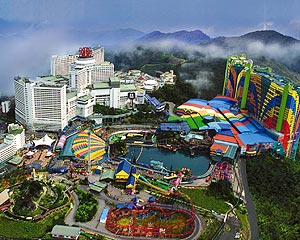 That’s because, in a period when capital is tight (by Genting’s own admission) the company is plowing $2.4 billion into its Genting Highlands megaresort in Malaysia. The expansion will include a 20th Century Fox theme park. Capex improvements to Resorts World Sentosa are also slated. Of Las Vegas there is nary a mention. One wonders if the January start date of construction will be postponed, as so many others have been.
* The Macao casino industry’s shift toward mass-market play has hidden benefits, particularly as regards diversity of revenue. 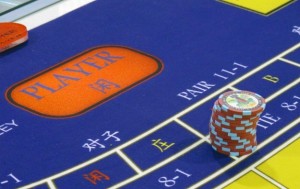 A Joe Average player generates four times the F&B revenue of a VIP player because the latter is getting a largely free ride in return for his “george” play. (One presumes a similar scenario applies to hotel revenues.) The whales are returning … slowly. They’re back up to 48% of all Macanese gamblers but that’s still a long way from 2011’s 70% waterline. As Galaxy Entertainment founder Lui-Che Woo says, we’ll need two years of market performance to determine whether Macao has recovered from Beijing’s high-roller crackdown or not.
