

“It’s more appreciated now than it was 20 years ago,” says Golden Entertainment CEO Blake Sartini of his new trophy property, the Stratosphere. Boy, is he right (as usual). What used  to be called “Stupak’s Stump” or the “Tower of Bobel” is now one of Sin City’s foremost icons, its elegant spire orienting you at a glance as to where you are in the valley, not to mention providing a connecting point between the Las Vegas Strip and Downtown. As owner, Sartini’s first order of business will be to upgrade the Strat’s 2,427 hotel rooms, which go for bargain rates at present. He’ll also need to beef up gambling revenues, opines Macquarie Group analyst Chad Beynon: “Nobody goes there but to bungee jump. If they can fix that, earnings will go up significantly.”
Buying out American Casino & Entertainment Properties has increased Golden’s debt load to a groaning $1.1 billion. But Sartini, who cashed out of Station Casinos when the getting was good, has a plan for that. He’s germinating slot routes in Illinois and is planning to do the same in Pennsylvania, now that they’re legal. Golden really does have the Midas touch, so I wouldn’t be against Sartini’s reinvention of the Stratosphere. Golden’s stock has been rising, well, stratospherically since the deal was announced, suggesting that Sartini is onto a very good thing here.
* In a surrealistic twist, MGM Resorts International has announced a 2021 opening for a casino in Bridgeport. This blithely ignores the fact that gambling in Connecticut is restricted to the Mohegan and Mashantucket Pequot tribes,  never mind that the Lege is highly unlikely to junk $250 million in annual revenue-sharing from tribal casinos just to humor Bridgeport homeboy Jim Murren. MGM not only has a date for opening the project but a site, Steel Point, a 52-acre area and “a working-class residential neighborhood dotted with marinas and light manufacturing plants.”
Murren is treading in some well-worn footsteps, Steve Wynn and Donald Trump also having tried (and been unable) to 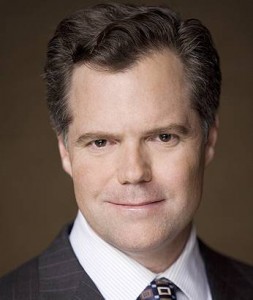 reinvent the Steel Point area. Trump’s artistry of the deal was not equal to the intractability of the political process. He and Wynn were the first of a revolving door of developers who couldn’t pull of a Steel Point project. The region became synonymous with scandal, Mayor Joseph Ganim (D) being forced to resign after being convicted of racketeering, among other Yankee felonies. (He was reelected a couple of years ago. What’s a few felonies among friends?)
An MGM resort sounds like a good fix-it for Steel Point, Bass Pro Shops and Starbucks are a start but they can’t do it alone. Activist Jeff Kohl gives it a backhanded endorsement, saying, “At this point in time, because there is nothing knocking at our door and there’s nothing else we can bring in at such short order, I think the positives outweigh the negatives.” But unless Murren can persuade lawmakers that MGM can deliver $250 million a year in taxes and then some, this is all sophistry.
In other MGM news, the company has trimmed its commitment to Japan ever so slightly. Its predicted investment in Nippon has gone from $10 billion to $9 billion. Is the tight curb on casino-floor space restricting MGM’s willingness to go all in, too?
* Think of all the salubrious effects upon casinos of legalized marijuana: Blissed-out customers taking a “hey, whatever, man” attitude toward losses, Grateful Dead tribute bands and exponentially higher traffic at the buffet. However, as long as Jefferson Beauregard Sessions is giving loco weed the stinkeye that’s not going to happen. Well, pro-pot Rep. Dina Titus (D) isn’t taking this lying down. She’s sponsoring legislation to  protect legalized cannabis from federal intervention “and let military veterans access medical cannabis recommendations through government doctors, among others.”
Saying it’s a “crying shame” that medicinal marijuana is off-limits to vets, she adds, “The opioid crisis, I think, has been perpetuated by the VA because it’s so much easier to give somebody a pill than it is just to deal with some of the demons that they may face or some of the real physical problems. Veterans come back now not with just one injury but maybe 10, 12 injuries because of the new science on the battlefield.”
Unfortunately, Speaker of the House Paul Ryan (R) is getting in the way. Titus argues for a more compassionate view, quite on  the opposite side of the issue from people like Sheldon Adelson, who would like to keep most drugs criminalized, the better — one presumes — to generate clients for his wife’s drug-treatment practice. Anything that upsets the Adelson racket is good, in our view.
Undeterred, Titus argues that a “tipping point” is near, given the sheer preponderance of state legislatures that have voted to legalize ganja or may do so soon. In the meantime, she tailors her argument to whichever faction of Congress she’s plying for votes. “Some believe it’s a criminal justice issue,” she says. “Others believe it’s a states’ rights issue. Others see it as a medical opportunity issue. You’ve got a few who are just old stoned hippies who want to do it.”
