
Wall Street has identified one beneficiary of the tax bill currently before Congress: Station Casinos. As how it will affect those sought-after Millennials, well, companies like Station may have to re-do their math. (Pillaging discretionary income for people making less than $100,000 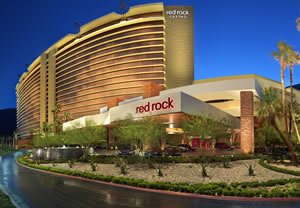 seems like a surefire prescription for a recession, to which — as we have discovered — casinos are far from bulletproof.) Anyway, on to Station. Deutsche Bank analyst Carlo Santarelli writes that “we see [Station] as the best play on tax reform within our gaming coverage universe and believe the current proposals could be conservatively worth $3-6 in present equity value per share (+10-20%) … Ultimately, depending on how the final bill comes together, the effective tax rate could be considerably lower, as we estimate [Station]’s 2018-2020 capex plans essentially approximate our pre-tax income forecasts, rendering taxable income insignificant.”
Free cash flow could increase as much 20%. Good news is you’re either a Station stockholder or an executive hoping to realize some capex reinvestment plans. “With gaming volumes steadily improving in conjunction with the key macro elements of the locals market, the pillars are in place for an extended period of [Las Vegas] locals outperformance,” Santarelli continues, placing his eggs in the construction-labor basket, citing $13.5 billion worth of upcoming construction. (That’s a lot of eggs.) Santarelli forecasts an average of 4% Station revenue increases over the next four years and says that’s a conservative benchmark.
Over at JP Morgan, analyst Joseph Greff is marginally less bullish, describing Station’s prospects as “reasonably solid.” Like Santarelli, he upped his price target for the stock. “Recent economic indicators show the Las Vegas economy continues to improve: the labor market is 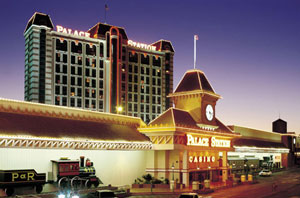 healthy with unemployment at 5% and wages growing ~5% annually, the population is growing … with a strong mix of retirees, housing is stable with prices steadily moving higher (+5% y/y), and we also note an acceleration in construction job growth, which is currently tracking +18% y/y and has increased for 63 consecutive months … We note retirees (ample free time) and construction workers (frequently good casino customers) are key demographics,” writes Greff, perhaps paying too little heed to anticipated increases in health costs for seniors, which would be a bump in Station’s road.
Greff foresees a 4% revenue increase also, propelled by upgrades at the Palms and Palace Station plus an “improved slot system.” (Slots being Station’s lifeblood.) He forecasts above-average slot revenue of $250-$275/win/slot/day. Greff also thinks a “reasonable” rate of cash flow from the Palms would be $80 million-$85 million, maybe as high as $110 million, which would be a spectacular return on investment (27% at the low end, 35% at the apogee). He also prognosticates $200-$250 room rates which, coupled with F&B revenues, translate to at least $108 million in revenue.
Palace Station will be essentially hors de combat for another year, no surprise given enhancements that include “luxury movie theaters, a third restaurant concept, a resort style pool complex, a casino bar, new 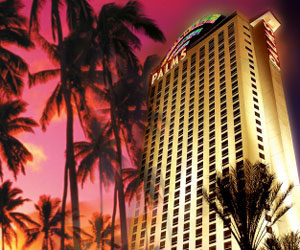 race and sports bar, renovated poker room, and a fully renovated casino floor.” At the Palms, it will take until mid-2018 for “renovations to the casino floor, a new café and buffet, two new restaurant concepts, upgraded luxury movie theaters, renovated meeting and convention space, a rooftop open space, and a new high-limit area/lounge, new hotel registration and VIP check-in areas, low exterior facade, porte cochere, and landscaping improvements.” Phase II, expected to finish late in the year, will entail upgrading 282 new rooms and creating 60 new ones. Although Station has only partially completed installation (eight casinos) of its International Game Technology slot-management system, it’s noting a 6% increase in casino revenues.
* Speaking of marketing to Millennials, the proposed zipline at Linq Promenade and e-sports arena at Luxor are hardly novel to readers of this space, although they seem to have come as recent news to the Las Vegas Sun. “Our core audience is millennials. During the day, you see a lot broader range and a lot more families, but as the sun goes down, it gets a little bit younger, and as midnight approaches, it’s one big party,” Promenade GM Shaun Swanger told the paper. The article says casinos are trying to appeal to “cost-conscious young travelers,” in which case gambling houses might consider not jobbing them with resort fees, charges for wi-fi and “free” newspapers which they do not read. Just a thought.
The Linq zipline will have to vie with Downtown‘s Slotzilla for popularity but the conversion of LAX into an e-sports pavilion sounds mighty impressive: “a competition stage, LED video wall, daily gaming stations and a streaming and television-quality production studio.” Still, e-sports is literally a gamble for the casinos, as they find themselves marketing to a demographic that can’t play the slots or tables and can’t order a drink. Casinos don’t want to make a habit of carding customers but, the way they’re going, they may find they have no choice.
