
Ever-ravenous Penn National Gaming gulped down Pinnacle Entertainment over the weekend, paying $2.8 billion for a collection of top-quality gaming assets. Among other  benefits, the deal strengthens Penn’s position in its home state, as it gets The Meadows racino, doubling its Keystone State asset base. Penn expects to realize $100 million in synergies (read: job cuts) from the transaction. In other words, goodbye Anthony Sanfilippo and thanks for playing. Also, how do you like them apples, Caesars Entertainment? Penn now eclipses you in size of domestic operations. “We grew from a single race track back in 1972 to what is today the largest regional gaming operation in North America,” crowed an understandably jubilant Eric Schippers, adding, “We’re getting into new states like Colorado, Louisiana and Iowa, which opens up all kinds of new opportunities as we diversify our portfolio.”
Pinnacle shareholders cash out handsomely, with $20/share and 0.42 shares of Penn stock for each Pinnacle share owned. Penn paid a hefty premium for Pinnacle ($32.47/share or a lofty 9X cash flow) to get Pinnacle, which tells you how crafty a negotiator Sanfilippo was. Despite its magnitude, the 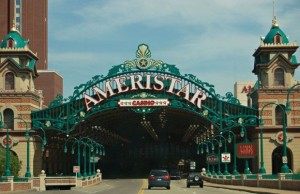 Penn/Pinnacle sale was almost overshadowed by yesterday morning’s announcement that Penn had turned right around and divested four casinos to speedy Boyd Gaming. The latter gains St. Louis‘ top-performing casino, Ameristar St. Charles, as well as Ameristar Kansas City, Belterra (which has been sapped by Ohio competition) and Belterra Park. The last is something of a charity case but Penn had no choice but sell it, since it’s already at the statutory maximum for casinos in the Buckeye State. As for Boyd, its decision to go back into Kansas City is interesting, as one of the company’s few failures was Sam’s Town Kansas City, which went out of business in 1998.
It will be interesting to see, as we look ahead, whether Boyd keeps the Ameristar brand, which Pinnacle retained because of its strong equity. Belterra is also a well-established 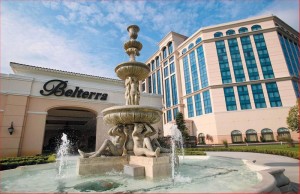 name, so there may be no point in rebranding those assets. Boyd paid $575 million (6.25X cash flow — a bargain) in a transaction that Deutsche Bank analyst Carlo Santarelli termed “prudent, The company will also have to undertake $105 million in lease payments to Gaming & Leisure Properties Inc., Penn evidently having craftily transferred the leases to GLPI before flipping the casino/racino quartet. At least Boyd only has to pay $7 million a year to rent economically challenged Belterra Park.
Considering that Penn sacrificed the two Ameristar trophy properties (but retains a 50% St. Louis market share) to palliate antitrust concerns, we’re inclined to think that Boyd  got the better end of the deal. “These assets are in great shape, increase BYD’s geographic diversity, and add the benefit of scale,” wrote JP Morgan analyst Joseph Greff. As though there were not enough moving parts to this transaction, Penn sold Plainridge Park to GLPI, which paid an astonishing 10X cash flow for the racino, although its otherworldly slot revenues (averaging $345/win/slot/day) are a strong argument for the valuation. (None of these deals are expected to close before July 2018.)
In addition to Penn, Boyd and GLPI, Santarelli likes Station Casinos and Eldorado Resorts shares going forward. He cites “political agendas centered on job creation and wage growth,” though we haven’t seen any, particularly of the latter. However, Nevada wages  just hit their second-highest quarterly average on record. But the Kenny Guinn Center for Policy Priorities warns of that the tax legislation before Congress that “A repeal of the state and local general sales deduction could be harmful to Nevada’s residents and have consequences for the State’s ability to finance its programs and services.” (A repeal of the home mortgage interest deduction will also hurt but increased child tax credist will give some of that back … if you have kids. Be fruitful and multiply, taxpayers.)
Adds Santarelli, “the potential for rising interest rates, a favorable discretionary income driver for the fixed income retiree patron, bode well for the regional gaming group as we head into 2018.” Although wages in the Las Vegas market are improving, he urges operators to keep sweating the comps. Since the casino industry is full of ‘me-too’ transactions, it will be interesting to see which company next feels compelled to swing a M&A deal of its own.
* Although Brazil is currently spinning its wheels on casino legalization, Brazilians will have a direct pipeline to Vegas casinos starting next June. That’s when LATAM Airlines Brazil incepts nonstop service from Sao Paulo to Sin City. Considering that Sao Paulo was once the poster child for poverty and crime in South America, this is quite a turnaround in public image. The airline proudly proclaims that “LATAM Airlines Group is the only airlines group in Latin America and one of three worldwide to be part of the Dow Jones Sustainability ‘World’ Index.” Good on them.
 * While I can’t think of anything lonelier than spending Christmas in Las Vegas, WalletHub ranks it as the ninth-best city in which to celebrate the birth of Jesus Christ. Why? It’s number two in hobby shops and toy stores per capita, as well as second in hotel room rates. It’s also a surprising 19th in Christmas-tree farms per capita. So deck the halls with some fuzzy dice and get into the Christmas spirit, Las Vegans.

I was listening to the Boyd call on the purchase announcement and was curious as to if anyone was going to ask why they are going back into St Louis and if they were going to rebrand the properties! Great minds think alike.
I also go the feeling that BYD would have preferably purchased the real estate as well and not a lease-hold interest to GLPI.
All very interesting.
I always felt Ameristar St Charles was the best in St Louis. Why would Penn keep Hollywood instead?
Sentiment? Ameristar SC grosses more, so it’s not a money-driven decision.