
Despite a neutral calendar (i.e., same number of weekend days) and a 2% increase in baccarat wagers, the Las Vegas Strip managed to plummet 25% in table game win, pulling 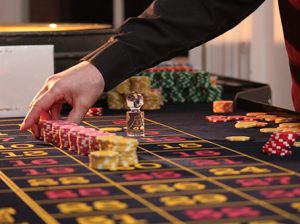 overall revenue 6% downward. Had it not been for that game, the Strip would have been only 2.5% off last year’s pace. The house was damned unlucky at table games, seeing 17% less win ($210 million), inclusive of baccarat, on flat wagering. Overall, Strip winnings were 6%, helped somewhat by a 5% increase at the slots ($270 million) on 3% more coin-in. The most dramatic gains were out in the sticks, with Elko ($23.5 million) up 12% and Carson Valley ($9 million) gaining 11%.
Downtown was still as good as gold, up 7% ($54 million) and North Las Vegas ($24 million) gained 2.5%. The Boulder Strip ($73 million) was flat and miscellaneous Clark County ($95.5 million) was down 2%. Laughlin was up 5% to $42 million. Reno was flat ($46 million) and Lake Tahoe down 3% ($15.5 million). It’s such a pity that the Nevada Gaming Control Board no longer breaks out winnings and losses from Wendover, the most reliable economic barometer in the Silver State. When Wendover catches a cold, Nevada gets pneumonia.
* According to Global Gaming Business, the Trump administration is putting a Native American face on the offices that handle aboriginal affairs. Assistant Secretary for Indian Affairs in the Interior Department is Tara MacLean Sweeney, an Inupiaq and the first Alaskan to hold that post. New director of the Bureau of Indian Affairs is Cherokee Bryan Rice, a governmental veteran, while Kiowa Tribe member John Tahsuda III is acting assistant secretary at Interior. With so many Native Americans in positions of influence one has cause for optimism that Trump’s government will be as enlightened on tribal gaming as the Obama one was (and the Bush II one wasn’t).
* Things may not be going according to plan at Lucky Dragon Casino but that’s not Matt Harkness‘ worry any longer. He’s been tapped for what must be one of the most coveted positions in gaming: CEO of Hard Rock Casino Atlantic City. Ironically, he once was an executive  at Trump Taj Mahal, the skeleton upon which the Hard Rock flesh is being sculpted. (He was also general manager at abysmal Trump Plaza but we won’t hold that against him.) Harkness opines that “people tend to overemphasize the decline without necessarily understanding that this is still an extremely viable market. Atlantic City is very well located in terms of proximity to major population areas and it has the great benefit of a more competitive tax rate on gaming revenue than in surrounding states. This is a direct benefit to both the city and the market.” Harkness, who has helped six casinos open, promises “a lot of surprises” accompanying Hard Rock’s debut. Global Gaming Business has him on its “People to Watch” for 2018 and we only wonder why he didn’t lead the list.
* Las Vegas ad campaigns that aired just before and after the 10/1 tragedy get panned by Casino.org‘s Samantha Beckett. A short-lived MGM Resorts International splash, Welcome to the Show “was a yawning, clichéd, and very pleased-with-itself social media 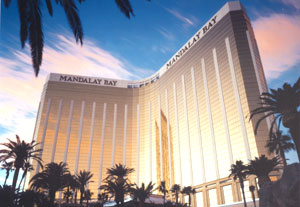 and TV campaign … More likely, the “holy sh*t” business suddenly took on a dark meaning that was never intended, but that would forever be echoed after the Mandalay Bay shootout that took the lives on [sic] 58 and injured more than 500.” As for the Las Vegas Convention & Visitors Authority‘s attempt to be relevant “looked like a compilation of Facebook images put to one of that social media’s low-tech algorithm pseudo-videos.” But a special circle of Hell was reserved for MGM and Andre Agassi‘s #VegasStrong spot, which polled as “Worst All-Around Casino Marketing” for 2017. Ouch! Somebody just took a pin a stuck it in Leo the Lion’s posterior.
* Add Delaware to the list of states chomping at the bid to legalize sports betting. Says the state’s finance director, Rick Geisenberger, “We’re working to roll it out as quickly as possible.” One reason why Delaware could be first to market is that it already has a lame sort of sports-betting regime in place that allows you to make parlay bets on football 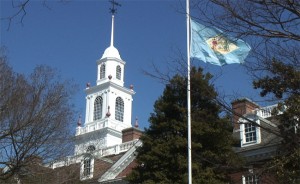 games. It’s not much but it’s something, which is more than 48 states can say. Also, Delaware is one of the states that has embraced DFS. While the state may see it as a potential bonanza, Dover Downs CEO Denis McGlynn is skeptical, saying “It’s a lot of sizzle but no steak. Sports betting in Las Vegas only makes up about 2 percent of their casinos’ total revenue and they have a monopoly right now.” At present, Delaware casinos only get a 40% cut of the parlay bets. Worse still, out-of-state bettors would likely stay home if they can have a fiddle on sports wagering in their own state. That’s part of why McGlynn is rooting against New Jersey in its Supreme Court fight. In a rare display of executive candor, he says, “it’s better for us to keep our monopoly on what he have.” At best, if New Jersey wins, Delaware will have a small window of opportunity as nearby states build sports betting from the ground up.

I don’t know where you’re getting your numbers from, but every PDF and file I’ve seen online specifically breaks out Wendover from the rest of Elko County. Year-over-year, up 15 percent for November, up 9 percent since 9-1-17 and up nearly 6 percent 2017 YTD.