
MGM National Harbor continued its domination of Maryland last month, with a 39% market share and $53 million gross. Less reassuring for MGM execs, high-tax slots are starting to pull away from low-tax table games, two  categories which used to be in 50/50 balance. In February tables raked in almost $25 million while slots banked $28.5 million. Still, when you’re grossing $1.9 million a day, taxes a relatively minor worry, especially when those slots are pulling in a way-above-average$376/win/slot/day. Gambling revenue for the Free State was up 6%, although almost all of that gain was represented by National Harbor (+16%). Maryland Live was up 1.5%, with $47 million and a 34.5% market share. Horseshoe Baltimore slipped 3% to $21.5 million, while retaining a 16% market share.
Table games really paid off for Ocean Downs. The racino, co-owned by Churchill Downs, shot out of the gate with a 22.5% gain and $5 million gross. Hollywood Perryville dipped 5% to $6 million and Rocky Gap Resort slipped 4% to $4 million. In West Virginia, gaming revenue was down 8%, mostly at the slots. That was especially the case for Penn National Gaming‘s Charles Town racino, whose 6% drop-off was entirely slots-driven. This month has one more weekend day than 2017, so we’ll see if that is reflected in more robust gaming numbers.
* In New York State, where the debut of Resorts World Catskills is 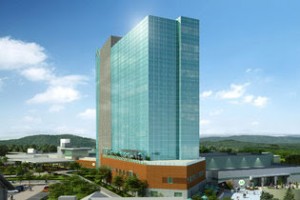 concerned, the watchword is So Far So Good. The $12 million Genting Group megaresort grossed $63 million in two weeks. Most reassuring for the upstate market, those dollars weren’t coming at the expense of competitors. Revenue at Del Lago Resort & Casino, Rivers Casino and Tioga Downs grew by $5 million across the same fortnight. Racinos and other VLT venues saw a slight dip, however. Still, who thought Resorts World Catskills would lift all the bigger boats?
* Next door, in Pennsylvania, the commonwealth is investing more heavily in slots, even as data comes in showing that one-armed bandits have peaked in the Keystone State. Table games are where it’s at: up to 27.5% of market share. Moody’s Investor Service has crunched the numbers and concluded this is a definite trend. Adds the Morning Call, “There has been a  decline in the average number of slots in service and a drop in the slot revenue per unit, per day, meaning tightening up the supply has not led to more demand at each machine.” (emphasis added)
Whereas slot revenue was at $2.47 billion in 2012, it’s ‘only’ $2.34 in 2017. Meanwhile, table revenue grew $37.5 million last year alone. “People talk about market saturation — it’s the slots, which are a large portion of the market, that are saturated,” said Moody’s Vice President Keith Foley. His firm’s report forecasts, “the favorable relationship between the supply of tables and demand for tables will continue.” That being the probable case, the winners of mini-casino bids should dig deep and come up with the $2.5 million levy necessary to host tables at their satellite facilities. It’s the smart move.
* Penn National took a big gamble when it underwrote the construction of Hollywood Casino Jamul and now has a busted hand to show for it, in the form of a defaulted $48.5 million loan. Tribal Chairwoman Erica Pinto  tried to paint a smiley face on the Penn pullout, saying it was a giant leap toward self-sufficiency, “which was our goal all along.” Yeah, default on a loan and you’ll be up to your butt in self-sufficiency. The tribe is going to try and manage the casino on its own, which does not fill us with confidence. As for Penn, it admits it might “incur unexpected costs related to the termination and transition of its management contract with the Jamul tribe.”
One local politician danced on the ashes of the Penn/Jamul relationship, taking to her Facebook page to post, “SEC filing shows huge bet on Hollywood Casino has gone bust. Penn National is bailing due to fat losses. No surprises here. The Jamul project has been a disaster from the get-go.” That last part is certainly true, much to Penn’s chagrin.
