
Wynn Resorts now has 100% less Steve Wynn now that the mogul has sold his entire stake in the company. At first blush this looks like a passive-aggressive lashing out at a firm that is now moving forward. 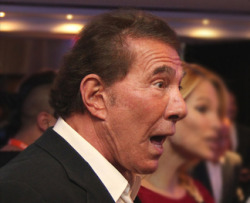 However, Wynn Resorts insists that this was an orderly process, negotiated over several weeks. Normally, the sudden release of millions of shares would not have a salutary effect on the stock price but WYNN is regaining ground lost immediately after the announcement. What’s more, the sale looks like the preamble to a takeover of the company by Macao-based interests. El Steve’s eight million shares went to two undisclosed institutional investors, while an additional 5.3 million were sold by the company to Galaxy Entertainment at a discounted $175/share — $5/share less than Steve Wynn’s sale price. (The money recouped from the Galaxy sale will be used to cover the Universal Entertainment settlement.) That brings Galaxy’s stake to 5% in one fell swoop, albeit low enough to keep it under the Nevada licensing threshold.
By ridding itself of Steve, Wynn Resorts may ease the probity investigation it is suffering in Massachusetts … though there’s still the not-inconsiderable matter of the $7.5 million hush-money payment it concealed from the Massachusetts Gaming Commission. While Galaxy kept its intentions to itself, Wynn CEO Matt 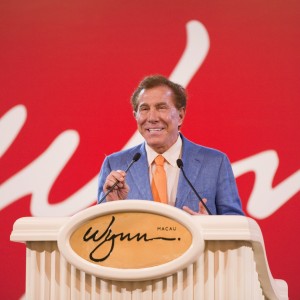 Maddox seemed to be laying the groundwork for a gradual takeover by saying that Galaxy shared “operating philosophies and values.” Galaxy Vice Chairman Frances Lui returned the compliment, saying, “This is a unique opportunity to acquire an investment in a globally recognized entertainment corporation.” One reason Wall Street was so sanguine about Wynn’s sale announcement is that the magnate’s severance agreement forbids him from selling more than one-third of his shares per quarter. Also, they’re not going onto the open market, which would have set off a sure panic.
Bloomberg News opines that, without the “Steve Wynn premium,” a sale of the company might be a good idea. The column argues that WYNN is “already commanding a weaker valuation relative to profit than it has  historically while Steve Wynn was at the helm.” Roth Capital Partners analyst David Bain thinks the aforesaid premium “will take years to recoup, if it ever does.” Jeffries Group‘s David Katz points to the superannuated condition of the Wynn board, with its average age of 68. At a sale premium off $200/share, Wynn Resorts would back at its 2014 historical high. Bloomberg columnist Tara Lachapelle concludes, “Maddox and the board have a fiduciary duty to consider any bona fide offers presented to them. Even if they wish to go it alone and refashion the brand, Wynn’s actions and absence have already tarnished the stock for the foreseeable future.”
Meanwhile, Nomura Holdings applauded the cash-out. Its analysts wrote, “As with most ‘retired’ individuals, [Wynn] now joins the ranks of investors who need to 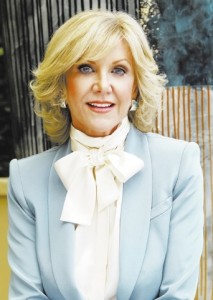 diversify their portfolios and maximize their incomes. Given the circumstances surrounding Mr. Wynn’s departure, it is unlikely he will return to have a major role or equity stake in another public company.” Also, being $1.4 billion richer, he will have some extra dough to hire good sexual-harassment attorneys. So much for the company’s Feb. 9 statement that Steve Wynn “has no immediate plans to sell shares.” Instead, Steve has left the building while Elaine Wynn remains a power within the company. Whoda thunk?
* Also exiting stage left is James Packer. He’s leaving the Crown Resorts board, presumably for treatment of depression, meaning we’ll no longer have one of our favorite pincushions. While Packer had a knack for casino development in Australia, his efforts to enter the American market were a long litany of failure, climaxing in the collapse of the Alon resort project (now to become Wynn West). Mind you, he holds 47% of Crown stock, so we may not have heard the last from him.
* Station Casinos is a sore loser. After having to pay out $124,252 on a bad-beat poker jackpot, it prevented any recurrences of the event by canceling the promotion now and forever. The Jumbo Hold ‘Em Poker progressive jackpot also bit the dust. In place of the two canceled promotions, Station’s Lori Nelson promised jackpots “equally and in  some cases richer” than the nixed bad-beat one. The disputed jackpot involved much poker arcana that I will not belabor here. Let’s just say don’t expose your hole card when playing at Red Rock Resort. Station could have dragged the matter through Clark County District Court but showed class by abiding by the Nevada Gaming Control Board‘s findings. As for the damage to Station’s image among poker players, the Las Vegas Review-Journal found anecdotal evidence that traffic in the poker parlors is down. It makes you wonder how much rake Station might have gained if it had just paid the jackpot instead of making players wait for their money.
* Station rival The Orleans is not a property to which we look for innovation. However, it’s partnering with International Game Technology to premiere a virtual-reality gaming experience, Virtual Zone. “The experience uses HTC Vive hardware and solutions for a multiplayer competition that is played in real time,” we’re told. I’m not sure I understand that but I’d like to play it.
* Need a reason to visit Circus Circus Reno? Owner Eldorado Resorts is proposing a water park for adjacent land that is currently a parking lot. The project is currently in the feasibility-study stage but, fear not casino-goers, would include an adults-only pool.

Boyd is progressing. The Orleans VR is just the beginning. Keep an eye on them…