
If any casino owners were thinking that the Culinary Union might get complacent or fragment in the face of a good Las Vegas economy, they 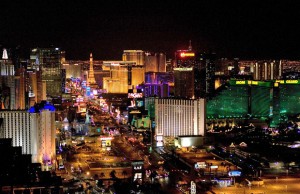 got a rude wakeup call yesterday. Some 99% of Culinary members voted to authorize a June 1 strike, if necessary. That’s almost 50,000 employees hitting the bricks at 34 casino-resorts, both on the Las Vegas Strip and Downtown. Protection of immigrants with temporary status is one of the Culinary’s hot-button issues, as well as what union boilerplate describes as “the Union’s economic proposal seeks to provide workers a fair share of the employers’ enormous anticipated cash flows and Trump tax windfalls.”
Inroads made by automation are also a forefront concern. Said Margaritaville prep cook Chad Neanover, “I voted yes to go on strike to ensure my job isn’t outsourced to a robot.” Others cited trickle-down economics. “The company is more profitable than ever because of the hard work we do, and I’m going to keep fighting to make sure that we have a fair share of that success,” stated Aria housekeeper Adela Montes de Oca. Live by the quarterly SEC filing, die by the quarterly filing. A repeat of the 1984 strike could cost the casino industry $250 million in revenue. Considering the profits certain companies (and executives) are rolling in, this is not the time to be ungenerous.
A 2018 strike would likely be peaceful, without the bomb threats and arrests that marred the 1984 labor action (back when casinos were more inclined to take an anti-union stance). MGM and Caesars Entertainment, with 18 casinos potentially affected, remain publicly 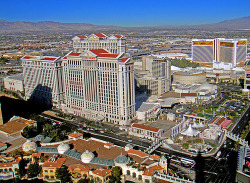 optimistic that a settlement will be reached. On the other hand, the Culinary may well not have the war chest to sustain more than a brief walkout. It depends on how stiff their resolve is when union jobs are threatened by chatbots and robotic bartenders. As historian James Kraft told the Las Vegas Review-Journal‘s Todd Prince, “Anything that impacts [the casinos’] right to manage — the right to mechanize, hire or fire, combine job classifications — those are usually the most contested issues in the workplace.’’ Stay tuned: This conflict isn’t going away anytime soon.
* Now that legal sports betting is the law of the land, American Gaming Association President Geoff Freeman has a few tips for Congress on what to do next. First, “empower” individual states to regulate the  activity: “More than 40 states and 260 jurisdictions have proven to be effective gaming regulators.” So much for the idea of all-embracing federal regulation. Next, establish “a national data repository to share any suspicious betting information with law enforcement, gaming regulators and sporting bodies.” Third, have the industry “voluntarily pursue the creation of a self-regulatory model to guide sports betting advertising,” with an eye toward promoting responsible gaming. Finally, “Encourage Contracts Over Statutes … The gaming industry will vigorously oppose efforts to use federal or state legislation to set basic business terms.” Does that include the form of legitimized skimming known as “integrity fees”? After all, it’s enlightening to realize that the major leagues’ integrity can be had for a price.
