

Japan is one big step closer to casino legalization now that its House of Representatives passed a bill putting problem-gambling 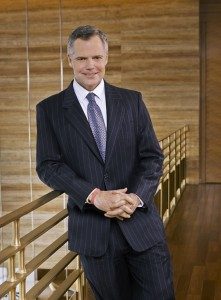 countermeasures into place. This was a necessary step before the actual casino-implementation law could go before the Diet. “The pace of implementation has started to accelerate,” said an understandably eager MGM Resorts International CEO Jim Murren, who was on hand for the vote. He added that three megaresorts would “generate billions of dollars, making the market vastly larger than Singapore.” Murren probably chose Singapore as his analogy since Japanese politicians have been fixated on that country both in terms of its casino industry and how it handles gambling by its citizens. The Diet has until June 20 to pass casino legislation. If not, it goes into a holding pattern, while scandal-plagued Prime Minister Shinzo Abe tries to cling to power.
We don’t know how Sheldon Adelson would cotton to having to partner with a Japanese company to get a casino license but MGM is ready, eager and willing. Its Japanese corporate relationships include Panasonic and Shochiku, and it’s become the largest purveyor of Japanese art and entertainment to Las Vegas, although we suspect the 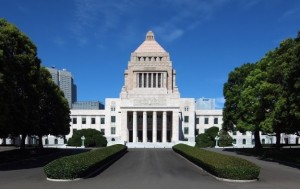 real audience is in Japan’s house of parliament. The actual choice of casino operators will devolve to whichever prefecture is designated for an integrated resort (somewhat like the way it was done in Massachusetts, actually). That makes 47 candidates and Murren has visited 23 of them so far. He’s been making a lot of promises we hope he can keep, such as that the projected resort “will be definitely designed with Japanese architect, outfitted with Japanese interior designers and artists, and powered by Japanese technology.” At least he isn’t spouting Dadaist nonsense about the prospect being “thoroughly Japanese and thoroughly delicious.” (Did you think you were reviewing a new sushi bar, Steve Wynn?)
Murren believes that a $10 billion megaresort would be “very 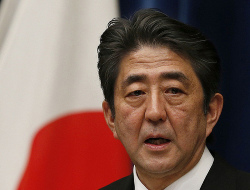 economically feasible,” despite a high tax rate (30%) and limited casino floor (3% of total square footage). He also thinks Japan’s leaders know better than the electorate, which is heavily opposed to gambling — although hooked on pachinko — “Japanese leaders have believed that it is good for Japanese people.” Murren also stimulates our curiosity when he says that Japanese leaders have shown “the great sense of social responsibility that is sadly lacking in other parts of the world.” What parts would those be, Jim? Do tell.
And if Abe goes down in flames? “I do not want to get ahead of big presumptions to assume that the Implementation Bill is passed until it is,” Murren concluded. “I am still 56 and will be patient for years to come.”
* The Culinary Union must be losing patience in collective-bargaining talks because it’s loosing daily e-mail broadsides to make its case. The first called upon tourists to stop sexually harassing guests (presumably having given up on management taking the lead here). According to the Culinary’s own internal polling, “59% of cocktail servers and 27% of hotel housekeepers said they had been sexually harassed by guests, managers or others while on the job. 72% of cocktail servers and 53% of hotel housekeepers said a guest had done something to make them feel uncomfortable or unsafe.” We obviously can’t verify the results but it would be an understatement to say that the casino industry promotes randy behavior as a way to sell the product that is Las Vegas.
In any event, the Culinary Union and other Unite-Here affiliates will be leafleting at major airports, asking Vegas-bound passengers to pledge to behave themselves around casino employees. We’re not sure which  casinos are resisting worker protections (Boyd Gaming, Golden Entertainment and Penn National Gaming are the publicly held suspects but there are 11 other suspects) but the Culinary goes out of its way to say MGM and Caesars Entertainment “have been positively responsive to the contract proposals on sexual harassment and safety buttons for guest room attendants.” That’s 18 casinos down, 16 more to go. We’re glad MGM and Caesars are being so tractable but it looks like they’ve got some remedial work to do.
“We are not here to be abused or have people think that just because it’s Las Vegas anything goes,” says MGM Grand housekeeper Maria Landeros, getting to the heart of the issue. “I was carrying a heavy tray full of drinks on the casino floor, and a high roller at the dice game grabbed me by the neck with both of his hands and forced me to kiss him for good luck. I have permanent nerve damage from that incident and I live in pain every day,” added Bally’s cocktail server Debra Jeffries, who’s made of sterner stuff than I am.
Today’s blast from the Culinary reneges on some of the love the union had shown Caesars and MGM, saying a monthlong strike would cost them $300 million. This raises the question of whether the Culinary could hold out longer than a month. Moreover, it faulted both  companies for flaunting their wealth instead of sharing the bounty: Caesars “does not expect to be cash taxpayer for the next three years, and just announced a share buyback program of up to $500 million. In 2017, the company’s CEO received nearly $24 million in total compensation, and the company’s 2017 reported CEO pay ratio was 601:1.” As for MGM, it “has projected free cash flow of up to $5 billion from 2018 through 2020. The company has also just announced a new, $2 billion share buyback program, having recently completed a $1 billion share buyback. The company’s 2017 reported CEO pay ratio was 396:1.” If I was an MGM or Caesars employee and saw those numbers I’d be a little steamed, too. The emergence of REITs as a force in the casino industry is also a bone of contention, with the Culinary seeking succession clauses in case Vici Properties or MGM Growth Properties sell their holdings to another operator — highly unlikely in the Vegas market.
Sexual harassment seems to be off the table as a negotiating point. The Culinary has narrowed its talking points to “technology, hotel housekeeping workload study, union security in case of property ownership change, and wages and benefits.” On that last point, the Union wants to get ahead of inflation with a 4% pay increase. The most the casino companies are willing to pony up is 2.7% — still better than the rate of inflation, if not by much. Given their sudden access of wealth (and the disparity between executive and line-employee pay), we think they could be a little more munificent. Right now the two sides are about $15 million/year apart. Let’s hope they can bridge that divide.
* China‘s leadership maintains a love/hate relationship with Macao, although one would be forgiven for paying more attention to the “hate” side of the ledger. The latest edict is that casino shuttle buses will be barred from the Hong Kong-Zhuhai-Macau Bridge. So much for getting from Hong Kong to Macao in 20 minutes. (Better hang onto those jetfoils, Macao.) “When the tourists arrive to any of the harbors, they can choose the respective casino shuttle bus,” said a spokesman for Macao’s Transport Bureau. Even with the new restriction, the bridge is expected to service 40,000 commuters a day. The six-lane bridge is no mean feat of engineering: “a main section 29.6 kilometres (18.4 miles) in length, including an underwater tunnel approximately 6.7 kilometres long and two artificial islands.”
