
It appears that a clear path has opened for Mohegan Sun and Foxwoods Casino Resort to develop a satellite casino. The Hartford Courant reports that “The U.S. Department of the Interior is expected to publish  a much-delayed notice Friday that satisfies concerns in Connecticut that the Mohegan tribe’s revenue-sharing agreement with the state won’t be jeopardized if they partner with the Mashantucket Pequots, who operate Foxwoods.” So far, the Trump administration is not making any comment but this, if true, would be a huge win for the tribes in question and enormous setback to MGM Resorts International, which has been trying to delay the East Windsor satellite casino, already under site clearance.
“I never thought this outcome was in question, but I’m glad it’s finally happened,” said state Sen. Cathy Osten (D), whose constituents include the two tribal megaresorts. Sen. Richard Blumenthal (D) tweeted that 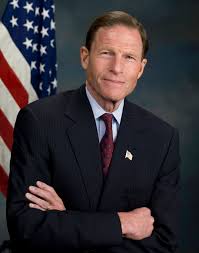 the decision was the “Right result at the wrong time. This delay has exacted real world costs and the [Inspector General’s] investigation into conflicts of interest must continue,” remarks that he repeated in a phone interview. At issue is whether lobbying by Nevada lawmakers on behalf of MGM was responsible for the Interior Department’s long delay in gazetting the tribes’ application.
Internal recommendations to move forward expeditiously with project approval were reportedly rejected, moving Blumenthal to say, “I believe the inspector general’s investigation should continue to a conclusion and it must … to uncover whether there was any conflict of interest or other wrongdoing. Why did it take so long to do the right thing?” (It’s been a year since the enabling legislation was signed into law.)
The enabling legislation that Connecticut passed for the satellite was contingent upon explicit federal approval, which now seems to be at hand. Financing for the satellite isn’t in hand, however, so that could  pose a further delay for the tribes. MGM is already threatening a Freedom of Information Act request “to uncover the chain of events leading up to its decision to publish the notice,” arguing that the decision was handed down minus underlying justification. “We believe our proposed world-class entertainment complex in Bridgeport is the best option for creating new jobs and revenue, and we will vigorously advocate for our legal rights,” huffed MGM.
At least the Nutmeg State’s tribal casinos can count on being 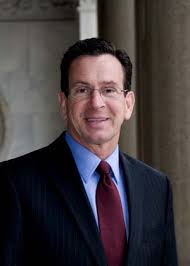 grandfathered by the Indian Gaming Regulatory Act into sports-betting law soon to go before the Lege. Gov. Dannel Malloy (D) opined that the tribal nations are in a position to deal with reality, and if the reality is the legislature is not going to take up online gaming separate and apart from whatever is required from sports betting, that’s the situation.” Internet gaming will have to wait, however. House Majority Leader Matt Ritter (D) explained, “A special session does not lend itself to something so complicated. How do you verify age? How does it work when you go across the border? Are there daily limits?”
The pressure to legalize sports betting won’t just be coming from Foxwoods and Mohegan Sun. SporTech, which offers parimutuel wagering at 16 Connecticut OTBs has a lot of skin in the game, too. Expect lawmakers to reconvene as soon as Malloy finishes renegotiate the state’s tribal compacts and not a moment sooner. At that point, Connecticut can join the conga line of 14 legislatures mulling the issue and trying to get to market as soon as possible, especially in case something “bad happens in Washington,” as American Gaming Association President Geoff Freeman put it.
Freeman has also moved off the fence on “integrity fees” (read: skimming) and into firm opposition. The major leagues’ rickety  rationale was laid out by the NBA‘s Dan Spillane. “These are our games. [They] are the backbone of the whole business of sports betting, and we think it makes sense for us to be compensated. We’ve invested billions of dollars in creating this product. You can’t have sports betting without our game. If betting becomes widely legal, that is going to cost money. The integrity fee is intended to cover those expenses.” Oh, the poor, poverty-stricken major leagues. Doesn’t your heart just bleed for them?
As Freeman put it, “If the math doesn’t work, you’ve bastardized the game in such a way that the illegal market offers better odds.” Still, don’t expect the leagues to roll over for the casinos on this one. There’s too much money in them thar games. As one source probably connected with the leagues said, Sports betting is not as profitable as a slot machine, but it’s still profitable on its own.” Yes, by all means, let’s take the profit motive out of sports betting. That’ll solve a raft of problems. (Not.)

I am not opposed to the tribes proposal; however, I have never really understood how tribes can just purchase property and throw open the doors to a casino on off-reservation property (I am aware of how they can put the land into a trust ect). Am I missing something in this situation?