
Early yesterday, Churchill Downs and Eldorado Resorts announced that they were deep-sixing the sale of Eldorado’s Lady Luck Vicksburg, although Churchill Downs’ purchase of Presque Isle Downs remains in play. Evidently, Churchill Downs was 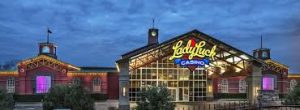 uncomfortable with Federal Trade Commission inquiries regarding its ownership of Riverwalk Casino, a property adjacent to Lady Luck. According to Deutsche Bank analyst Carlo Santarelli, the switcheroo was “resulting in CHDN choosing instead to acquire [Lady Luck] Nemacolin than spend time/money associated with higher FTC scrutiny.” It’s not a bad outcome for Eldorado, as Nemacolin has been a real lemon but Churchill Downs forfeits access to the Mississippi market just as sports betting is coming on line.
Churchill Downs is out a $5 million termination fee for nixing the Vicksburg deal but only has to pay $100K to take over the Nemacolin management contract. It will also be purchasing the casino’s 600 slots and 27 tables. Churchill Downs will have until 2023 to get Nemacolin turned around. “While it’s unfortunate ERI was unable to complete the sale of a smaller/non-core asset, we view the result as a net positive for ERI as the company will likely have an easier time selling Vicksburg (we assume they’re still a seller) than the EBITDA neutral/slightly positive Nemacolin management contract,” wrote Santarelli. While the termination of the Vicksburg half of the deal essentially means that the cost of buying Presque Isle Downs goes to $184 million, Santarelli opines that this is “immaterial” and that Presque Isle remains “the principal reason it undertook the transaction, in our view.”
* Proving once again that casinos and loco weed don’t mix, World Series of Poker player Michael Mizrachi, a three-time winner, was  told to remove a hat sporting the logo of Blüm, the cannabis dispensary that was sponsoring him. The incident went down on July 5 at “Ceasars [sic] Palace,” according to Mizrachi’s PR firm (never mind that the event is held at The Rio). “Players often wear logos of their sponsors while at the table, and legal cannabis businesses should not be treated differently,” wrote Mizrachi flack Kyle Del Muro. Oh, yes they should — so long as Nevada casinos are directed to steer clear of any tang of Mary Jane.
* In a move to heighten security, Pechanga Resort Casino has deployed two robots, “one that stands motionless in the valet parking area and a mobile rocket-shaped automaton that patrols the lobby area” to augment its 300-man security patrol. The move is an explicit reaction to the Mandalay Bay Massacre, which was made possible by incredibly lax security. (Mandalay Bay now posts security guards at its elevators around the clock.) “I’m always looking for new technologies. I’m always looking for new ways of preventing crimes,” Pechanga security chief Robert Krauss  told the Los Angeles Times. Krauss settled upon hardware developed by Knightscope that has already been put to use in stadiums and malls. (A third, infra-red-equipped robot will patrol the Pechanga pool to ixnay after-hours swimmers.)
Reports the LAT, “security experts can either direct the mobile robot to move closer to a suspicious person or object or simply zoom in with their high-definition cameras.” Knightscope robots have not been without their mishaps but the company holds that it has worked out the kinks and Pechanga’s ‘bots should be state of the art.
* “We are so glad that the dust has settled, and the building phase is over,” said Chairman Norman Deschampe of the newly enlarged 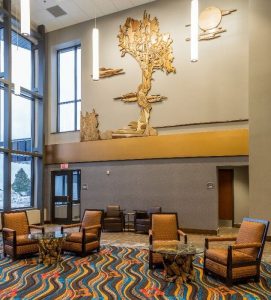 Grand Portage Lodge & Casino, in Minnesota‘s “Arrowhead” region. The formal reopening takes place on Thursday, when guests will undoubtedly stream through the new, three-story atrium en route to 425 more slot machines and additional table games. (Blackjack and three-card poker are the big draws.) Island View Dining Room and Antlers Lodge have been redone, the latter now sporting big-screen TVs and eight beers on tap. Hoist one on us.
* Las Vegas‘ water supply could get curtailed, what with Lake Mead being only two feet away from hitting the low-water mark at which federal cutbacks in H2O use would kick into gear. So far California, Nevada and much-maligned Mexico are on board with a contingency plan. The wrench in the works is Arizona, which is 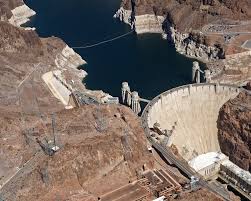 not being amenable. It’s not an interstate problem but rather a squabble between two Arizona bureaucracies, the Department of Water Resources and the Central Arizona Project. According to the Wall Street Journal, the “Colorado River, which supplies water to 40 million people from Denver to Los Angeles, has been gripped in the driest 19-year period on record, according to officials from the Bureau of Reclamation, a multistate agency that manages water and power in the West.”
There’s no cause for immediate panic: The reallocation threshold probably won’t be crossed until 2026. However, due to the geography of Lake Mead, still-lower water levels (and new cutbacks) will be reached sooner and sooner. The real estate industry, currently booming in Las Vegas, could take a hit, “because the cutbacks could result in less replenishment of groundwater basins they rely on to ensure future water supplies for subdivisions.” That’s not news anybody wants to hear right now.
