
Credit Suisse has initiated coverage of Caesars Entertainment, citing it as its “Top Pick” in the gaming sector. Why? “It recently re-emerged from bankruptcy and is one of the largest US gaming operators, with eight Las Vegas Strip and 22 Regional properties.  CZR is a pioneer of loyalty marketing, and its Total Rewards program is a significant advantage.” Analyst Cameron McKnight writes that Caesars “is reducing costs across the business, it is cash generative and should continue to deleverage. Valuation is very attractive relative to close peer MGM.” On the downside, “CZR is locked into expensive leases and sale-leasebacks.” He projects cash-flow growth in the next year, partly fueled by efficiency drives within the company. McKnight appends a $13/share price target on Caesars, which currently trades around a mere $9.70.
JP Morgan analyst Daniel Politzer also pegged Caesars at $13/share after meeting with top company execs. He said that softness on the Strip is “temporary” and the long-range picture “remains intact.” 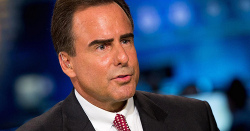 Caesars’ outlying casinos “continue to perform well” and the company “has further opportunity to meaningfully reduce its marketing costs.” Politzer saw the sales/leasebacks as a positive, “an avenue to unlock value.” CEO Mark Frissora, et. al. said that room revenue was not as important to them as to MGM Resorts International “given [Caesars’] higher mix of gaming revenue.” Any acquisition that would increase leverage is seen as “unlikely.” (So much for Jack Entertainment.)
Frissora and company were very positive on regional markets (especially the Gulf Coast) with the conspicuous exception of Atlantic City. “Consumer trends are favorable, and while retailer commentary is strong, regional gaming typically is more stable  and thus investors shouldn’t expect an acceleration in top-line growth levels,” Politzer wrote, adding that marketing was Caesars’ second-highest cost (next to labor), making it a target for reduction. Promotional activity in Atlantic City was described as aggressive and unsustainable, with the market not expected to grow. Speaking of aggression, Frissora is looking for a 20% ROI from the Centaur Gaming acquisition in Indiana. Those racetracks are unlikely to be sold to Vici Properties until they have table games, which Mike Pence thwarted while he was still governor of the Hoosier State.
* McKnight buried the lead in a report on Macao, writing, “We believe there is interest in WYNN, given a potential breakup.” This is the first we’ve read of a dismantling of the company since Steve Wynn quit. On the surface it would appear unlikely, given Elaine Wynn‘s consolidation of power and the installation of board of directors more to her liking. Why go to such lengths to take over the company when your leading purpose is to sell it? It seems perverse (albeit profitable), never mind that the company has Ms. Wynn’s name on it. But McKnight does not say these things lightly, so we’ll keep our ear to the ground. In other news, China promises new tariffs, so we’ll wait and see if these impact the gaming sector.
Those trade tensions are weighing on Wynn Resorts stock, languishing at a cheap (for it) $128/share. JP Morgan’s Joseph Greff met with Wynn CFO Craig Billings and “Our overall takeaway is that there is disconnect between its current 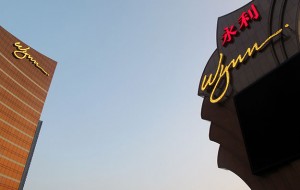 operating fundamentals and current investor sentiment (i.e., extremely negative on Macau and gaming, in general).” The company has regained market share at Wynn Macau and owns about 17% of the overall Macanese market. “WYNN continues to be optimistic on premium mass and overall mass trends and its ability to grow market share here.” Since Wynn Resorts’ Las Vegas Strip properties aren’t aimed at the mass-market customer, the company feels itself little affected by what’s turning out to be a very soft 3Q18.
* If you live in Hawaii or Utah you can’t gamble in any way, shape or form — but WalletHub ranks you as the happiest Americans, in its latest survey. It didn’t say where Nevada landed but it didn’t crack the top 20, in part because it leads the nation in divorces: 26%. (You see why my wife and I elected to tie the knot in Michigan.) We’re also the fifth-most stressed state. No surprise there.
