

Election Night seems far behind us but its meaning for gaming is still sinking in, as in Arkansas, where sports betting has also been approved. In addition, two Oklahoma-based tribal entities are likely to feel entitled to the casinos green-lit for Pope County  and Jefferson County. The Downstream Development Authority of the Quapaw Tribe and Cherokee Nation Businesses both gave heavily to the election drive, and we can expect them to be at the front of the queue when casino bids are taken. Likely to be Out is Caesars Entertainment, which intervened against Arkansas casinos at the last minute and will have to twist itself into a rhetorical pretzel to justify extending the Roman Empire into one more state. In the meantime it looks like the Quapaw will apply in Jefferson County while the Cherokee go for Pope. Meanwhile, the Quapaw are pursuing a construction permit closer to home, in Pine Bluff, Oklahoma, although it’s not a sure thing that the tribe would get the Pine Bluff gaming concession, should it be granted.
Gov. Asa Hutchinson (R) has been bemoaning the fiscal shortfall projected from Issue 4‘s reduction of the casino tax rate from 20% to 13% on the first $150 million in  revenue. However, Driving Arkansas Forward counsel Alex Gray counters that the increased revenue realized from the additions of table games at racetracks — one of which will eliminate dog racing — will more than offset the tax reduction. There’s also some haggling over whether it will take one or two years for the Pope and Jefferson casinos to become active, and start contributing to the state. (I’ll be conservative and take the over.)
There’s a saying that looking closely into election results in Florida is liking turning on the kitchen light at 4 a.m. and watching the palmetto bugs scatter. Indeed, the Sunshine State is being roiled by several recounts in key races. No such need in the two casino-related ones. The margin of victory for Amendment 3, Voter Control of Gambling, shrank from 70/30 to 65/35 but is still more than enough to strip the Legislature of its powers to manage gaming policy in the state. Floridians were even more vehement in their rejection of dog racing, voting 69% in favor of its abolition. There’s general consensus that Amendment 3 places a sizable stumbling block in the path of legalized sports betting, with losing parties including the Miami Dolphins, Tampa Bay Buccaneers, DraftKings and FanDuel. The Jacksonville Jaguars are so peeved they’re thinking of taking their ball and moving to London, where sports betting is rampant. If you’re looking for a humorous side to this plebiscite, note how the NFL has turned on a dime on sports betting and now craves it desperately.
Gaming attorney Dan Wallach counters that the sports betting crowd is getting its shorts into a bunch over nothing, noting that the words “sports betting” appear no where in Amendment 3, which carefully enumerates the casino games covered by the new law. Other grumbles that appear overstated are the assumption that the Seminole  Tribe now has veto power over gambling expansion in the state since voters won’t favor its expansion. Given Americans’ craze for gaming, I think this assumption is excessive. By the way, add MGM Resorts International to the roster of losers in Florida, since it chipped in to a pair of anti-Amendment 3 PACs. Another loser, the Florida Greyhound Association, may not be as sorry as it appears: Florida dog tracks have been trying to ‘decouple’ slots from races for years and now they will be free to offer one-armed bandits without having to present races. Outgoing state Attorney General Pam Bondi stumped for Amendment 13, calling dog racing “a black eye on our state” and noting that greyhounds had tested positive for cocaine (!) and other illegal drugs.
In Idaho “historical racing” was a loser at the ballot box. Opponents summoned a 54% majority to knock the VLT game out. Ad agencies were the real winners, as this is reportedly the most expensive race in Idaho history. Proponents of historical racing were perhaps too greedy, saying it would fund education but setting aside only one half-cent of every dollar for that purpose.
Daily fantasy sports racked up a big win in Louisiana, approved in 47 of 64 parishesp, representing 92% of the populace, including the big metro areas. What’s more, the language of the amendment stated that DFS “shall not be considered gambling.” So there. But don’t race to FanDuel to have a bit of a flutter, Louisianans. The Bayou State still has to set up regulation, taxation and, perhaps most importantly, geofencing. Opposition to the measure was sparse.
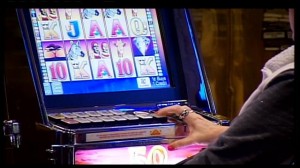 Video poker got the boot in Forest Park, Illinois, where 52% of voters chose to pull the lever against slot machines. This is a humiliation for the city council, which had approved slot routes two years ago, but the vox populi is not to be denied.
* Big gaming hedged its bets in the Nevada gubernatorial campaign. Las Vegas Sands donated 75 grand each to Adam Laxalt (R) and eventual winner Steve Sisolak (D). Station Casinos gave Sisolak $90,000 but the Fertitta Brothers laid $208,000 in bread of Laxalt, a busted hand. MGM did a better job of getting of reading the cards, donating $175,000 to Sisolak while laying a $35K side bet on Laxalt.
* After the Culinary Union turned Nevada blue in this year’s midterm elections, the rest of the country is starting to take notice of its ability to organize voting drives. “They 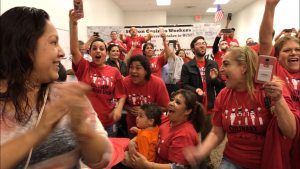 have a remarkable machine. And I don’t think that should be underestimated,” said Silver State pundit supreme Jon Ralston. Adds liberal activist Frank Sharry, ““what Culinary does, and the way they organize in Nevada, is the model for voter mobilization in the country.” Elaborated Ralston, “The union, which is, as you know, more than half Hispanic, made thousands or maybe tens of thousands of contacts. It has 55- or 60,000 members, many of whom they got registered. They clearly had an impact. How much of an impact? We’ll know more when more data rolls in.” As exiting Sen. Dean Heller (R) can tell you, one alienates the Culinary at one’s own risk.
* Rest in peace, Stan Lee. The creative wizard who gave us the X-Men and Iron Man is dead at age 95. His legacy continues but Lee himself will be greatly missed. His last years are said to have been greatly troubled. If so, he has found tranquility now.
