Casino comes to Arkansas; Luxury comes at a cost
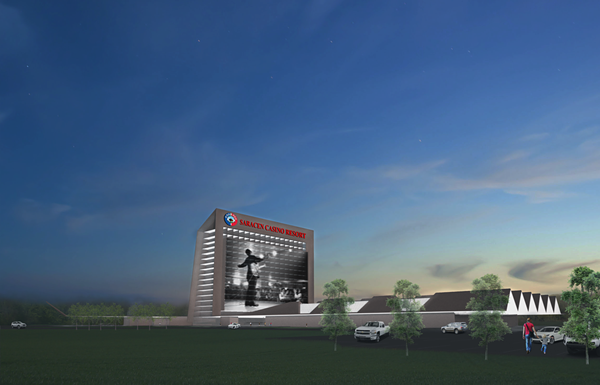
That was quick. Downstream Development Authority, a branch of the Quapaw Tribe, has been tapped by local officials to develop a casino in Pine Bluff, Arkansas. If you think the decision precipitate, don’t  worry: The Quapaw have been doing outreach for five years now and a news reports states that “it seems unlikely that another applicant will emerge.” Anyone who does will have to have both local backing and casino experience. We can think of a lot of people with the latter but without the former. (Considering that Caesars Entertainment is drawing down its operations in Tunica was it was of them to have dynamited all their bridges to Arkansas?)
For now, everyone involved is treating the benediction of the Arkansas Racing Commission as a mere formality. Saracen Casino Resort is being predicted to open within a year, which seems hasty, but we suppose anything is possible if the Quapaw put their mind to it.
* Though you’d think value was driving hotel occupancies, it turns out that luxury hotels are outperforming the sector as a whole, with occupancy in the 74.5% range, compared to 66% for the entire 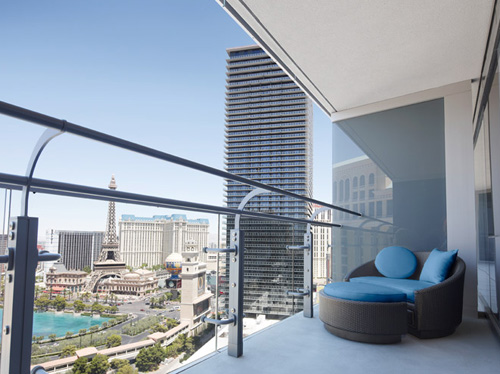 industry. (Good news for luxury-mad Las Vegas, obviously.) Part of the trend is chalked up to a lack of competition up there in the luxury stratosphere. But demand is also outstripping development. “As good a recovery as we have gone through, the market values for luxury hotels have still not caught up to replacement cost,” opines lodging boffin R. Mark Woodworth.
“Luxury hotels are also often located on expensive development sites in prime locations and decked out with costly, high-end finishes,”  reports National Real Estate Investor, and come with amenities like on-property restaurants and convention space. (Sound familiar?) “The cost to build a full-service hotel is so high. You can have one full-service hotel or six limited-service hotels,” says STR senior veep Jan Freitag. There’s also the question of financing, hard to get nowadays. (Just ask Genting Group in re Resorts World Las Vegas, or Jackie Robinson of All-Net Arena obscurity, or Lucky Dragon Casino or … ) Part of that hesitation is because — note well, MGM Resorts International — money men are leery of the downturn in convention business that accompanies hard times. Luxury hotels are also more labor-intensive, a disincentive during a period which is seeing unemployment just under 4%, putting upward pressure on wages. But if you’ve already got a fully staffed, amenity-laden, luxury hotel — hey, you’ve landed in clover.
* Steve Ruddock crunches the possibilities for online gambling 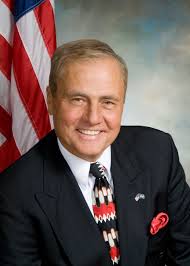 and sports betting in the 2019 legislative session, and picks likely winners and losers. (Best line: describing Assemblyman Gary Pretlow‘s perennial alibis for inability to pass legislation as “a carousel of excuses.”) Ruddock puts Illinois and West Virginia toward the front of the queue, New York State and Michigan toward the back, with Connecticut somewhere in the middle. Prospects in New York and Michigan are dimmed somewhat by the retirements of state senators and Net-bet champs John Bonacic (R pictured) and Mike Kowall (R) respectively.
* Millennials in Macao seem to want the same thing from slots as their American counterparts: smarter machines with greater interactivity. So says Robin Bernhard of BMM Testlabs. It may not be a pressing issue for Macanese casinos, which derive less than 5% 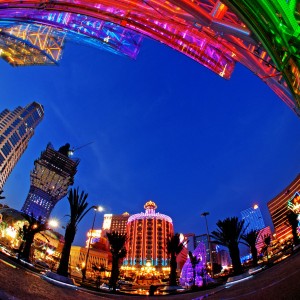 of their gross gaming revenue from slots. BMM proposes a variety of solutions, including acceptance of bitcoin, incorporation of e-sports and simultaneous ability to place sports bets. It’s a much more ambitious slate of changes that was ushered in by server-based gambling, whose pushers couldn’t envision player benefits beyond being able to order drinks and buy show tickets from the casino floor. Bitcoin would be a difficult regulatory hurdle, as cryptocurrency is prohibited in Macao. Even BMM concedes that players might not want to share personal data with a slot machine.