

Demystifying Las Vegas timeshares
by Jessica Kane
It’s well known that Las Vegas is a premier vacation destination for gamblers and risk-takers. But even the most experienced investors need to take caution when investing in 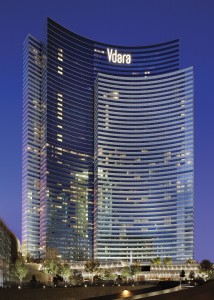 Sin City timeshares. According to the American Resort Development Assocation (ARDA), shared vacations sales make up a highly regulated billion-dollar industry. In fact, in 2016, the 1,570 nationwide timeshare resorts accounted for over $9.6 billion dollars of annual revenue, a number that easily trumped the $8 billion music industry. But there’s a lot to know before seriously considering sitting down for a timeshare pitch.
The ARDA estimated that the average price of a timeshare interval in 2016 was $22,180, not including annual fees, maintenance costs, and interest. With considerably high prices and obvious limitations, the timeshare industry has long been dominated by aging, affluent married couples. Still, modern innovations, such as a point-based exchange system, have sparked renewed interest in the tourism industry’s preeminent sharing economy.
Before we delve into the current state of timeshares, it’s important to consider the history of shared vacation ownership. Timeshares have been around since the 1960s, when resorts like SuperDevoluy, in the French Alps, and the Hilton Hale Kaanapali, in Maui, began leasing annually recurring vacation-condominium rentals. For the first time, middle-class people were given a small taste of what it was like to own property in premier vacation spots around the world.
Today, companies such as Westgate Resorts offer flexible vacation ownership options that include everything from luxury accommodations to dining and entertainment. While timeshares of the past typically limited their members to one destination, retailers like Westgate allow their members to choose from a variety of premier destinations, such as Las Vegas, Miami, and Myrtle Beach. In fact, they have a total of 25 resorts in 13 different locations around the United States. Members may even opt to take an international cruise in lieu of visiting their usual resort destination.
Timeshare retailers like Westgate rely on the aforementioned point program. In these cases, timeshare points are treated like currency which can be exchanged for flexible  internal conversions. It is important to note that many retailers utilize a points conversion program that requires timeshare owners to pay a fee to convert their standard interval into exchangeable points. While exchanges enable timeshare owners to capitalize on their investment, reservations are extremely limited and, therefore, require a lot of flexibility on the owner’s behalf.
Located across from the Las Vegas Convention Center and a mile from the main Strip, Westgate boasts onsite gambling, dining, and entertainment. The sales pitch is a low-key complimentary breakfast and property tour, a far cry from the pushy tactics of many well-known Vegas timeshare retailers.
While there are plenty of promising timeshares retailers, the industry is still fraught with scammers who prey on unsuspecting consumers. In fact, industry regulators and truth-seeking journalists alike have scrutinized the deceptive practice of dozens of timeshare resale companies in an effort to protect consumer interests. In recent years, there’s been an uptick the Consumer Financial Protection Bureau‘s (CFPB) oversight as well as high profile criminal investigations.
The CFPB has made an effort to generate transparency between the stark differences between timeshare and subprime lending practices, including the fact that timeshare loans have fixed rates and payments, lack predatory-loan terms, and boast secured equity. Of course, timeshare financing deviates from standard real-estate transactions because it is intended for the purchase of a lifetime of shared, prepaid vacations rather than a piece of finite property.
Prospective buyers have a lot to consider before exploring timeshare options in the Las Vegas area. Timeshare occupancy rates average around 81%, which is low compared to  hotel occupancy. Still, owners may feel pressured to cash in on their annual interval in order to capitalize on their investment. Of course, with an ever-fluctuating market, things like fees, plane tickets and other travel accommodations can be hard to account for in advance. In many cases, timeshare owners are left with no other choice but to try and sell their timeshare at a loss.
First-time buyers can save money by purchasing or inheriting a timeshare deed directly from an existing owner. Still, low investment costs don’t always absolve the burden of fluctuating annual fees, travel expenses and limited selling options. Of course, exchange and resell markets have grown to accommodate timeshare owners’ best interests and technology has made it increasingly easy to rent or share your interval.
Still, according to a recent article in Consumer Reports, fraudsters prey on the identities and vulnerabilities of timeshare owners looking to sell. Sellers may opt to pay a modest fee to list their timeshare in an online resell database. Still, timeshare resales are unpredictable and slim, leaving many aging owners with no better choice than to swallow their loss and donate their deed to a charitable organization.
Of course, the guarantee of a yearly vacation rental, over-the-top hard-sell tactics, and seemingly ever-expanding point systems seem to be responsible for perpetual and  increasingly diverse interest in timeshare programs. If you’re focused on the Las Vegas timeshare market, you find an ever-expanding array of ownership plots that range from fixed weeks to highly flexible point-based systems. In fact, there seem to be an abundance of eager sales people ready to pitch timeshare clubs to unsuspecting tourists navigating the Strip.
Despite the bad press, the ARDA purports that 83% of timeshare owners are satisfied with their timeshare purchases. Of course, unexpected financial burdens and travel limitations can transform the guarantee of an annual vacation into a suffocating financial liability. If timeshare fans and foes can agree on one thing, it’s that sales tactics and presentations can be a mind-numbing process.
Sales representatives often reel in potential customers with the promise of a free gift and a lifetime of low-cost vacations. In turn, consumers are asked to give up a few hours of their time. Consumers report being offered food drinks, and resort tours while being  subjected to all-too-often, aggressive sales pitches. In many cases, customers felt they needed to repeatedly decline the offer in order to cash in on their reward and leave. Meanwhile, consumers who have consented to a timeshare purchase have reported being pressured to purchase numerous upgrades.
The Federal Trade Commision (FTC) warns consumers to do research before pouring money into a timeshare. Determine whether a timeshare contract is for a lifetime or set number of years. There are stark differences between deeded timeshares, home-ownership associations and “right to use” vacation intervals. What’s more, a contract should indicate whether your timeshare interval is fixed, floating or point-based. The FTC suggests that consumers calculate the estimated cost of a timeshare unit and compare it to the cost of renting similar accommodations. If you’re focused on a certain timeshare facility or program, review consumer reports and owner feedback to form a realistic outlook. Try your best to expand upon the information provided to you by the seller.
Nevada laws dictate that consumers may cancel a timeshare purchase by submitting a written request within five days of signing a contract. Once granted, the seller has 15 days to return any payments you made. Timeshare retailers must abstain from deceptive sales practices, such as failing to disclose information or misrepresenting benefits.
Of course, there are some obvious perks to purchasing a timeshare too. For one, you’ll spend less time booking, scheduling, and arranging for travel plans. While you do need to pay maintenance fees, you don’t have to worry about furnishing or paying utilities for a property you’ll only use a few days out of the year. What’s more, timeshare  accommodations tend to be more spacious and accommodating than traditional hotel rooms. If you’re traveling with extended family or friends, a multi-room timeshare condo has some surefire advantages.
While the thought of repeatedly vacationing to the same spot each year doesn’t appeal to everyone, Las Vegas may be one of the few places that this is actually enjoyable. After all, the city’s subtropical desert climate and ceaseless entertainment schedule present tourists with the potential to develop a new itinerary every time. With well over 42 million visitors in 2017, finding someone to sublet your timeshare probably isn’t going to be difficult.
While it is unclear exactly how many timeshares there are in the Las Vegas area, it’s evident that there are thousands of units. With each unit split into mostly one-week intervals, that’s nearly 52 owners per unit. Multiply this by the annual cost and fees of each owner and it’s clear to see the resorts are the real winners here.
Of course, like all aspects of the Las Vegas economy, there are plenty of scam artists who are eager and willing to rip-off unsuspecting consumers. If you decide that a Las Vegas timeshare makes sense for you, carefully review your options with rigorous and unbiased research, and, by all means, save your risk-taking for the casino floor.

Owning a timeshare is not owning “real estate”. It’s more similar to owning a very small share of a co-op apartment. The unit “owner” has a share interest in a business. There is no “mortgage” on a time share to the unit owners, but the building itself may have a mortgage to the developer/real owner. The unit owners get a shorter term credit based loan. If the timeshare enterprise fails, the unit owners could loose everything. That said, a neighbor has a well located good season Vegas time share for about 25 years and uses or exchanges it every year. My Aunt and Uncle owned and used a time share in Freeport, Bahamas for 30 years. When they had no use for it, they gave it back to the owner/manager as there was no market value for it.
If you are able to us it every year, a time share is a really good deal. It is possible to buy one on the secondary market for $1. One just need to be VERY aware of the rules of use.
The most annoying of the resale sales claims when you do not want it any more, in my opinion, when you want to sell (get rid of it), is your family must own and pay fees FOREVER when you die. Claims in perpetuity are not legal in the U.S. If no relative wishes to have the property after you pass on the only claim the timeshare company has on the estate is that final years maintenance fee. Estate closed see you later alligator. For the record I have 7 weeks of timeshare and I am a deadbeat. I use them every year or let a friend use them.