
Credit Suisse analyst Cameron McKnight has uttered the word most dreaded around Las Vegas: recession. He’s even come up with some projections. “Based on our long-term Strip model, we can see a recession scenario for the Strip in which revenue is down 14% y/y, expenses down 7% y/y and Adjusted EBITDA down 26%.” Those compare to 20%, 7% and 40% the last time around. Since CityCenter, Encore and Palazzo all 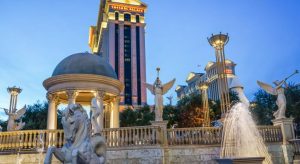 opened in the teeth of the Great Recession, “the past recession saw supply growth and increased competition at the trough.” Also, “Vegas gaming revenues were structurally higher as there wasn’t as much regional and Native American competition as today.” Of all Vegas-centric stocks, McKnight favors Caesars Entertainment most, writing, “we like its more defensive domestic gaming-focused business, its mix of regional and Vegas assets, significantly undervalued real estate, potential share gains in Vegas, growth from renovated assets, and potential activist and corporate interest.” He adds that investors are not so enthusiastic, waiting and seeing how the CEO change plays out, and concerned about how highly leveraged the company remains.
“While sentiment has improved, recession-talk has not abated and is still a key issue,” McKnight continues. “As a general rule, we view Las Vegas Strip operations highly operationally levered – with net gaming and hotel revenues highly variable, and 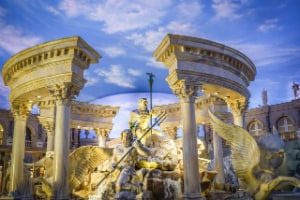 expenses relatively fixed – with limited variable costs, a very high labor component and a large unionized workforce.” That last department contributes to an expense pie of which a 45% slice consists of worker costs. Some costs are immutable, like gaming taxes. Food and beverage are way up (82%!) since 2007, no doubt due to the ongoing attempt to diversify Las Vegas by piling on more and more restaurants and nightclubs. “Gaming employees cover 25% more square feet than 2007, but average wages are up 13%,” McKnight adds. (MGM Resorts International is trying to dump $100 million in cash flow through staff cuts.) Glass half-empty: AirBNB is catching on in Sin City, up 50% last year: 718,000 total guests. Glass half-full: This represents less than 2% of room nights. Don’t expect gaming CEOs to drop the R-word in their quarterly investors calls, even if some of them seem to be preparing for one.
* Although Sen. Elizabeth Warren (D) has been out on the campaign trail in the Midwest this does not mean the Mashpee Wampanoag lack for champions in the halls of Congress. The Mashpee Wampanoag Tribe Reservation Reaffirmation Act has been reintroduced by Reps. William Keating (D) and Joseph Kennedy III (D). It has bipartisan support, with Rep. Don Young (R), Rep. Tom McClintock (R) and Rep. Doug 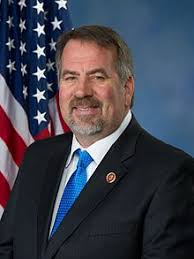 LaMalfa (R, pictured) climbing aboard. If the Department of the Interior‘s current policies toward the Mashpee be allowed to stand, the tribe would be the first one to be stripped of its sovereign status in the 21st century. “We are extremely grateful that a bipartisan group of Congressional representatives understands the injustice of taking sovereign land away from the first Americans and have moved swiftly to ensure this nation does not return to the dark days of removing indigenous people from their land,” said Chairman Cedric Cromwell. In addition to other tribal allies, the Mashpee have the support of the General Society of Mayflower Descendants, which wrote Congress that the Reaffirmation Act is a “worthy precedent to be followed today by all who honor the Pilgrims and the Native Americans who created this critical part of American society.” Let’s hope Congress is listening.
* DraftKings is having a little trouble with the learning curve for real sports wagering. It is investigating a fumble at Resorts Atlantic City in which DraftKings was unable to process all would-be wagers for the Philadelphia Eagles/New Orleans Saints thriller, due to the tardy finish of the Los Angeles Chargers/New England Patriots blowout, which left a three-minute window to process wagers. That meant that some wannabe bettors were left out in the cold regarding the $1 million top prize. DraftKings maintains that have done anything different would have meant breaking its own rules. “As with all mobile sports books, there is always some time period required for the back end systems to grade the market and the payout to occur,” explained DraftKings’ James Chisholm.
 The potential plaintiffs are embodied by one Rufus Peabody, who maintains that he was going to roll $81,000 in Chargers/Pat wagers into the second game but was prevented from doing so (at a lower point spread, theoretically available at a higher price). However, Peabody’s winnings on Game #1 were not processed in time for him to re-bet on Game #2.
“I feel like it’s an issue of fairness, that some people’s bets were graded before others,. There’s a subset of people that had their bets graded and were able to bet on the second game and a subset of others that were not,” said an umbrageous Peabody. He has yet to decide whether to take the matter up with Garden State regulators. Having won $250,000 in the two-game tournament and retained his $81K bankroll, Peabody can afford a lot of crying towels. DraftKings’ problem was nothing compared to the 45-minute outage FanDuel experienced during the first half of the doubleheader, thwarting prop bets. With hiccups like this, the two companies have their remedial work cut out for them.
 * Speaking of the NFL, belated condolences to the Indianapolis Colts and head coach Frank Reich on the end of their Cinderella season. They’ll have a leisurely six months to review every dropped pass and missed field goal. Keep rocking those muttonchops, coach.
