

Caesars Entertainment reported 4Q18 results yesterday, playing to generally rave notices from Wall Street. “Very good” and “Excellent” were the initial reactions of Credit Suisse analyst Cameron McKnight. He noted 8% revenue growth in Las Vegas on only  1.5% cost increases, adding “Regionals dragged down by A.C. (not a surprise.” Indeed not. McKnight later elaborated on this bulletin, writing that 4Q18 was “A very good quarter, against reasonably muted expectations.” Certainly an 18% increase in Las Vegas cash flow would come as a pleasant shock. Such trends, he said, were looking good for early 2019. “Regional results were impacted by Atlantic City, where supply growth impacted results more than had been built into guidance.” Analysts will have even less to go on this year, as Caesars is following MGM Resorts International‘s example and withholding 2019 guidance.
Room revenues were 11% higher on the Las Vegas Strip, exceeding Wall Street’s expectation and despite some hotel inventory being offline for renovation. (I hear it’s hard to get a good night’s sleep at Paris-Las Vegas these days, what with all the banging and thumping.) McKnight revisited his theme later in the day, rating CZR his top pick among gaming stocks and filling in some coloristic touches, such as quantifying the amount of decline (6%) that 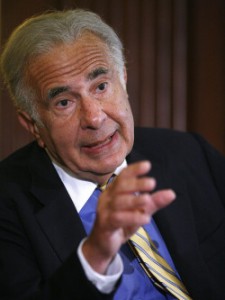 Atlantic City was having on regional revenues. The long search to replace Mark Frissora is, according to management, still in progress “with management sounding confident about the process.” I’m glad someone is. Spending cuts are targeted for this year and management is “engaging in constructive dialogue with activist investor.” (Read: Carl Icahn) Unfortunately for Mr. Activist Investor, the merger-and-acquisition “environment appears to be less active.” Other headwinds the company faces are $80 million in new labor costs in Vegas and as much as $5 million in “shadow supply” of rooms coming back into the market.
Over at JP Morgan, analyst Daniel Politzer was less enthused calling the Caesars “outlook mixed.” He noted “strong lodging and gaming trends” in Las Vegas, including an $8 million bump from favorable hold. Politzer also observed that that 4Q18 had an easy comparison, since late 2017’s Strip numbers were softened by the aftermath of the 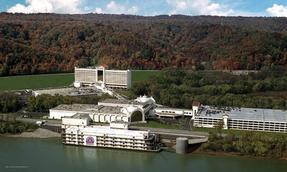 Mandalay Bay Massacre. He added Council Bluffs and southern Indiana (right) to Atlantic City among the markets suffering from competitive pressures. The two Centaur Gaming racinos should add $80 million-$85 million in cash flow but that will be offset by a $40 million EBITDA decline in Atlantic City. In Vegas, the company admitted that its ability to “really drive price is somewhat limited,” thanks to competition. (Three cheers for the free market.) With as much as $550 million budgeted for property upgrades, there’s a limited amount of money on hand for reducing leverage. Politzer advised looking ahead to 2020, as capex and corporate expenses abate and investments in the company “begin t0 bear fruit.”
As for Icahn, the 800-pound gorilla in any discussion of Caesars, Politzer repeated his previous views, adding that there was “a shortage of buyers to create a competitive bidding situation.” Has gaming reached the point where no more big deals can be consummated. Has it cannibalized itself as much as it can? We pause, briefly, in no great hope of answer. As for Caesars, it’s keeping $1.5 billion in its back pocket, lest it should feel in need of some retail therapy.
* While Caesars dominated the conversation, Boyd Gaming reported an impressive fourth quarter. Analyst Joseph Greff applauded the “attractive free cash flow generation and ensuing de-leveraging” after engorging Valley Forge Casino Resort and four 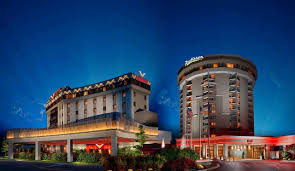 Pinnacle Entertainment casinos. He set a price target of $40/share (much better than CZR). What made the quarter notable? Cash flow at Boyd’s downtown Las Vegas properties was up 7%, total revenue — $791.5 million — beat Greff’s $780.5 million projection comfortably and every Vegas locals property posted year-over-year cash-flow growth. “Management cited gains in pedestrian traffic as well as increased visitation from Hawaiian customers as well as operating efficiencies and marketing improvements” in downtown Vegas. Slot routes in Illinois contributed to $502 million Midwest and South revenues. A one-time, $3 million tax benefit at Kansas Star didn’t hurt either. Unlike Caesars and MGM, Boyd provided 2019 guidance, including $160 million in capital reinvestment, as well as flood-closure impact on Belterra Resort and Belterra Park. We wish that such transparency was the industry standard.
