

As one might anticipate in a highly competitive free market, the upsized Atlantic City casino industry saw 15% less cash flow last year. This is only to be expected with the addition of Hard Rock Atlantic City and 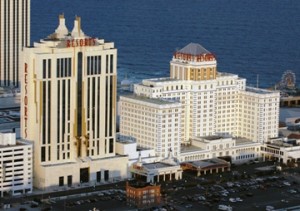 Ocean Resort. Far be it from us to make the argument that competition should be repressed to keep profit margins high. Two casinos did it right: Both Tropicana Atlantic City and the Golden Nugget saw higher gross operating profits in 2018. The Nugget was up 12.5% to $45 million and the Trop inched up 1.5% to $93.5 million. Borgata had the most to lose and it did, off 19% to $206 million. Both new casinos reported operating profits—Hard Rock $9 million, Ocean Resort double that. Resorts Digital had a terrible year, spiraling 75% downward.
Hotel occupancy ran at 80%, led by Resorts Atlantic City at 86%, trailed by Golden Nugget at 74% (which makes the profit-margin performance all the more impressive). Borgata was the costliest place to lay your head on a pillow, averaging $179.64, while Golden Nugget was the champ for affordability, averaging $83.98. Hard Rock President Joe Lupo put the best spin he could on the numbers, saying, “The launch of a new property and the acquisition of new customers are always costly, but we’re very happy with the volumes and momentum into 2019.” We don’t doubt him.
* Deputy Attorney General Rod Rosenstein just saved the Trump administration from at least one lawsuit. Saying that his reinterpretation of the Federal Wire Act “did not address” online lotteries, Rosenstein calls off the dogs “until the Department concludes 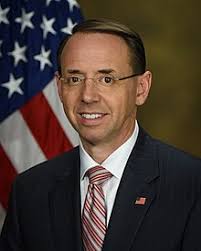 its review … If the Department determines that the Wire Act does apply to State lotteries or their vendors, then Department of Justice attorneys should extend the forbearance period for 90 days after the Department publicly announces this position,” in order to give lotteries time to come into compliance. The near-term effect of this backing and filling would be to render a New Hampshire lawsuit against the Department of Justice moot.
Internet-gaming analyst Dustin Gouker is puzzled by the Rosenstein memo (as are we), scratching his head over such intellectual contradictions as banning online gambling but exempting Internet-based lotteries. “It’s not at all clear how the DOJ can draw such a line, as many forms of the lottery—from Powerball to online lotteries—have at least an interstate component,” he writes. “Online lotteries—like online gambling and poker—have some amount of data that likely crosses state lines, in addition to payments that are often interstate in nature.” To add to Rosenstein’s inconsistency, the 2011 DOJ opinion that permitted interstate, online gambling was a response to states that wanted their lotteries to cross state lines, making it odd that Rosenstein would cite it as precedent. Even he would admit that we haven’t heard the last of this.
* Here we go again. It’s compact-renegotiation time for the Seminole Tribe and that body of overgrown children known as the Florida Legislature. A deal hammered out with then-Gov. Rick Scott (R) expires next month, which we hope will lend some sense of urgency to  these newest talks, which must produce concord by May 3. The state senate has already erased $350 million in tribal revenue-sharing from its proposed budget. Both sports betting and Internet gambling are potential sticking points this year. “That issue has come up. Nobody in the Senate … has agreed that online gaming is something that the tribe should have,” said Sen. Bill Galvano (R), the usual point man in gaming talks. He did, however, hold out the possibility of summer negotiations outside the regular session.
Given the straitened budgetary circumstances, Gov. Ron DeSantis (R) couldn’t resist some gambling verbiage when discussing the situation. “If there are things that I consider to be extravagant or pork projects, you probably would end up OK to place wagers that I’ll veto that,” he warned the Lege. Perhaps we’re too optimistic this time around but there seems to more focus surrounding compact negotiations, which would be a relief from the strutting and preening that have marred talks in the past.
* Congratulations to professional gambler James Holzhauer, who set a record for single-day winnings on Jeopardy. The Las Vegas resident raked in $110,000. We’re giving up our dreams of appearing on the show right here and now.
* Whenever Nevada gambling revenues are tallied, there’s usually some mention of Elko. But what’s it like? Well, for one thing, it’s a hotbed of Basque cuisine and customs. How did it become so? It’s an interesting story and one that owes a lot to Sen. Pat McCarran (D) and his fascist leanings, for one thing.
* Finally, punters who put their money on Benjamin Netanyahu to win re-election can clean up big after yesterday’s Israeli plebiscite. Oddsmakers had Netanyahu losing, so they’ll be forking over some coin of the realm today. Next up on the potential chopping block: British Prime Minister Theresa May, whose chances look even worse than Bibi’s did.

According to the article, both Hard Rock and Ocean had operating losses. I looked it up since I was surprised to see in your notes that both had profits:
“The two new casinos each reported a gross operating loss for the year in 2018. Ocean Resort lost $17.8 million, while Hard Rock lost $9.1 million.”
That cant be good for HR; in particular. No wonder the President got canned. I suspect that both incurred significant opening costs which deflated operating profits. Hope so; anyway.