

Phil Ruffin is in the hunt for Caesars Entertainment … well, sort of. He said he’s interested in individual Las Vegas Strip properties, clearly anticipating some  kind of sell-down to deleverage an Eldorado Resorts or Tilman Fertitta acquisition of the Roman Empire. However, Ruffin is clearly looking for fire-sale prices: He’s only willing to pay 6X cash flow and that just doesn’t cut it for a Strip asset. (Fun fact: Ruffin himself paid 7X for Treasure Island.) He told the Las Vegas Review-Journal he’s looking for casinos that generate $200 million-$300 million in annual cash flow. We don’t know which Caesars properties do that, as the company doesn’t bust out individual-property numbers, but can say, sorry Cromwell. No Ruffin for you.
Ruffin, showing his hand, says he has $1 billion in cash on hand and can raise even more in debt financing (everybody’s willing to go deeply into the red to swing a Caesars deal) if need be. Ruffin is a creative casino owner and we’d be curious to see what he’d do with, say, Planet Hollywood. Except for iconic Caesars Palace, it’s possible that any and all Caesars Entertainment properties on the Strip will be up for grabs, to say nothing of the regional network.
It might behoove Caesars to shed some hotels, as it currently the target of an antitrust probe which is attempting to determine if hotel chains (including Caesars) colluded “to not advertise to consumers who searched for another company’s hotel.” So, for instance, if you went through Expedia to search for a Marriott in Las Vegas, no Caesars properties would be shown you. Caesars is remaining tacit for the moment, which is probably wise.
* In a move sure to gladden the hearts of gamblers across the country, Reps. Dina Titus (D) and Darin LaHood have introduced a bill to raise the “IRS lockdown” on slot winnings from $1,200 to $5,000. Nothing over $4,999.99 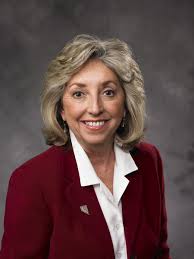 would have to reported to the taxman. (If Republicans really like low taxes this should be a no-brainer to support.) The $5K amount wasn’t just plucked out of the sky but is a calculation of what a $1,200 jackpot in 1977 dollars (when the lockdown was imposed) would be worth today. “Casinos are the only businesses that must take their assets out of production to comply with their tax information reporting obligations. The current federal regulations on reporting slot machine winnings have been outdated for decades, creating inefficiencies, paperwork and unnecessary hurdles,” said American Gaming Association President Bill Miller, endorsing the Titus/LaHood bill. Changing this rule is one of the AGA’s top priorities this year and we applaud the initiative.
It’s a busy week for the AGA. To celebrate the first anniversary of the downfall of the Bradley Act, the association is releasing a “Responsible Marketing Code for Sports Wagering.” Perhaps with an eye to recent advertising developments in Europe, “Our new marketing code mandates that the advertising and marketing of sports services respects the legal age for sports wagering, supports responsible gaming, controls digital media and websites and monitors code compliance,” says Miller. Since sports betting is terra incognita for most of the country, with a patchwork quilt of laws and regulations, the AGA’s attempt to provide a modicum of standardization is appreciated.
* In Arkansas, the city of Pine Bluff has voted to annex land for the planned Saracen Casino. The only ‘no’ vote came from Councilman Bruce Lockett, who understandably wanted to know who was the (secret) owner of the land being annexed. (This is like an episode of Ozark, minus the Navarro Cartel.) The Quapaw Indian Nation is the likely casino operator, especially as it has the mayor’s endorsement.
* In North Carolina, a bill quietly making its way through the Lege would make it possible for the Cherokee Tribe to open sports books at its casinos. (There would be no mobile betting.) Solons are tractable to the legislation due to visions of $50 million in revenue dancing in their heads. That may be optimistic but we’d like to see this bill pass anyway.
* “[Tiger] Woods is a self-contained gambling ecosystem and his magnetism attracts more than just the money on the man himself.” So reports Bloomberg on how Tiger Woods’ resurrection of his game has shaken up sports books.  “People are willing to overpay to bet on Tiger Woods. Casinos see this as a huge opportunity, but it’s very risky. They can attract a lot of action if they give odds that are closer to the truth, but it can lead to an unbalance,” says Adi Wyner, a professor of statistics at the University of Pennsylvania. More Tiger on the PGA circuit quite simply means more money in casino sports books, 20% more according to Jeff Sherman, who handles risk management for the Westgate Las Vegas book: “That means more Tiger props [bets] for the PGA than I’d normally have if he finished middle of the pack in the Masters.”
To offset the Tiger Effect, sports bets are lengthening odds on his competitors. (Woods is currently favored to win the PGA tournament despite being ranked #6 on the tour.) Still, despite the destabilizing effect of a resurgent Tiger, Station Casinos Sports Book Director Chuck Esposito looks to the bottom line. “It brings guests in which is a win-win,” he says.

Both Planet Hollywood and Harrahs are at opposite ends of Caesars Entertainment casino cluster on the east side of the Strip so its possible Mr. Ruffin could purchase either one of these casinos. When the dust has settled regarding Caesars Entertainment Mr. Ruffin has a good chance of owning one more casino on the Strip.