

Parx Casino is out $1 million after overpaying its taxes and missing the deadline to file for a refund. So says a Pennsylvania judge. Parx had three years to rectify the overpayment and 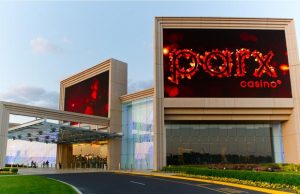 missed the deadline by a whopping six months. Hey, when you’re rolling in dough as Pennsylvania’s top casino it’s easy to get amnesiac like that. The overage was $1,122,654.89, Parx having apparently miscalculated its slot revenue. It was an error that stretched over a two year period, 2009-11. Parx parent Greenwood Racing belatedly came around an applied for a refund in mid-2014, too late to get its money back.
Ruled Commonwealth Court Judge Kevin Brobson, “As reflected in the Court’s Memorandum Opinion, we sided with … Commonwealth’s position and held that Taxpayer’s petition for refund was untimely.” That missing tax money could go a long way toward paying for Parx’s new, $10 million sportsbook. Meanwhile the company is shopping for new locations in Shippensburg Township for its satellite casino. Site #1 proved to be susceptible to sinkholes, so it was back to the drawing board. Greenwood got the $8 million license over a year and a half ago and still hasn’t identified a viable site.
Meanwhile in Pittsburgh, Steelers fans who were ready for some football were in luck last Monday. Not only did the Pittsburgh Steelers obliterate the Cincinnati Bengals 27-3, fans could watch the destruction from the $5 million comfort of a new sportsbook at Rivers Casino, opened within hours of 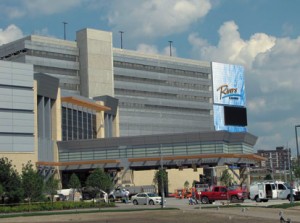 game time. Said General Manager Bill Keena, “I can tell that, day to day, my table, slot and food and beverage revenue are up … I think it brings in a younger demographic but also people we have not seen before. It brings in all age groups.” Even before the official opening, the 195-seat venue was playing to standing-room-only crowds.
The book as six staffed betting kiosks, 27 more self-service ones, plus six more on the casino floor. The 26 HDTV sets are effectively 30, as the two 50.5-foot-by-seven-foot LED monitors can be subdivided between four different video feeds. Heck, and I can barely keep up with all the onscreen graphics on one TV set.
* Rep. Dina Titus (D) ducked the question when asked if she would support a bipartisan bill to ban resort fees. Considering  that the casino industry gave her precious little support during her first term in Congress, her circumspection is strange. Some Wall Street analysts have come out against the bill, contending that it would hurt business if hotels were forced to disclose resort fees as part of the upfront cost of a room. Maybe but … isn’t that the free market at work? Mind you, the lodging industry is prepared to spend megabucks cultivating addicts, er, supporters on Capitol Hill.
On one side you have companies like Marriott, which sprinkled both sides of the aisle with $330,000 in the 2016 election cycle. Then you have the American Hotel & Lodging Association, which admirably maintains that “transparency and guest satisfaction are at the core of the industry’s business model. Making sure guests have all the necessary information prior to booking their reservation is paramount.” Analyst agree that MGM Resorts International and Caesars Entertainment are watching the Johnson-Fortenberry bill with trepidation, as they confiscate—er, earn—3% of their revenue through resort fees. I’m surprised it’s not more, given what they charge.
* Colosseo Atlantic City President Rocco Sebastiani said he couldn’t resist “the challenge” of reviving the Atlantic Club hotel, once the Atlantic City Hilton before Tom Barrack screwed it up. The place has been closed for five years and three  previous sales have collapsed but if Sebastiani is as eager as he says he is, then maybe this one will close. “It’s got a lot of renovating that needs to be done; that’s what we do. We buy assets that need a lot of work and bring them up to market,” Sebastiani said of his business model.
Of the Atlantic Club, which has been pitched without success as condos, a waterpark and a Stockton University extension campus, Sebastiani predicted, “We’re going to renovate the property and reopen it as an 800-room hotel with new retail, and new food and beverage offerings”—and no casino. The purchase price was undisclosed but the last time the Atlantic Club changed hands it brought only $13.5 million.
* Genting Singapore is raising $29.5 million in debt to fund a casino in Japan. Of course, that’s peanuts compared to what the eventual cost would be, were Genting to be chosen. However, the Japanese are said to like companies that are long  on cash, short on leverage, which describes Genting (a cash-to-debt ratio of 4:1)—but doesn’t characterize its American rivals. Japanese politicians have also taken Singapore as their model for the kind of megaresorts they want and Genting has plenty of experience in that market. Fitch Ratings now pegs the cost of Japanese megaresorts as much as $15 billion, a number that will be hard for Genting (or anyone) to achieve much of an ROI upon.
* I don’t want facial-recognition technology being used on me when I travel, so why should I want it on my slot machine? That’s one of the more dubious products being pitched at Global Gaming Expo. If casinos really want to spend their money where it will do the most good, they might to eradicate the radio dead zones that became notorious after they hampered attempts to stop domestic terrorist Stephen Paddock. “That communication is really the only lifeline [first responders] have,” said Safer Buildings Coalition Managing Director John Foley. Buildings built prior to 2009 fall outside of a requirement that 95% of each high-rise should have “reliable radio communications for first responders.”
Mandalay Bay was completed in 1999, hence the notorious (and all-too-aptly named) dead zones. Reports Casino.org, “Clark County Fire Department requested last year that 28 Strip properties undergo radio tests to determine if adequate communications are available. But it’s unclear how many have done so, and whether steps have been taken to improve radio and cell phone functionality.” Shouldn’t this be a priority? If nothing else, it’s sound business practice—especially considering how long it took Vegas tourism to recover from Pollock’s rampage.

AC: Atlantic Club/AC Hilton, does anyone pay attention to the short summer season in AC? The “Chelsea Tower” at the Tropicana was Carl Icahn’s debt purchase of a successful Cape May, NJ hotel operators short lived venture into AC that went bad. Not even the excellent Chelsea’s Gastro Pub can stay open all year round.
I am glad that the Golden Nugget, Ballys Grand, The Grand, The Hilton, ACH, Atlantic Club (did I miss one) is being saved. It has always been a classic comfortable beach side hotel. Probably to quiet and comfortable that it never really did all that impressive casino win after Wynn owned it.
FYI, I believe it is being reported that Colosseo Atlantic City closed on the property already. I am anxious to see what they are going to do with it, besides what has been described so far.
AC: Hilton/Atlantic Club, etc. Does anyone remember that the AC Hilton/Grand/whatever has the lowest overhead ceiling height in a parking garage for AC buildings/casinos. My minivan barely can clear their 6 foot ceiling. Large SUV, pickups, etc, can’t park there.