

If rampant facial recognition is such a good thing, how come music festivals like Coachella and SXSW are banning it? The casino industry could take a hint from this, especially as the rejection seems to be coming from much-coveted Millennials. As BuzzFeed puts it, “If we accept ubiquitous biometric monitoring, and normalize the idea of getting our faces scanned to get on a plane or pick up our kids from school, the experiment works and our fate is sealed. But if we organize—if we refuse to be lab rats in a digital panopticon—we can avert a future where all human movements and associations are tracked by artificial intelligence algorithms trained to look for and punish deviations from authoritarian norms.”
Some are already fighting back. Two Harrah’s Joliet customers are suing the casino for going all biometric on them. The complaint zings Harrah’s for doing it “without creating and following a written policy, made available to the public.” 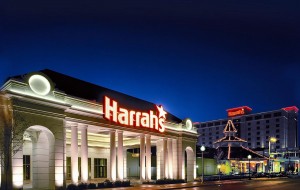 Very naughty. (Hollywood Casino Joliet has been hit with a similar lawsuit.) “Each time plaintiffs gambled at defendants’ Harrah’s Joliet casino, defendants facial recognition technology scanned plaintiffs’ facial geometry and compared those scans against stored facial geometry templates in defendants’ databases,” reads the complaint. It accuses Harrah’s of flouting the Biometric Information Privacy Act, passed in 2008 and well-promulgated since. “As a result, defendants’ violations of the Biometric Information Privacy Act were reckless, or in the alternative, negligent.”
In case you think that what happens in Joliet stays there, Surveillance Manager Bill Doolin bragged on camera that “As other properties which belong to that network catch somebody [cheating], they send a report that goes to all of the  other casinos in the network. Within an hour or two of them catching someone, maybe in Nevada or in Atlantic City, all of the casinos in that network will have that information available to them.” Reassuring, huh? The lawsuit, to which Caesars Entertainment has yet to respond, accuses the company of not getting advance permission to collect data, failing to inform customers in writing of the surveillance and not setting a date for destruction of the biometric data, among several other charges. Both plaintiffs are members of Caesars Rewards, which tells you something about how the casinos treat their ‘valued’ customers. The gentlemen probably won’t be getting any comps anytime soon.
* Encore Boston Harbor‘s public image is all wet after, as we previously noted here, rainwater flooded the resort’s poker room. Newspapers and Web sites have been quick to note that Encore is five months old and the poker room even newer. Wrote one blogger, “the newness of the facility almost certainly infers a construction issue that will result in an insurance settlement from one of the casino’s construction contractors.” $2.6 billion doesn’t buy what it used to.
“Results from three different Nevada hotel-casinos failed to support the popular notion that poker rooms drive business to the slot and table game areas of the casino floor.” That’s what University of Nevada-Las Vegas Professor Anthony 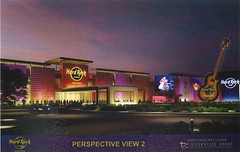 Lucas wrote five years ago. No telling whether Hard Rock International execs read that or were simply impressed by the costly failure of the Hard Rock Hotel‘s poker room in 2010 (a debacle for Warner Gaming, not Hard Rock). Either way, Hard Rock’s proposed Rockford casino will open with 0% poker. Zip, none, nada. “A typical Las Vegas casino poker room with 20 tables generates about $3 million a year in operating profits,” Lucas told the Rockford Register Star, adding that slot machines in the same space would produce quintuple the profit. And, having guaranteed Rockford at least $7 million a year, Hard Rock will need all the profit it can muster.
* Oklahoma‘s Horse Racing Commission approved parimutuel meets and continued racino operation for 2020 last week, seemingly knocking the props out from under Gov. Kevin Stitt‘s argument that tribal compacts sunset at the end of 2019. Look for that contention to made strongly in the coming weeks.
* Gaming establishment in Japan continues to creep forward. A casino management commission has been authorized to take office on Jan. 7. The five members of the panel, once confirmed by the Diet, will serve five-year terms. Other than being authorized to fight gambling addiction, their remit will be familiar to American observers of casino regulation. We’re still a ways from seeing gaming operators chosen, especially since many interested cities and provinces have to be winnowed down to a lucky three.

[…] say that “slot machines in the same space would produce quintuple the profit,” according to the Stiffs and Georges […]