

MGM Resorts International CFO Corey Sanders and Chief Strategy Officer Aaron Fischer met with J.P. Morgan analyst Joseph Greff, who came “away from these meetings incrementally positive on MGM’s asset 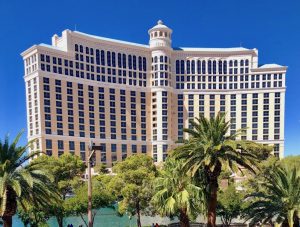 monetization plans, ability to meet its 2020 targets, and a healthy LV Strip market.” Among other things, the Bellagio sale was described as an initial, not late, step in deriving money from real estate sales. In case you were wondering what MGM was going to do with all that money, its priorities are “(1) reduce debt, (2) repurchase shares (on its 3Q call, MGM said it will repurchase $750m of shares by year-end 2019), and (3) provide dry powder for growth investments down the road.” #3 is a very low priority as no major capex projects are planned. Getting leverage down to 1X equity was described as “paramount.”
Mergers and acquisitions are “off the table,” so that evidently means MGM won’t be a potential buyer for Caesars Entertainment surplus assets. MGM would prefer to sell MGM Grand to MGM Growth Properties but “multiple parties are interested and it will inevitably come down to price; MGM hopes to conclude the sale process sooner than later.” It wants to have “a conversation” with Dubai World about the future of CityCenter but nothing is happening on that front. The company is bullish on 2020, looking forward to Con/Agg Expo and the NFL draft. (Let’s hope the latter goes better for Sin City than the NBA all-star game did.)
In other business, the company looks to upgrade brand-new MGM Cotai to attract more mass-market business, as it “expects the VIP market to  remain weak for the foreseeable future.” Its cash-flow targets in Macao are $500 million in annual cash flow per casino, with MGM Macau already there and MGM Cotai on the way. As for all-important Japan, we must possess our souls in patience: Management doesn’t expect concession awards until summer of next year. At best there will be a “tight timeframe” to meet the 2025 World Expo. “Suffice it to say, MGM likes its chances given its steady and consistent Osaka First strategy and local partner(s).” Greff predicts a mid-teens return on investment, which should be music to MGM’s ears.
* We overlooked at least one gaming-specific election race this week: Terre Haute voters approved a casino for their area. It wasn’t even close, with 64% in favor. Would-be operators now have less than a month to get  their applications in to the state. “There’s no doubt that had we not seized this opportunity, other communities in Indiana were ready to come after this license,” remarked state Sen. Jon Ford (R). Terre Haute Mayor Duke Bennett concurred, saying “Communities have been wanting to do this for years but got no traction—couldn’t even get a vote in the House or Senate.” A Casino Association of Indiana study predicts 819,000 annual visits to the projected casino, for which Spectacle Entertainment is the frontrunner, with Full House Resorts also in the hunt. It will be subject to both and admissions tax and a wagering tax, with 40% going to Terre Haute, 30% to Vigo County, 15% to Vigo County School Corp. and 15% to economic promoter West Central 2025. Congratulations, Indiana.
An OTB initiative in Danville, Virginia, eked out a win, 52% to 48%, meaning that a Rosie’s Gaming Emporium will be coming to town. Colonial Downs, parent of Rosie’s, will be offering live-simulcast wagering as well as “historic racing,” just a step away from slot machines. “This was an important first step, and now we’ll begin in earnest the process of working with Danville city leaders to determine exactly what project the community would like to see,” said a Colonial Downs spokesman.
In Kentucky, state Attorney General Andy Beshear (D) lengthened his narrow lead over Gov. Matt Bevin (R), the least-popular governor in these United States. Beshear favors sports betting, DFS, Internet 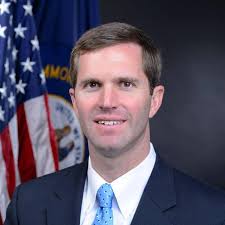 gambling and 10 casinos in the Bluegrass State, pointing out how neighboring states are siphoning dollars from across the borders. Whether any of that will be possible in a state whose power structure is deeply GOP remains to be seen. Getting through the General Assembly is possible but the state Senate has vowed to shoot down any casino-legalization attempts. It may take a serious budget crisis for Beshear to make good on these campaign promises. (Update: Bevin hopes to steal the election result by having it nullified in the Lege.)
In Colorado, voters in Cripple Creek, Black Hawk and Central City voted in favor of sports books. But don’t rush out to have a fiddle just yet. The state Division of Gaming has until May to formulate rules and safeguards. Olympic Games, professional sports, some collegiate sports and motor races will be eligible for wagering.
* American casino operators would be well-advised to steer clear of the crooked Southeast Asian gaming industry. Latest case in point: Donaco International wants to punish dissident shareholders Gerald Tan and Patrick Tan, and is asking the Australian Government Takeovers Panel to freeze their shares. Why? Because they had the temerity to demand that the Donaco board of directors be replaced. It accused the two Tans of being “associated by reason of entering into a scheme for the purpose of controlling or influencing the composition of the Donaco board and the conduct of Donaco’s affairs.” Like, duh! Donaco also accused them of being closely tied to former CEO Joey Lim. Donaco operates casinos in Vietnam and Cambodia, the former a graveyard of U.S. investment and the latter hopelessly corrupt.
