
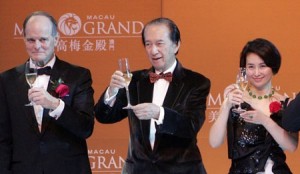
MGM China will be dropped from the Hong Kong bourse. Casino.org announced the change with this photo of Stanley Ho and Pansy Ho at the MGM Grand Macau opening. Somebody had a wicked sense of humor, cropping former CEO J. Terrence Lanni out of the picture, leaving just the Ho duo. Stanley Ho referred to the property as “my casino,” to the embarrassment of MGM. Even in his dotage, Ho is still stealing the limelight from the late Lanni.
In other Macao news, Wynn Resorts Vice Chair Linda Chen gives a preview of Crystal Palace, whose cost has already escalated from $2 billion to $2.9 billion, even before a spadeful of earth has been turned. Perhaps reacting to the Wall Street analysts who called the investment “a bit aggressive,” Chen stresses the importance of amenities (which will include a theater and art gallery), saying “People have to choose Macau as the destination before any industry can thrive. The non-gaming drives the visitation. Once they choose that destination, then everything else comes.” It’s also a pragmatic reaction to declining VIP business, Wynn’s bread and butter.
Chen has ties on both sides of the Pacific, being a member of the Nanjing People’s Consultative Conference, which advises on government policy. She hasn’t missed a step since the resignation of mentor Steve Wynn, saying, “Of course, you don’t want to lose the chairman of the company. But our culture is, no matter who left the company today, if I wasn’t here tomorrow, everyone would still function. You can’t rely on one person.” Sound advice for all companies that are reliant upon the cult of one CEO. Las Vegas Sands, are you listening?
* Parolee O.J. Simpson is, as you have read here earlier, 86’d from The Cosmopolitan of Las Vegas, which had the good taste to ban the convicted felon from its premises. Simpson claims that Cosmo employees defamed him by saying he was drunk and disorderly. More specifically, he was belligerent (What? The Juice abusive? Heaven forfend!) and broke glass and otherwise disrupted the Cosmo’s chi. Hopefully the courts will follow the Cosmo’s lead and toss Simpson.
* In other Las Vegas Strip news, the Los Angeles Times took a long look at the “concession fees” that a variety of Caesars Entertainment-based restaurants are charging patrons. In their defense they say everybody else is doing it but they’re the only ones being explicit, in the interest of 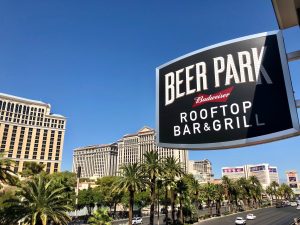 transparency. You’re paying roughly 5% more to eat at, say, Cabo Wabo (where the food is mediocre) or Beer Park. As VitalVegas author Scott Roeben says, “These places are relying on people being duped. They’re betting that if you’re on vacation, you aren’t going to waste time asking a manager to remove a bogus charge. But this has become a serious problem because it affects the perception of Vegas as a place that nickels-and-dimes customers.”
PR woman Kelli Maruca was trotted out to say that “As costs continue to rise, surcharges are becoming more common and necessary in the restaurant and hospitality industries to ensure a sustainable, fair working environment for all of our team members.” Why not raise menu prices? “In a sense, we are raising the prices. But we are going about it in the simplest, fairest, most transparent way possible.”
The good news is that if you balk at the surcharge it will be removed from your bill. That’s the upside of going public with the fee. The levy is being  imposed not because it’s mandated, nor is it unlawful. It’s the free market in action and it will continue until enough consumers take a stand against it. That’s what happened when concession fees were levied at Park MGM‘s Mama Rabbit. Parent MGM Resorts International backed away from the uncharge when social media blew its collective stack and has since banned such uncharges at all its restaurants. Good for MGM. But Roeben warns against complacency, “It’s only a handful of bars and restaurants on the Strip that are doing it, but it’s a slippery slope that could get worse.”
* Oklahoma Gov. Kevin Stitt (R) has yet to make a formal offer to the state’s gaming-enabled tribes as regards increases in their exclusivity fees. However, he’s already proposed to send the issue to binding arbitration. Perhaps he knows he’s playing a losing hand as regards precedence for the tribes’ compacts to automatically renew. Whatever the case, the tribes rejected arbitration like a weak fastball, all but guaranteeing protracted and acrimonious negotiations.
