

Imagine how much of a world of hurt Station Casinos would be in if DJs Marshmello and Skrillex hadn’t quit instead of having their high-priced sinecures ($60 million in Mr. Marshmello’s case) terminated, as happened to 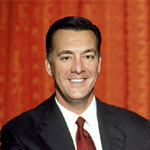 Ryan Raddon, aka Kaskade. At numbers like those, it’s no wonder KAOS was hemorrhaging cash—Station took a $27 million write down on the Palms joint. The basic problem is the even hardened nightclubbers won’t stray from the Las Vegas Strip. Station got this lesson at Red Rock Resort and now an expensive reminder at the Palms. Station CEO Frank Fertitta III blamed the market rather than himself, saying, “It doesn’t appear that the market has grown enough for the amount of supply. The cost of entertainment is excessively high, and we just made the decision to focus where the fish are.”
As for Mr. Kaskade, his lawyer says it would be “hard to imagine a more straightforward breach of contract case than this one.” He’s seeking payment for 37 canceled dates. Odds are that Station will be writing Mr. Kaskade a big-ass check, even if it settles out of court.
* We don’t normally take issue with The Motley Fool but we’re not on board with its latest, woe-is-us piece on Atlantic City. Never mind a 12.5% increase in operating profit or a strong November. The market is  oversaturated, we are told, and closures and bankruptcies must surely follow. The Fool grudgingly allows that “their better overall performance is encouraging,” particularly Borgata, Hard Rock Atlantic City and Ocean Resort Casino. And we’ll readily concede that Eldorado Resorts is doing its best to put the Tropicana Atlantic City out of business. What will happen when Eldorado has four Boardwalk casinos to mismanage instead of just one? The Fool furthermore pooh-poohs Atlantic City’s recent performance, chalking up improvements to Internet gambling and the fever for sports betting. So? As my babysitter used to say, “Don’t worry, Mr. McKee, it’s all money.”
If Tilman Fertitta had his way, two casinos—presumably Bally’s and  Resorts Atlantic City—would fold their hands. He told The Press of Atlantic City, “It’s a seven-casino market, and when it was seven casinos,
everybody was putting money back into the properties. Now, they won’t.” It’s difficult to imagine someone as competitive as Tilman not maintaining capex at the Golden Nugget. Even so, we take anything he says seriously. No doubt he will feel even more strongly if and when Bart Blatstein opens a casino at the Showboat. Even so, we’re not buying into any end-is-nigh eschatology at the seashore … and *we* used to run an “Atlantic City Death Watch.” No longer.
* Oklahoma Gov. Kevin Stitt (R) has unveiled the latest gambit in his all-stick/no-carrot campaign to extract higher exclusivity fees from tribal casinos. He’s threatening to open the Sooner State to commercial gambling, although any attempt to make good on that threat would surely  land Stitt in court. He says he’s been successfully soliciting interest from major companies and they’d readily pay an 18% tax rate (7% less than what Stitt is attempting to extort from the tribes). Stitt told a Tulsa newspaper, “One operator explicitly told me over the phone he’d sign a deal tomorrow at an 18% fee, and this business person is eager because his offer is a low rate for what his casinos are paying on average across the nation.” (Would that be Tom Reeg by any chance?) The tribes, meanwhile, are waiting vainly to see some kind of incentive to strike a deal with Stitt. In the laugh line of the year, his spokeswoman said the governor “truly believes and hopes there is opportunity to negotiate before the January 1 deadline.” That makes one.
One tribal president stated what Stitt apparently forgot: No exclusivity = no exclusivity fees, putting $140 million in tax receipts at risk. The question for the private sector is that, with 130-plus casinos and racinos  of varying sizes operating along the length and breadth of Oklahoma, how much revenue is left over for Sheldon Come Latelies? Either way, the prospect of getting commercial casinos turned Stitt into a veritable Chatty Cathy. “Commercial operators are reading the news headlines in our papers and in industry trade publications, and they are wanting a chance to break into the third-largest casino market in the nation,” he said, continuing to negotiate through the media, his preferred tactic. “While this is something I am not pursuing with the Legislature at this time, the conversations have been enlightening about the value of the gaming industry in Oklahoma.”
Stitt’s threats had the desired effect on one tribal chieftain. “Growth in tribal economic development has been a win-win for the state and tribes. It’s a testament to what we can accomplish when we work together,” said a seemingly conciliatory Chickasaw Nation Gov. Bill Anoatubby. Others  well less well-disposed. “I don’t know what to make of Governor Stitt’s public comments,” said Anoatubby’s chief counsel, Stephen Greetham. “They are all over the map.” Even more forceful was Muscogee Nation Principal Chief James Floyd, who said that “removing the exclusivity agreement with our tribes also effectively removes the constraints of a nation’s boundaries on where a gaming facility may be constructed. Governor Stitt is potentially opening up all of Oklahoma for gaming on every corner of every neighborhood in any part of the state.” That’s talking a language Stitt will understand.
Jottings: Good news for gaijin gamblers in Japan. A withholding-tax proposal has been smothered in the crib. Prime Minister Shinzo Abe‘s government thinks it would dampen casino investment, a legitimate concern, especially when the price of entry is $10 billion, minimum … 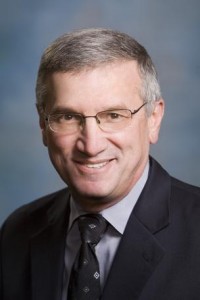 Caesars Entertainment CEO Anthony Rodio made the trip to the Hoosier State for the opening of $90 million Caesars Southern Indiana, complete with Roman centurions 103 tables and 1,218 slots. Said Rodio, “This is like a mini-Vegas experience compared to what the traditional, three-level riverboat offered. That’s night and day.” With name change (going against Gary Loveman‘s downgrading the property to a Horseshoe), Caesars is explicitly making a play for the Nashville, Cincinnati and Indianapolis markets.

Atlantic City: The AC market will be stressed later this year or early next year when Cordish “Live Casino” opens in South Philly, about 60 miles, an hour & a few minutes from AC. The additional 5 smaller casinos in PA won’t help feed the regional market, but will further dilute it. And the “wild card” Bart Blatstein. If Ocean Casino pairs with a casino chain like Penn National, Rivers, Boyd Gaming, or Cordish-Live! brand, things would become quite interesting in AC, perhaps not so much for Mr. Fertittta’s Golden Nugget.